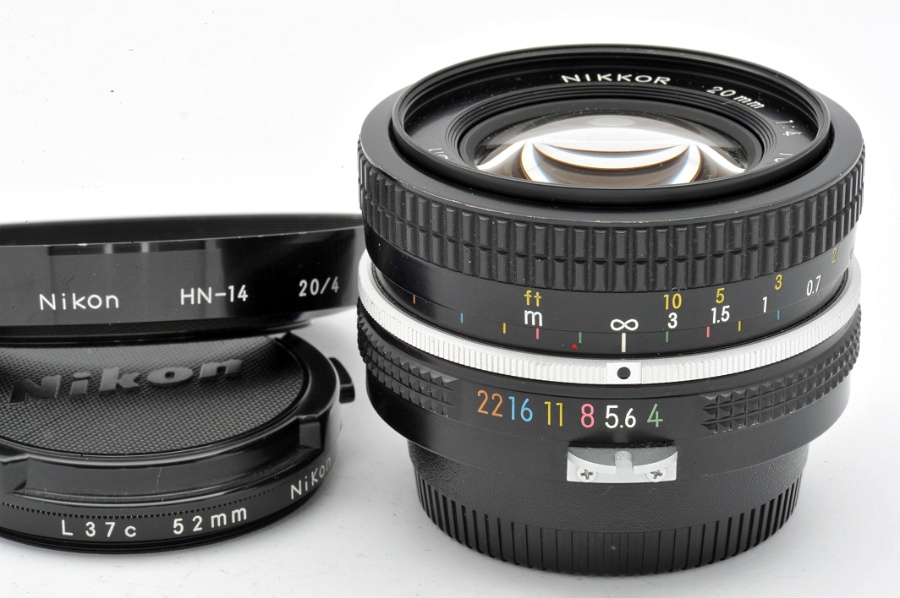
The Nikkor 20mm f/4 lens, (AI – serial number 124591), is part of the AI (Aperture Indexing) series, produced from 1977 to 1981. This places my lens early in the AI production run—likely manufactured around 1978. The AI version succeeded the original Non-AI 20mm f/4 (introduced in 1973) and carried forward the same optical formula of 9 elements in 8 groups, designed by Nikon optical engineer Yoshiyuki Shimizu. It features a manual-focus helicoid mechanism, a 7-blade aperture diaphragm, and a minimum aperture of f/22. Its optical coatings were Nikon’s Integrated Coating (NIC), giving improved flare resistance and color rendition compared to earlier single-coated lenses. The close-focus distance is 0.25 m (about 10 inches), allowing for dramatic near-field perspective effects typical of ultra-wide lenses.
The AI Nikkor 20mm f/4 was widely admired for its compact size (only 31mm long) and excellent corner sharpness when stopped down—a hallmark of Nikon’s late 1970s wide-angle designs. While not as bright as the later f/3.5 or f/2.8 versions, its slower aperture minimized distortion and maintained high contrast across the frame, making it ideal for architecture, landscapes, and travel photography. The 20mm f/4’s deep depth of field made it a favorite for zone focusing and reportage work.
It’s not an AI-S lens—the AI-S 20mm f/3.5 replaced it in 1981—but it remains compatible with most Nikon DSLRs and mirrorless cameras (via FTZ adapter) in manual or aperture-priority modes.
Collectors and shooters alike prize it for its balanced rendering, natural color, and vintage Nikon craftsmanship.
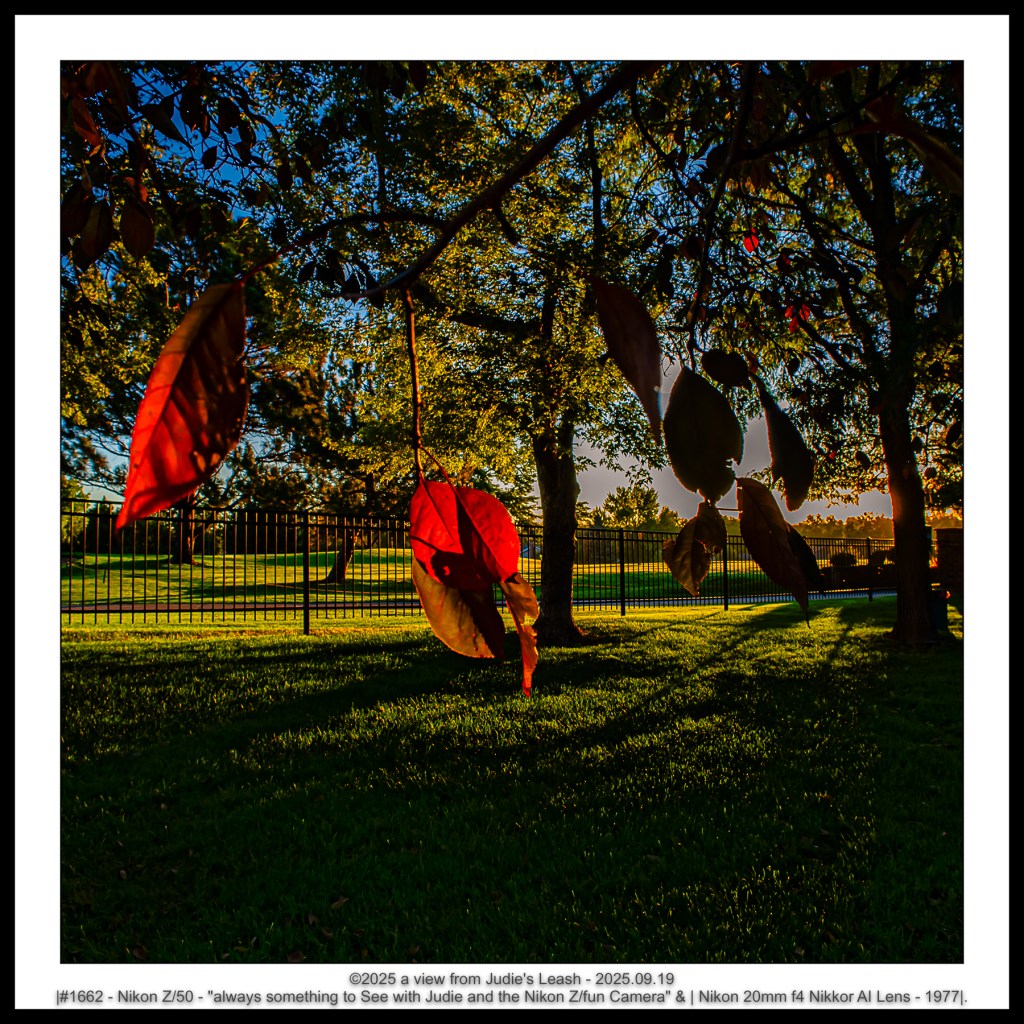
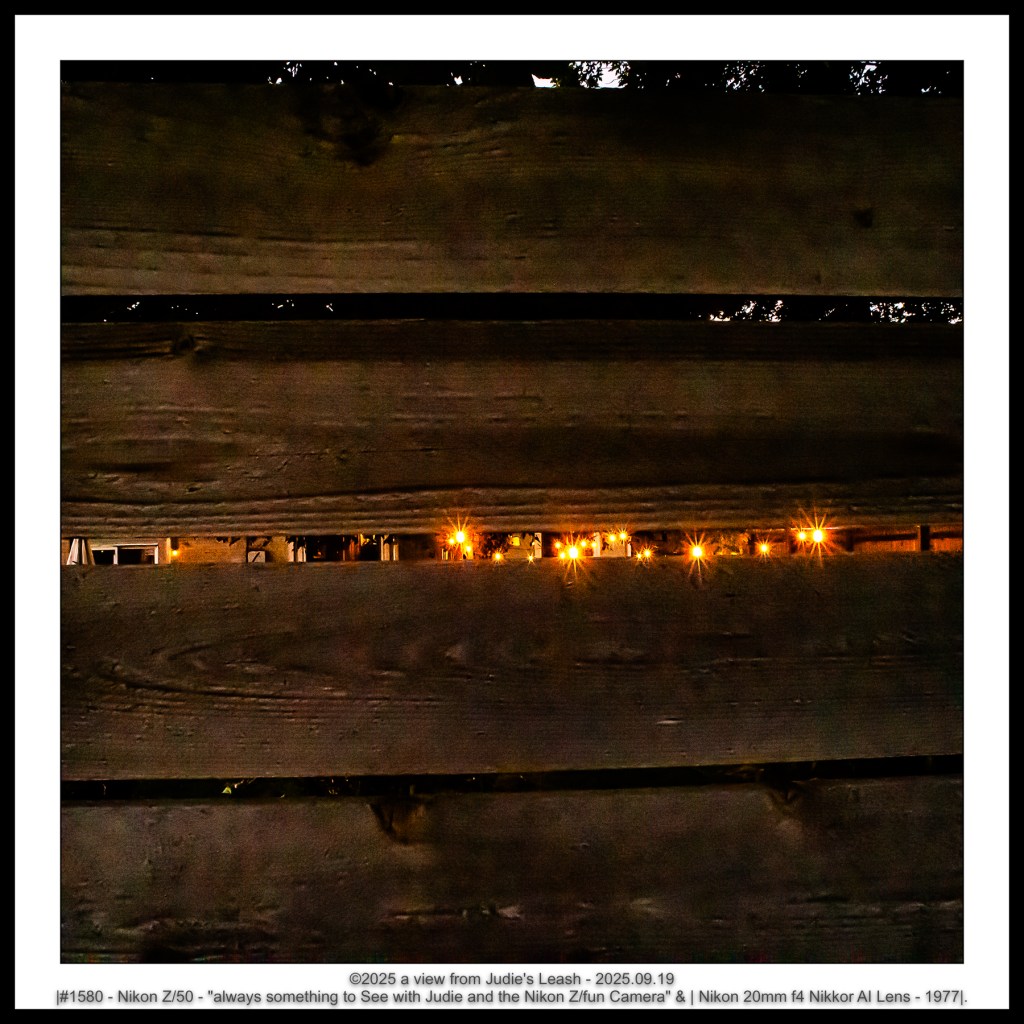
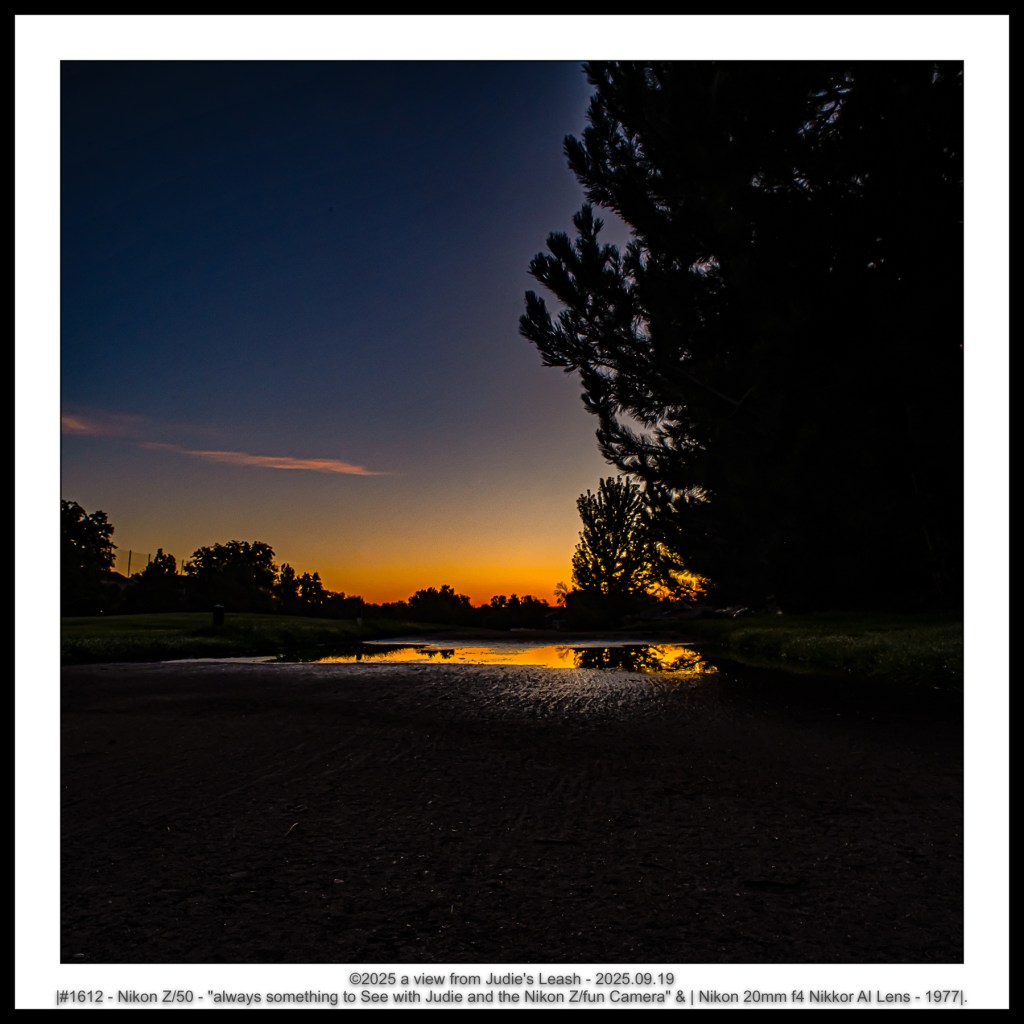
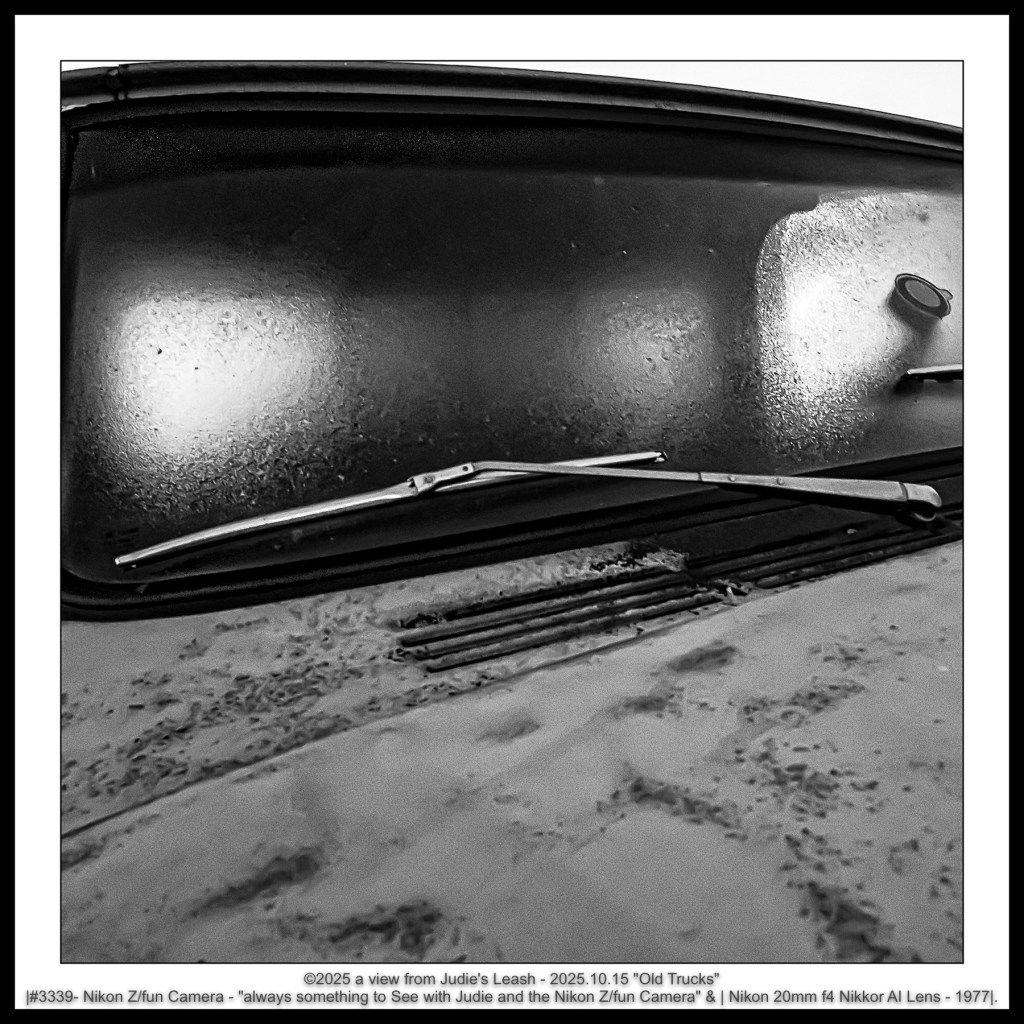
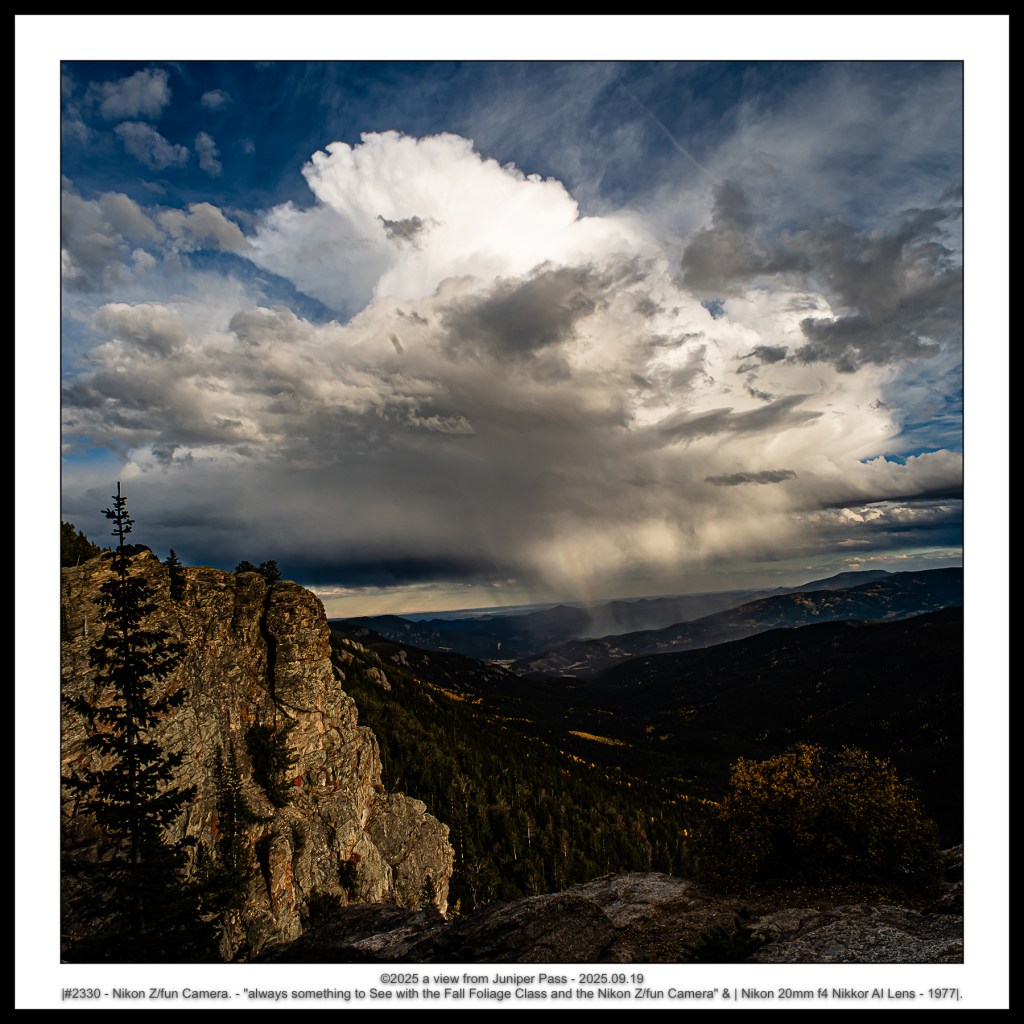
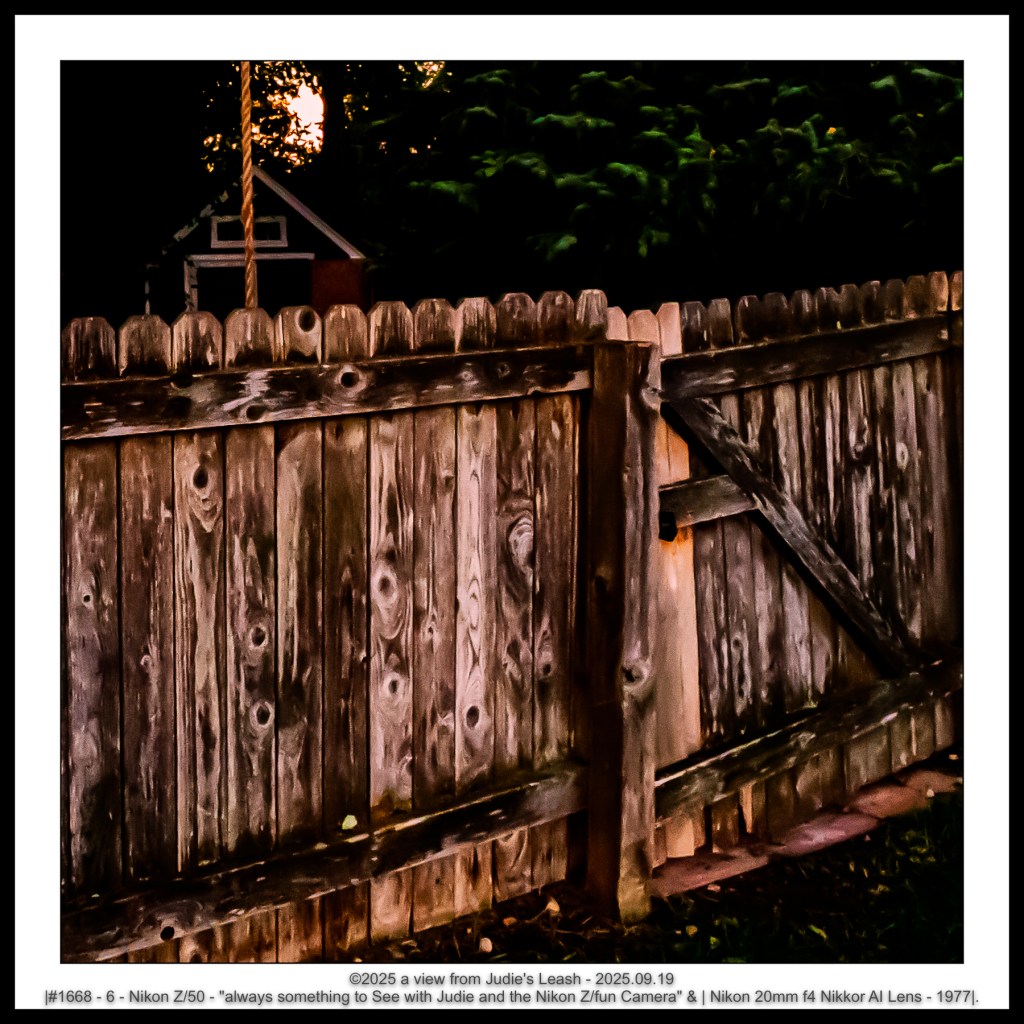
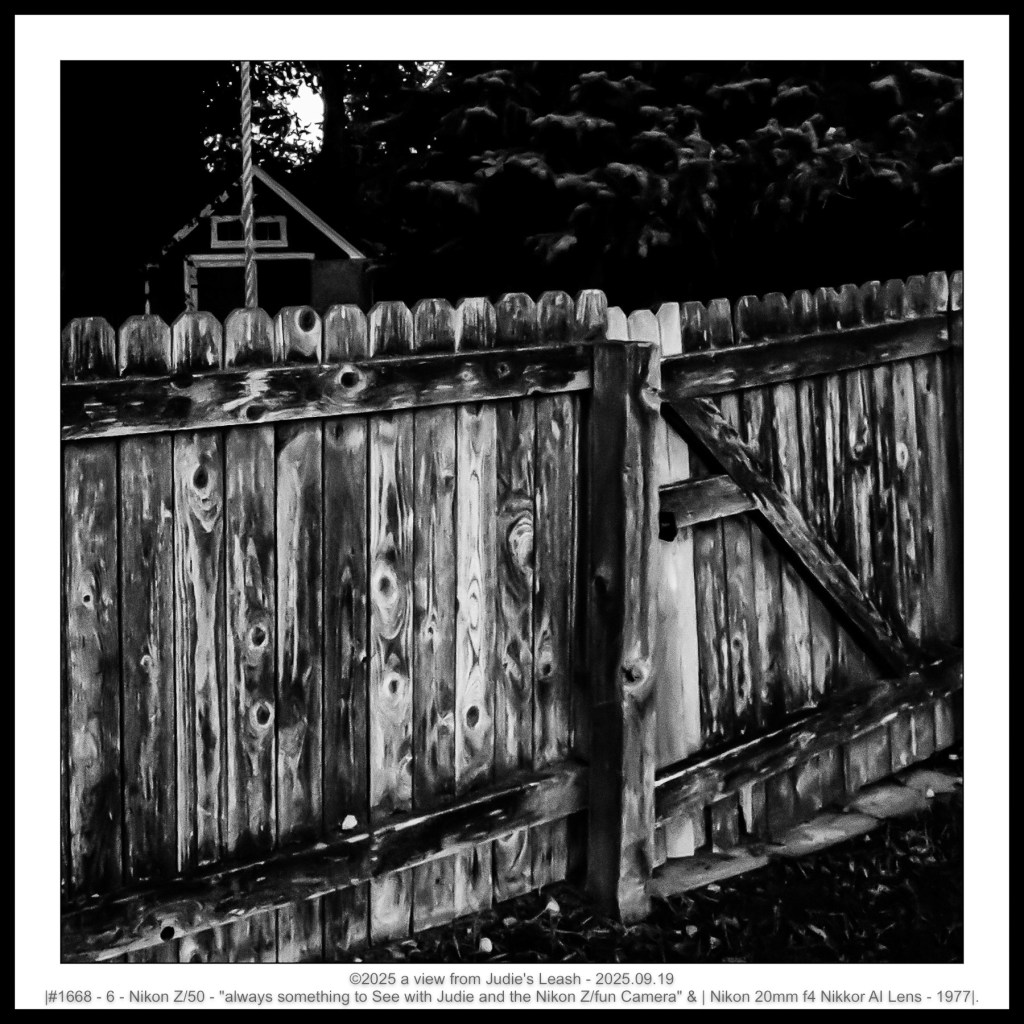
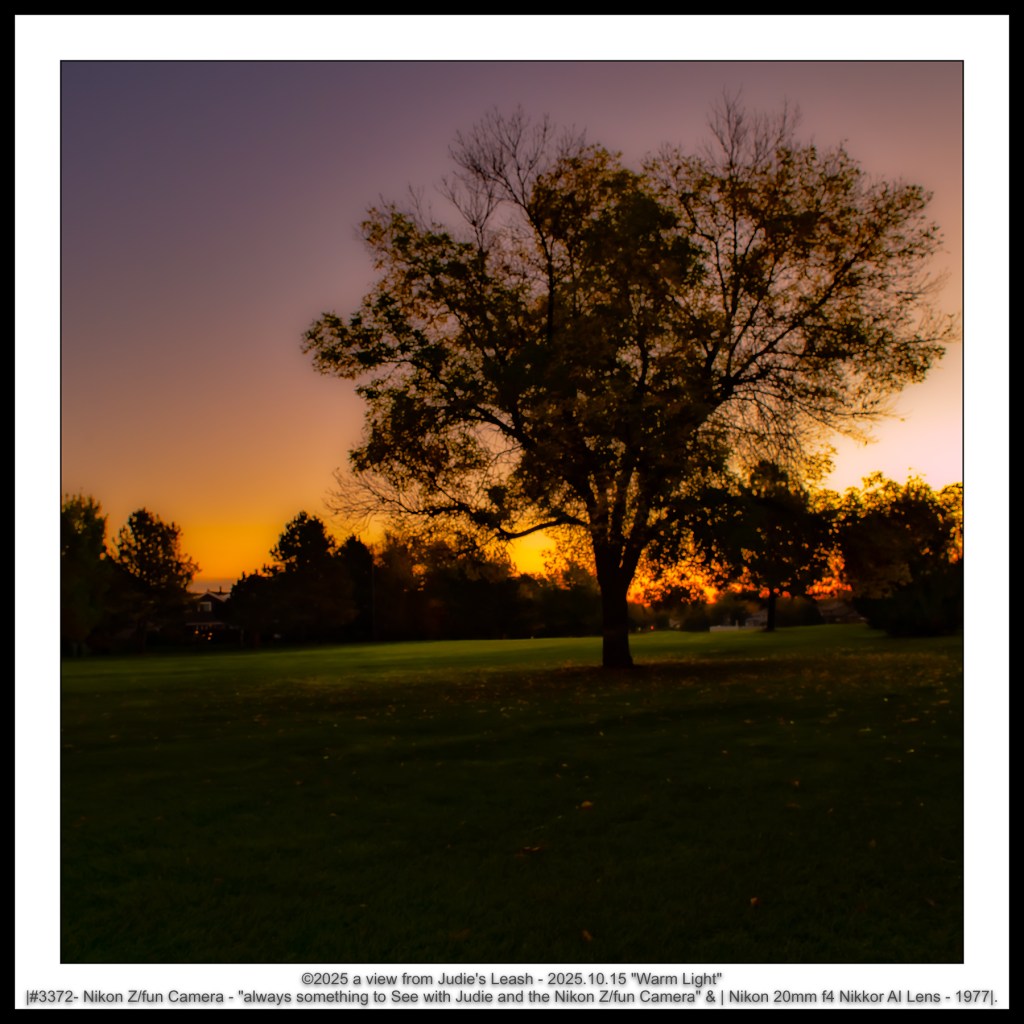
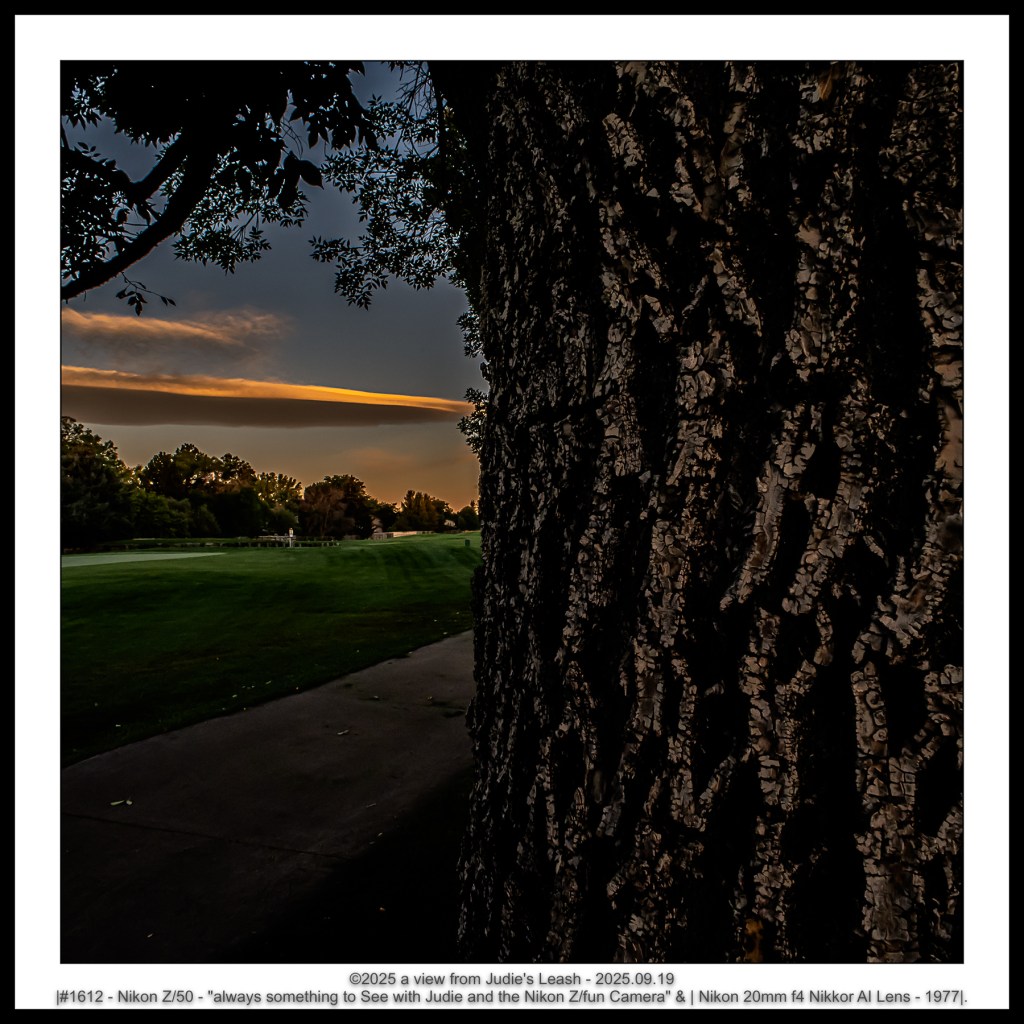
The images below were taken with the AI Nikkor 20mm f/4 using both the Nikon Z/F and Nikon Z/50 cameras and FTZ adapters I & II.
Each file was first processed in Lightroom for initial tonal balance and exposure adjustments, then refined using the NIK Collection by DxO—specifically Viveza or Silver Efex Pro via Adobe Photoshop.
The majority of the photographs belong to my ongoing series A View from Judie’s Leash, a ground-level exploration of everyday perspectives through my pug’s world. Others come from my travels and photography classes throughout Colorado, including the annual fall foliage workshop in Evergreen.
Using the NIK Collection adds a powerful finishing layer to each image.
Viveza allows for precise, localized color and tone adjustments without masking, helping enhance subtle hues, textures, and the natural light that defines Colorado’s landscapes.
Silver Efex Pro, on the other hand, transforms color images into expressive black-and-white works with film-like contrast, deep tonal range, and rich texture—capturing mood and detail in a way that complements the classic rendering of the vintage Nikkor 20mm lens.








 viewfromthehandlebars.com