Elements of Composition
Primary Subject – Clearly define the main focus of the photograph so the viewer knows where to look first.
Secondary Subject – Add a supporting element that provides context, balance, or visual interest to the main subject.
In photography, we as photographers are always searching for the proper subject.
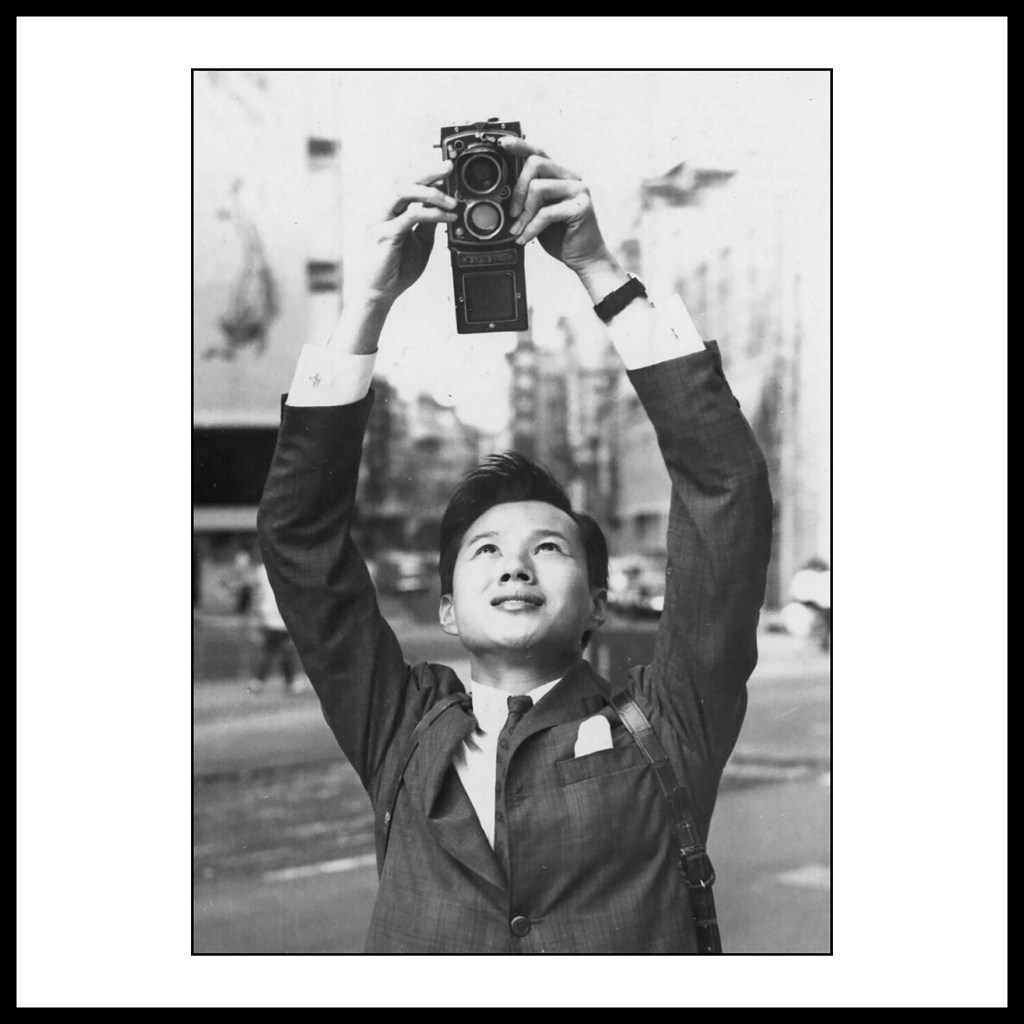
Fan Ho (pictured above) expressed this distinction beautifully:
“Writers and painters can rely on ‘memory’ to create, but photographers simply cannot photograph ‘memory’ and must therefore seize the moment.” – Fan Ho
This thought perfectly captures his philosophy. Unlike other artists who can build or reconstruct from memory, the photographer’s work depends on immediacy — the ability to recognize and capture the decisive moment before it vanishes forever.
First, Look carefully for the subject.
The subject is the main focus of a photograph — the element that draws the viewer’s attention first and defines the story of the image.
The sub-subject is secondary, supporting the main subject by adding balance, context, or contrast.
While the subject provides clarity and purpose, the sub-subject enriches the frame with depth and relationships.
Together, they create harmony and guide the viewer’s eye through the composition.
Fan Ho 1954 “As Evening Hurries By”
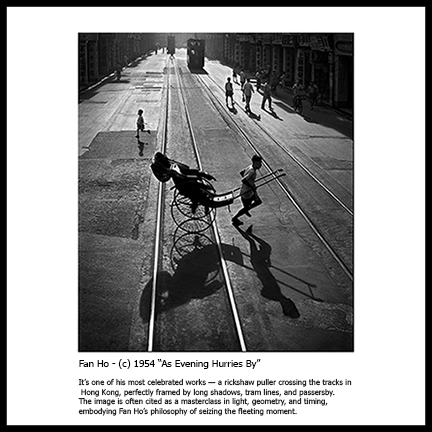
In Fan Ho’s “As Evening Hurries By” (1954), the primary subject is the rickshaw puller caught mid-stride, his body and shadow stretched across the rails, symbolizing human endurance and rhythm against the city’s geometry. The sub-subject emerges in the supporting figures—pedestrians, cyclists, and the distant tram—who add context and scale, reminding us that this is not just one man’s story but part of Hong Kong’s collective daily life. Secondary compositional elements amplify this relationship: the leading lines of the tram tracks guide the eye directly to the rickshaw and then into the depth of the frame; the background architecture and signage ground the scene in place and time without overpowering it; the foreground emptiness provides space for motion and anticipation; and most importantly, the dramatic interplay of light and shadow isolates the rickshaw puller while echoing his form in the ground’s silhouette. Together, these elements create a layered composition in which subject and sub-subject interact seamlessly, offering both immediacy and narrative depth.

 viewfromthehandlebars.com