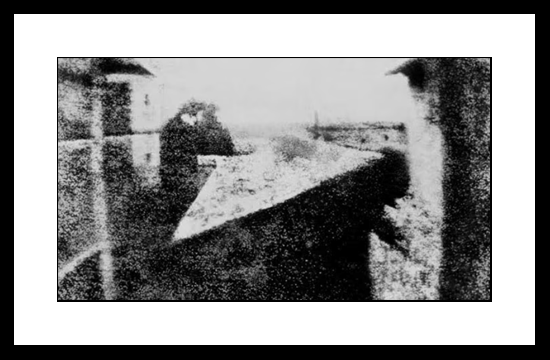
View from the Window at Le Gras – (French: Point de vue du Gras) is the oldest surviving photograph. It was created by French inventor Nicéphore Niépce between June 4 and July 18, 1827, in Saint-Loup-de-Varennes, France, and shows parts of the buildings and surrounding countryside of his estate, Le Gras, as seen from a high window.
The image was created by heliography, a process which Niépce had invented around 1822, and which uses the hardening of bitumen in light to record an image after washing off the remaining unhardened material.
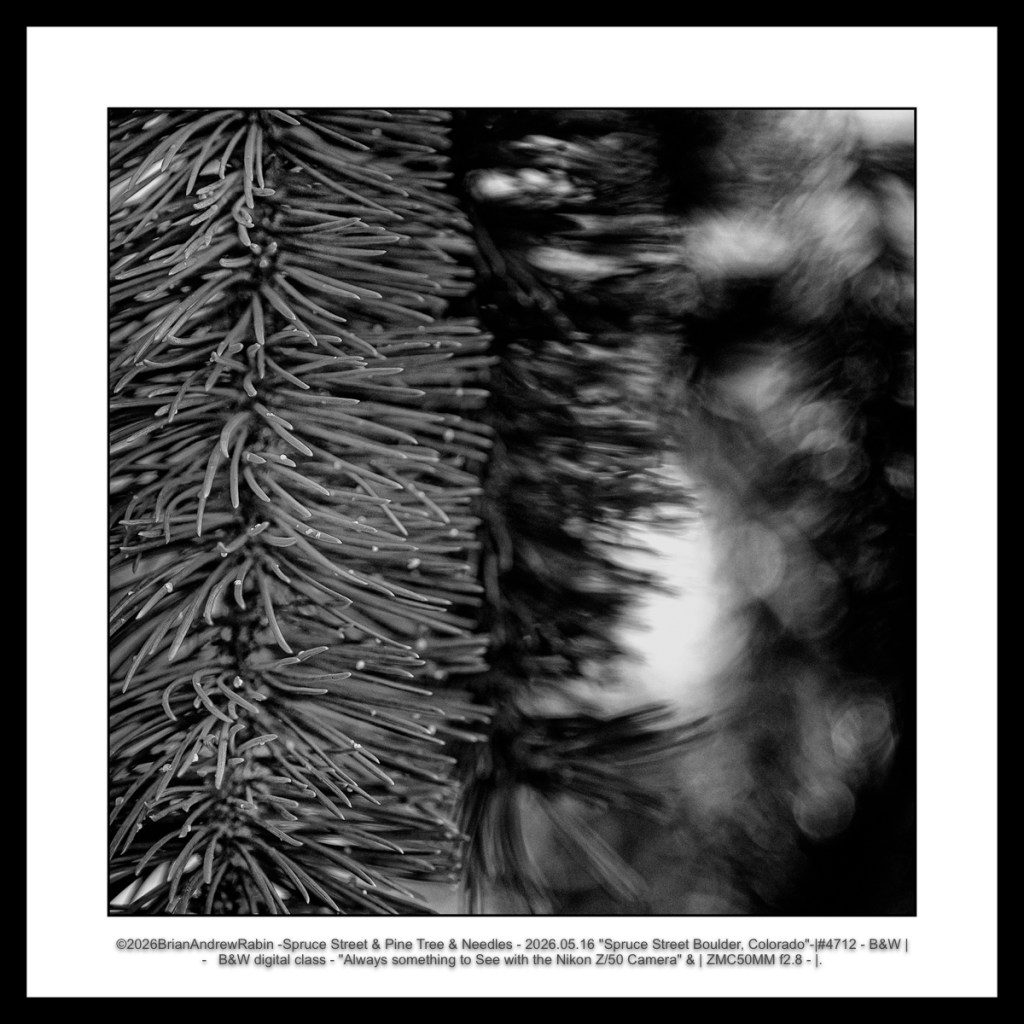
2026.05. 18 – A quiet Saturday morning in Boulder, walking Spruce Street with a small group of photography students, this was my annual Black and White Digital photography class walk.
Once again, dispensing my usual gibberish about light and shadow, depth of field and composition — the kind of nonsense I’ve been talking for the better part of 35 years. This year’s addition was the theme of you don’t have to go far to see beauty.
For the past 25 years I have been living in the most beautiful state in the county and selling camera gear to people who have been traveling to the most exotic countries in the world. During the Covid pandemic, I realized the beauty is place you inhabit not the one you are seeking to find.
So,open your eyes and see what is in front of you.
The day’s photographic canvas was the eclectic Spruce Street neighborhood between Campbell Robertson Park and 9th Street, one of my favorite Boulder neighborhoods to walk and photograph — a quiet contrast to Pearl Street, a block away.
In tow, I had the Nikon Z50 and the MC 50mm macro lens. I wasn’t after the wide view of the neighborhood. I was pressing close, looking for the world inside the world.
Looking at the photograph, Spruce Street & Pine Tree & Needles, I can still feel what I felt looking thru the viewfinder — watching the image shift and breathe as I moved the aperture from a high number down to f/3.3, the bokeh growing more buttery with each stop as the pine needles sharpened into focus.
It was the perfect moment to return a student question from earlier about shooting in B&W mode versus Color mode, and as I showed them the final image, I reviewed Ansel Adams’ idea of pre-visualization and his thoughts on how the lens sees differently than the eye, and the brain.
The image that emerged from that morning, a single branch held sharp against a background that simply surrenders, the right half of the frame dissolving into soft grey pools of bokeh while the needles on the left hold their ground with almost architectural precision, the whole frame quiet and still, carrying the mood of that morning with it.
2026.05.19
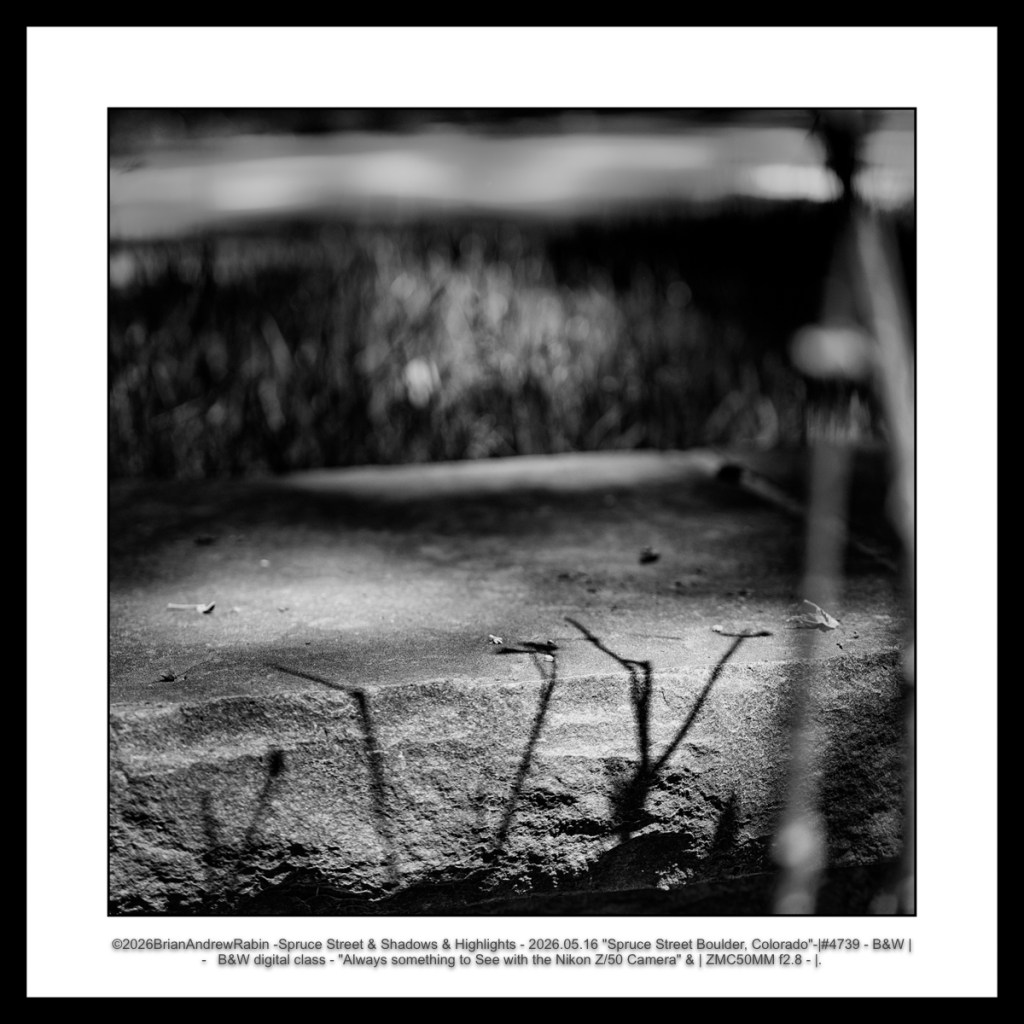
This is another image from the same walk — Spruce Street & Shadows & Highlights.
I was thinking about it this morning while walking Judie — somewhere between her sniffing the neighbor’s hedge and pulling toward a squirrel she had no chance of catching, and an unexpected encounter with a leashed stray dog wandering without its human, my mind drifted to an old question. One that photographers, writers, and philosophers have been wrestling with for as long as there have been cameras:
Why do we take pictures?
A lot has been written on the subject. Three books keep coming back to me.
Susan Sontag’s On Photography argues that photographs don’t simply capture reality — they interpret and reshape it. She was one of the first to seriously examine photography as a cultural and political force, and her central worry was that the flood of images was changing us — slowly numbing our emotional responses to the world. Photography, she believed, gives us an imaginary possession of an unreal past. It’s a heavy idea. And not an entirely comfortable one for someone who makes pictures for a living.
Robert Adams comes at it differently — and, for me, more personally. In Why People Photograph, he writes from the inside, from the experience of someone who actually makes pictures. His answer is quiet and considered: photographers are drawn to the medium out of a need to bear witness. To affirm what is beautiful, true, and worth preserving. Adams insists that photography, at its best, is an act of gratitude. I’ve thought about that a lot on the gravel roads of Nine Hills, camera in the handlebar bag, chasing light I may or may not find.
And then there’s Roland Barthes. I just started Camera Lucida, and I’m already underlining things. Barthes wrote it in grief — after his mother died — searching through photographs for some trace of her. He gives us two ideas that feel almost immediately true: the studium, the general cultural meaning we bring to an image, and the punctum — that small, unexpected detail that reaches out of a photograph and stops you cold. For Barthes, photography is unique because it is proof. An irrefutable certificate that something was. That moment existed. That a person stood in a particular light, on a particular morning, and someone was there to see it.
Which brings me back to Spruce Street, and to this image.
A few things jump out immediately. The subject isn’t the stone step — it’s the shadows cast across it. Those thin, branchy lines drawn by morning light across the face of the stone are what hold the frame. The step becomes a canvas, and the real photograph is the one the sun made, not the one I made. I just happened to be there to witness it.
Which feels like exactly the right image to follow that question.
Running it through the three books:
Sontag would say this image is doing what all photographs do — turning a fleeting moment into something permanent. A shadow lasts seconds. This one now lasts forever. That’s the strange power she was writing about.
Adams would call it an act of witness. Nobody else stopped on Spruce Street that morning and saw this. I did. The stone, the light, the shadows — they were asking to be noticed. For Adams, that’s enough. That is the reason.
But it’s Barthes where this image really lands. The studium is straightforward — a stone step, morning light, a quiet Boulder neighborhood. Familiar. Legible. The punctum is those shadows. They don’t look incidental. They look deliberate — calligraphy, almost. A mark left by something alive and reaching toward light, and the light took that reaching and threw it down in sharp lines across cold stone.
That’s the detail that stops you. That’s the one that reaches out of the frame.
Which brings me back to Judie, and the stray dog, and the question that started all of this.
Dog walking and picture-taking have something in common — they both leave room for thought. And somewhere between the shadows on that stone step and the chaos that came later, I kept circling back to the same answer.
Maybe we take pictures because the world keeps leaving us notes — written in light and shadow, on stone steps and pine needles — and we want to write back.
Maybe it’s the process itself. Looking for light. Learning to see the way the camera and lens see, then calibrating that vision against what the eye and brain want. There’s a quiet satisfaction in that negotiation — one that never quite resolves, which is probably why we keep going out.
To take Adams a step further: it’s been years since I’ve watched an image breathe and come to life in a tray of developer, in a darkroom, but the pleasure of pre-visualization is still there. Seeing the finished photograph before I make it — how it will feel on the screen, on the wall — that’s part of the process too. Maybe the most important part.
Or maybe it’s simpler than all of that. I can’t play guitar. I can’t play tennis. This is the thing I do. The thing I have been doing for four and a half decades — and still enjoy, still learn from, and am fortunate enough to do. And to teach to others who enjoy it too.
Which brings me back to this morning’s walk — the one that didn’t go exactly as planned.
Near the community garden, a stray dog appeared — leash dragging, no human attached — teeth bared, furious. Coming straight at us.
I did what you do. I picked Judie up like a twenty-pound football, tucked her against my chest, and started walking backwards. Slowly. Quietly.
A neighbor with two dogs of her own, in the distance yelled go away, and the German Shepherd mix stepped back. Then forward. Then back again.
By the time I reached the intersection where three roads converge, I was done being quiet. Back off. Back off. Back off. The deep, husky voice I’ve apparently had since I first opened my mouth some fifty-odd years ago in New Jersey — that one. I kept repeating it until he listened.
The dog and I were locked in a slow, meditative standoff — him stepping forward, me stepping backward, Judie perfectly still in my arms — both of us waiting to see who’d blink first, when a man in the passenger seat of a white SUV pulled in front of me and started yelling at me to leave him alone.
He explained that he too was handicapped. That I needed to back off.
He had no idea I was talking to the dog. He must have assumed I was yelling at the man who couldn’t hold the leash — the other handicapped man.
And that’s when whatever was left of my morning composure quietly excused itself. I told the man in the car — in very clear, very specific terms — exactly what I thought of his input. It gets a little blurry after that. But the sentiment was unambiguous.
It’s the way we talk back home in New Jersey when we’re angry, afraid, passionate. No passive aggression. No subtext. Just sound — direct and unambiguous. Not unlike the noise that dog made when he came at Judie and me.
Walking back to the condo, somewhere between the community garden and our front door, I had a moment to reflect.
This morning could have turned out differently. I was lucky it turned out the way it did.
A few thoughts stay with me and will for some time.
Mind your own business until you know all the facts — all of them.
If you can’t hold the leash, you must give up the privilege of the dog.
You can take the kid out of Jersey, but you can’t take the Jersey out of the kid, I smiled.
And then, once again, my mind turned back to the question.
Maybe we take pictures because the world keeps leaving us notes — written in light and shadow, on stone steps and pine needles. On a good morning, we have that grace.
Other mornings, we are navigating life’s challenges and quietly thinking about the world we are living through and wondering about how we could do things differently when confronted with adversity.
2026.05.20
– Same walk. Same morning. Same reason I stopped.
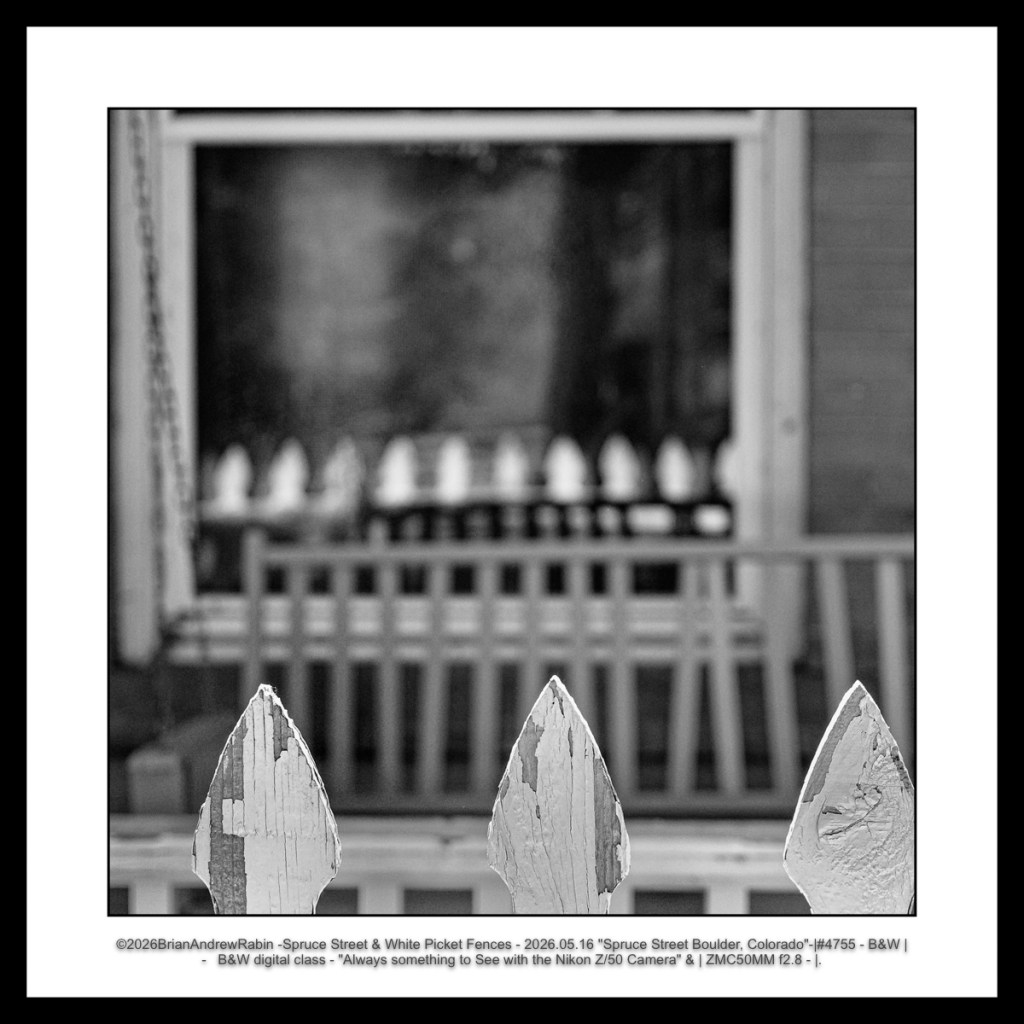
Not the fence. The paint.
There’s something about peeling paint that I can’t walk past — the way it lifts and curls and cracks, leaving these irregular maps of what the surface used to look like. It’s texture you can almost feel without touching it. And in black and white, with the Z50 and the 50mm, that texture becomes the whole story.
The white picket fence is one of those images we think we already know. We’ve seen it a thousand times — it means something before you even raise the camera. Hometown. Stability. The tidy American dream. But get close enough, and it starts telling a different story. These pickets are weathered. The paint is going. And I think that’s more interesting than a freshly painted fence ever could be.
The depth of field was intentional. I wanted those three pickets sharp — peeling and present — and everything behind them to fall away. The second fence, the porch, the window — they become atmosphere. Context without distraction. The eye goes where the texture is.
It’s the same instinct that stopped me at the stone step and the shadows. I’m not looking for the postcard. I’m looking for the thing inside the postcard that nobody bothered to photograph. The wear. The light. The detail that’s been there all along, waiting for someone to get close enough to notice it.
That’s the punctum, if we’re still running Barthes. The peeling paint. That’s what reaches out of the frame.
Not the fence. The paint.
2026.05.23
Yesterday morning continued the way the best ones do — quietly, without agenda.
Judie and I made our way out to the Lake Arbor Golf Course fairways on what turned out to be the first genuinely clear spring morning of the season. I had my NIKKOR Z MC 50mm f/2.8 with me, that trusted little macro, the one that gets down to just over half a foot from the focal plane.
For days I had been moving through the landscape looking for something worth stopping for, thinking about abstraction, thinking about black and white, thinking about how close I could get to the bristles that crown each piece of fruit along the path.
There is something that an hour like that does that nothing else can quite replicate. I felt the world go quiet in the way it rarely does anymore — aging parents, the war grinding on in Ukraine, the tremors building in Iran, and whatever is gathering on the horizon in Cuba all fell away for a little while. I often think about my niece and nephew and their peers, about the oligarchs tightening their grip on a country that owes those kids something better, about a pendulum that has swung so far in one direction it has nearly forgotten the other side exists. For sixty minutes, none of it was mine to carry.
I came home and planted a batch of organic seedlings in our community garden plots before the cold I have been fighting since last Saturday finally won the afternoon. I slept it off, or tried to — and then I woke up, because that word still means what it has always meant regardless of what the politics of the day has done to it.
After waking up, I was no, more certain of what I am dealing with.
This morning I am slower than I would like, a little fogged, the headaches leaving me to wonder whether this is a common cold, the flu, or Covid — a test later today will settle it.
I keep coming back to those bristles and that macro lens and what I might have found if I had gotten just a few inches closer, because some mornings leave you with more questions than photographs, and those tend to be the ones worth writing about.
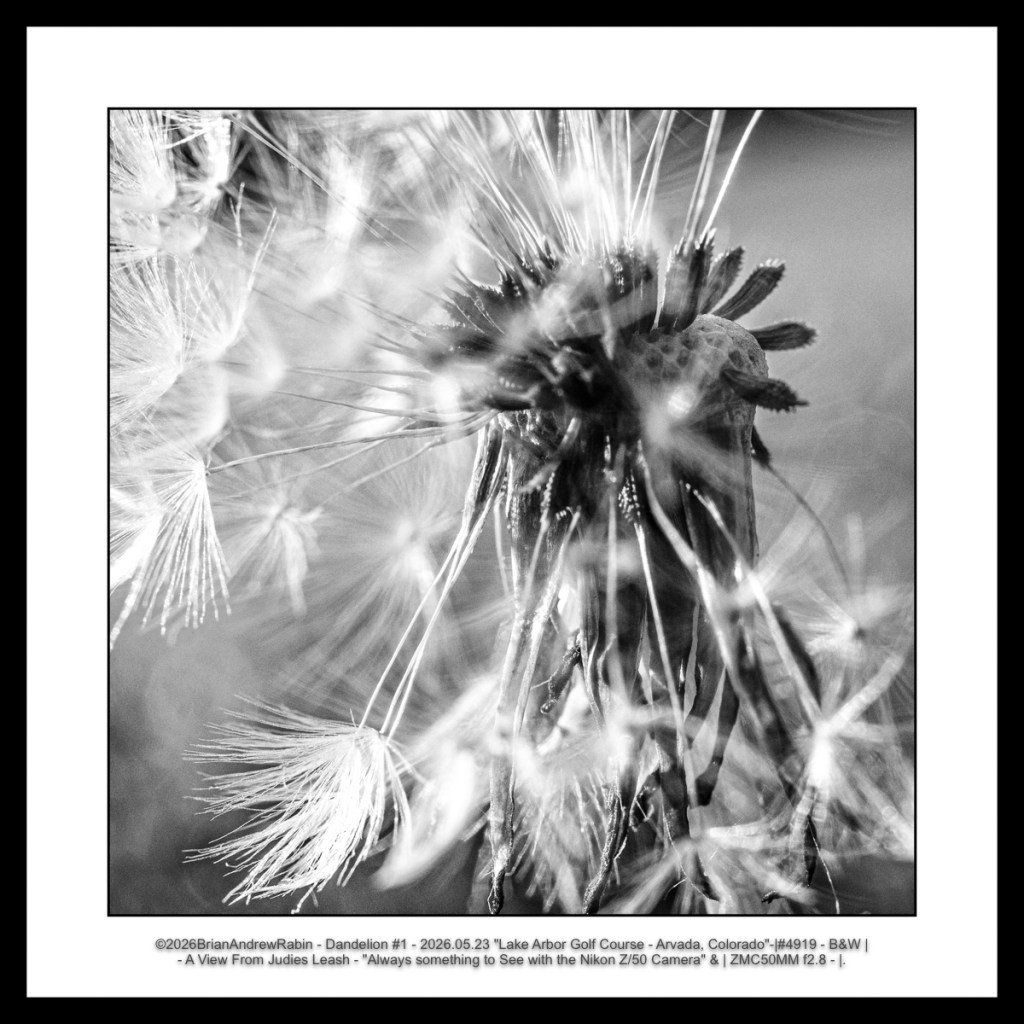
Dandelion #1 –
Yesterday I really focused on the lens and the dandelion.
The exhausted seed head at the center of the frame reads less like a weed and more like a crown — gnarled, textured, almost medieval — while the remaining seeds dissolve into soft light at the edges, caught somewhere between structure and disappearance. The black and white conversion strips away any botanical literalness and lets the tonal contrast do the heavy lifting, the blown whites of the wispy filaments pulling hard against the dark, dense core.
It is the kind of image where the closer you look, the less certain you are of what you are looking at, which is exactly what I was hoping the macro would do.
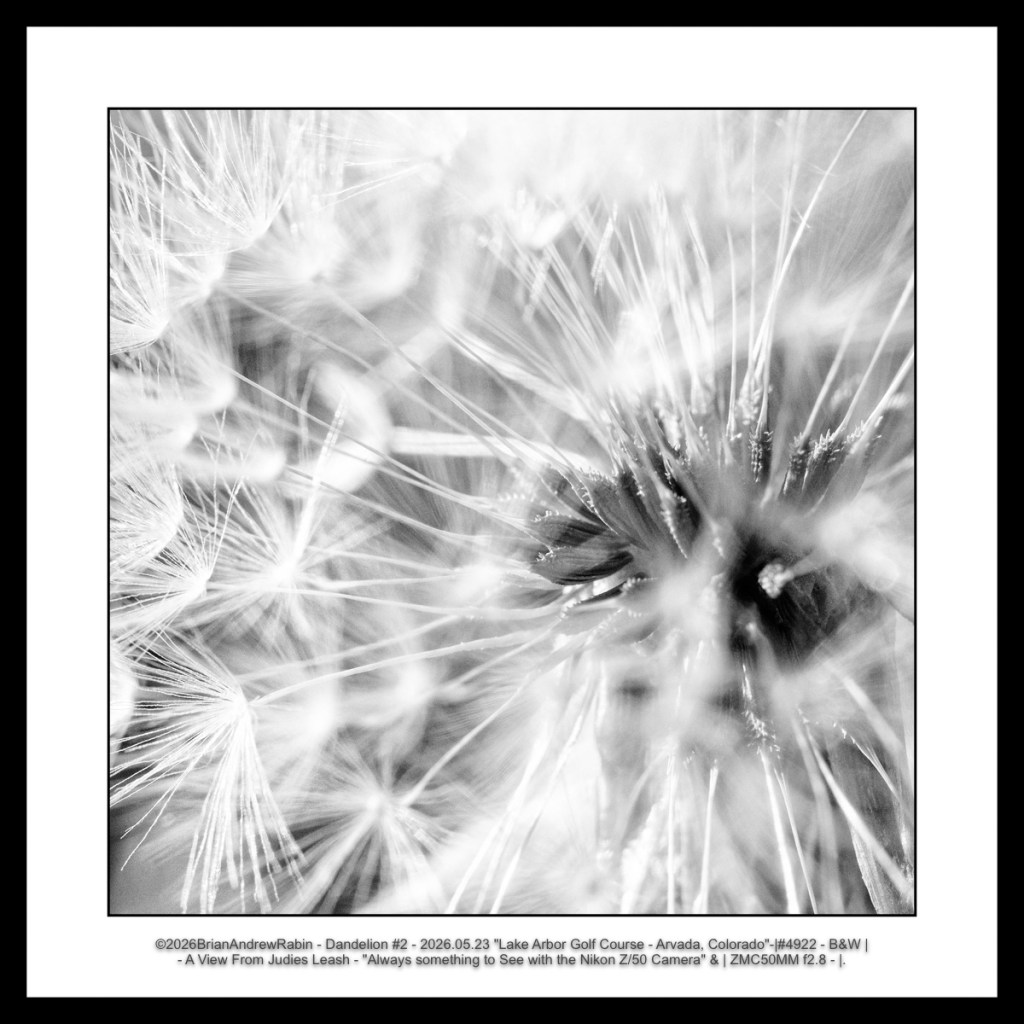
Dandelion # 2 –
The bristles are telling a different story than the ones in #1, and it took me a moment to understand what that story was. In #1 the bristles are survivors — clinging, dense, radiating outward from that dark core like they are holding something together against its will.
In #2 they have surrendered to the light, each filament tracing its own long, clean line across the frame, the individual strands visible from base to tip in a way that feels almost architectural, like a blueprint for something that is about to cease to exist. There is a stillness to them that #1 never allows — no drama, no tension between dark and light, just the quiet geometry of dispersal, each bristle doing the only thing it was ever meant to do.
If #1 is the dandelion holding on, #2 is the dandelion letting go.
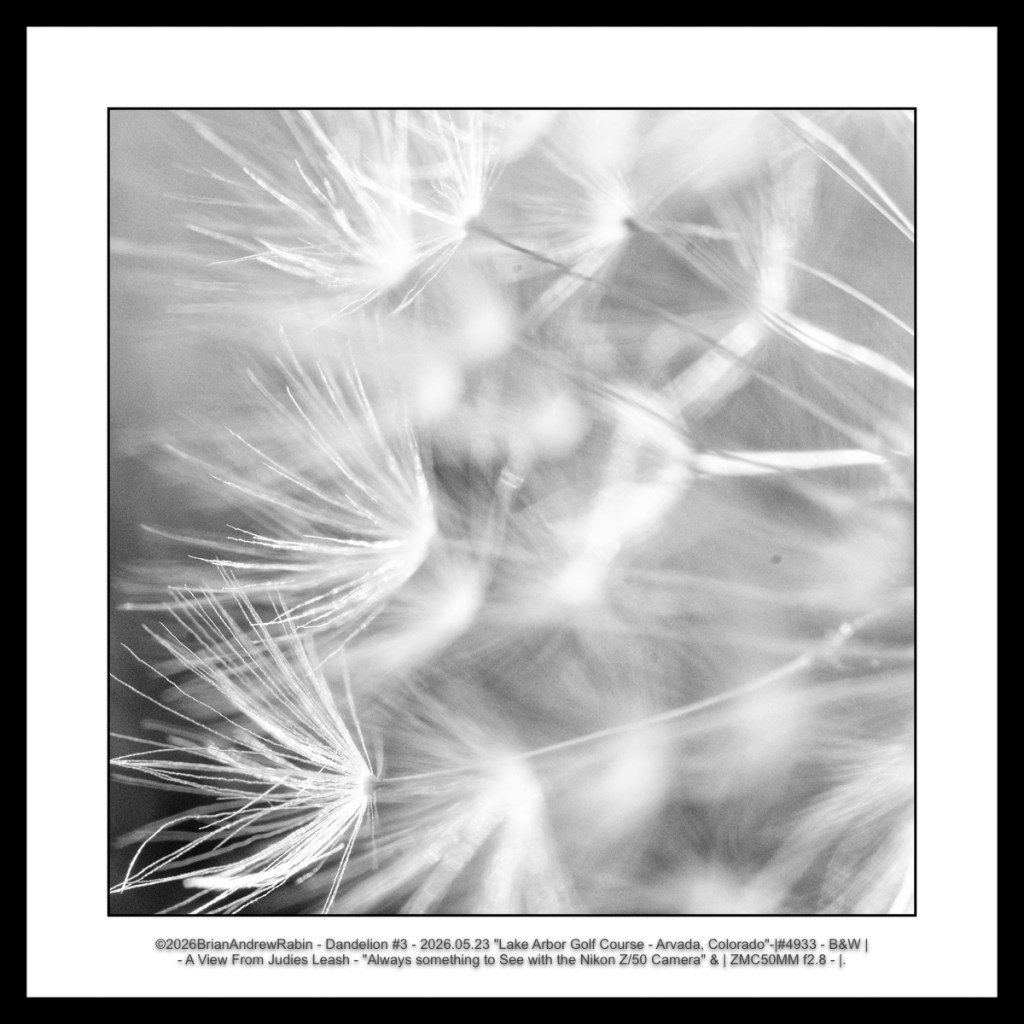
Dandelion #3 –
If #1 is the dandelion holding on and #2 is the dandelion letting go, then #3 is the dandelion already gone — or nearly so. The frame is almost entirely soft, the background a pale mid-tone wash of out-of-focus filaments layered over one another like ghost impressions, the whole image existing somewhere between a photograph and a memory.
What saves it from pure abstraction is the single seed cluster in the lower left corner, sharp and fully resolved, its individual bristles fanning outward with a precision that makes everything else in the frame feel like it is receding from that one fixed point. That sharp cluster is doing all the heavy lifting — without it the image floats away entirely, but with it you have an anchor, a last clear thing before the dissolution takes over. It is the most minimal of the three, the quietest, and in some ways the most honest about what a dandelion actually is — not a weed, not a crown, but a delivery system for disappearance, doing its work one bristle at a time.
7.16.13 – Old Memories –
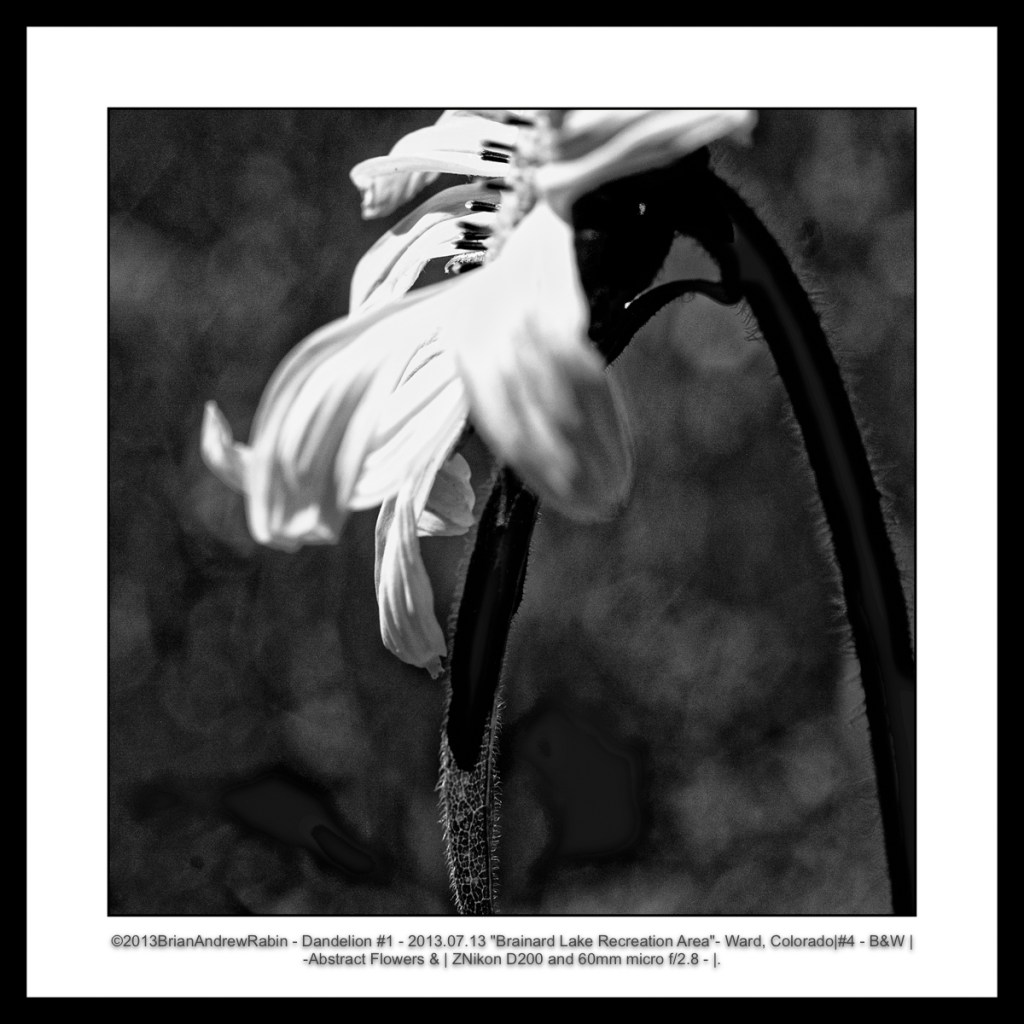
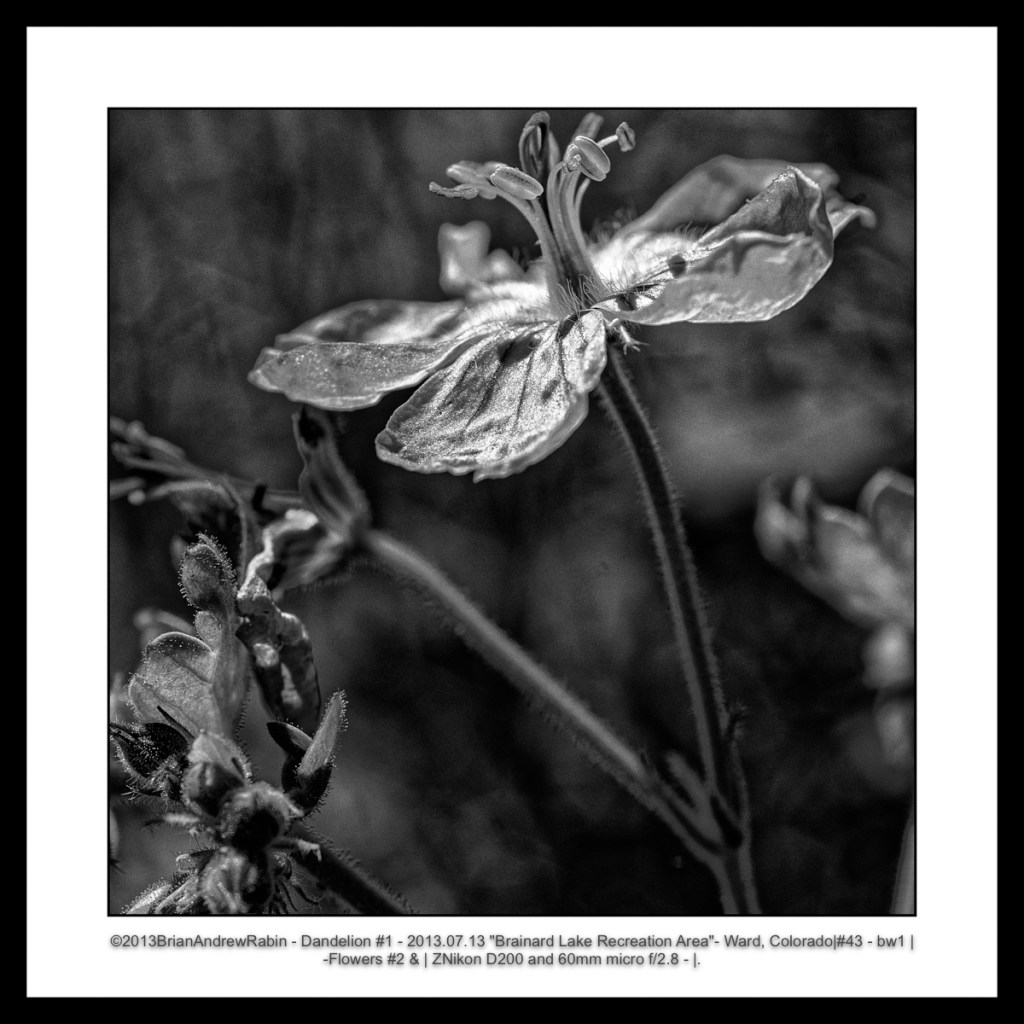
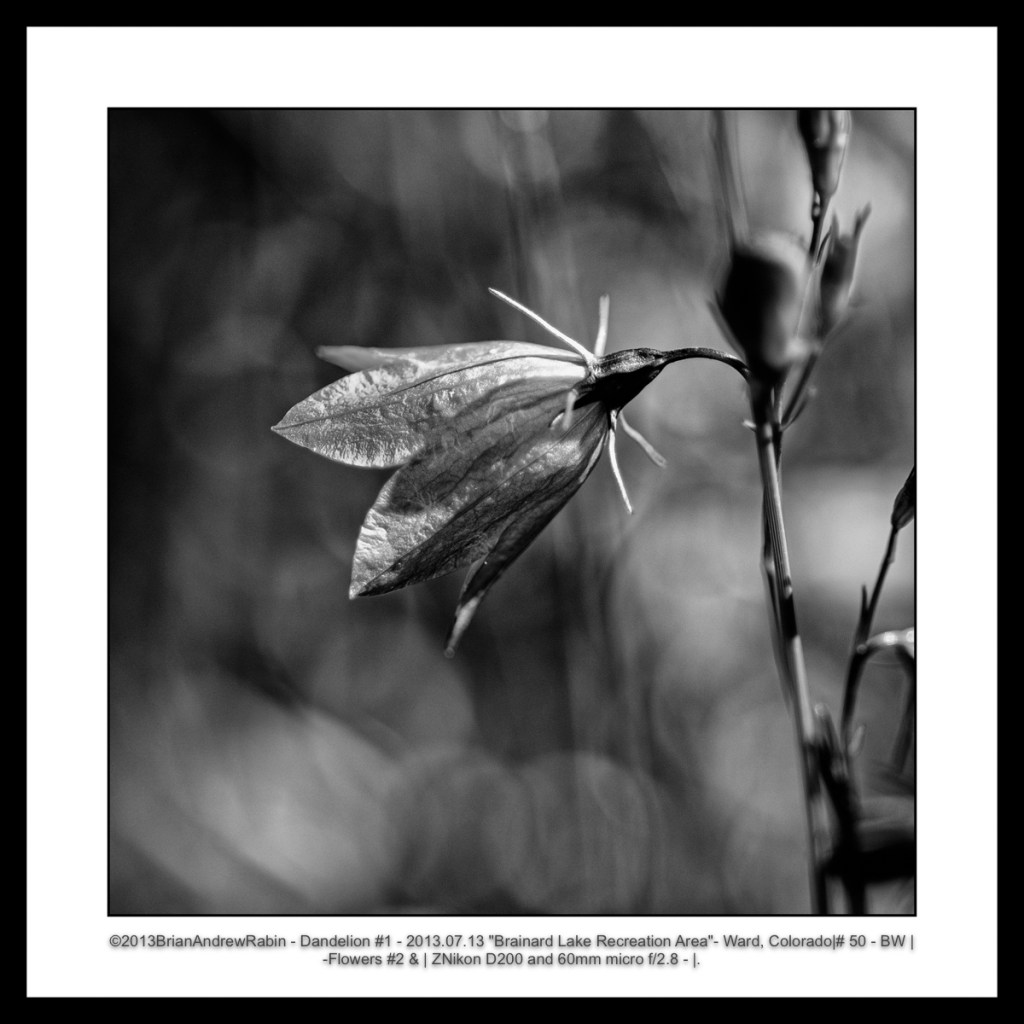
These images Ward, Colorado. July 13, 2013.
These images were taken about 13 years ago and still on a memory card last week that I found while getting ready to sell two Nikon D200’s that I have not used in over a decade.
Looking over image, Dandelion #1, I first realize it was misnamed (late night editing) – it should be called Wildflower #1.
This wildflower was bowing under its own weight when I found it at Brainard Lake. There’s an elegance to that — the way it leans against that dark, softly textured background. I was shooting with a 60mm micro and what it gave me were details I honestly wasn’t expecting: the cracked skin at the base of the stem, the fine hairs catching light, the petals falling open like draped fabric. Something entirely ordinary becoming almost architectural.
I knew right away this one wanted to be black and white. Color would have turned it into a botanical record. Black and white made it a study in form and gravity. Those near-blown highlights at the flower head — that brightness — reads to me like a last gasp before the thing goes fully to seed.
If you know Barthes, you know studium and punctum. The studium here is straightforward enough — a wildflower, late in its cycle, macro work in the mountains. But my punctum, the thing that stops me every time I look at this print, is that cracked, almost reptilian texture at the base of the stem. It doesn’t belong to the same world as those soft petals above it. That tension is what keeps my eye moving. That’s what made me stop and get low in the first place.
05.28.26 – Deconstructed and Decomposing Bicycle — Writers Square, Denver
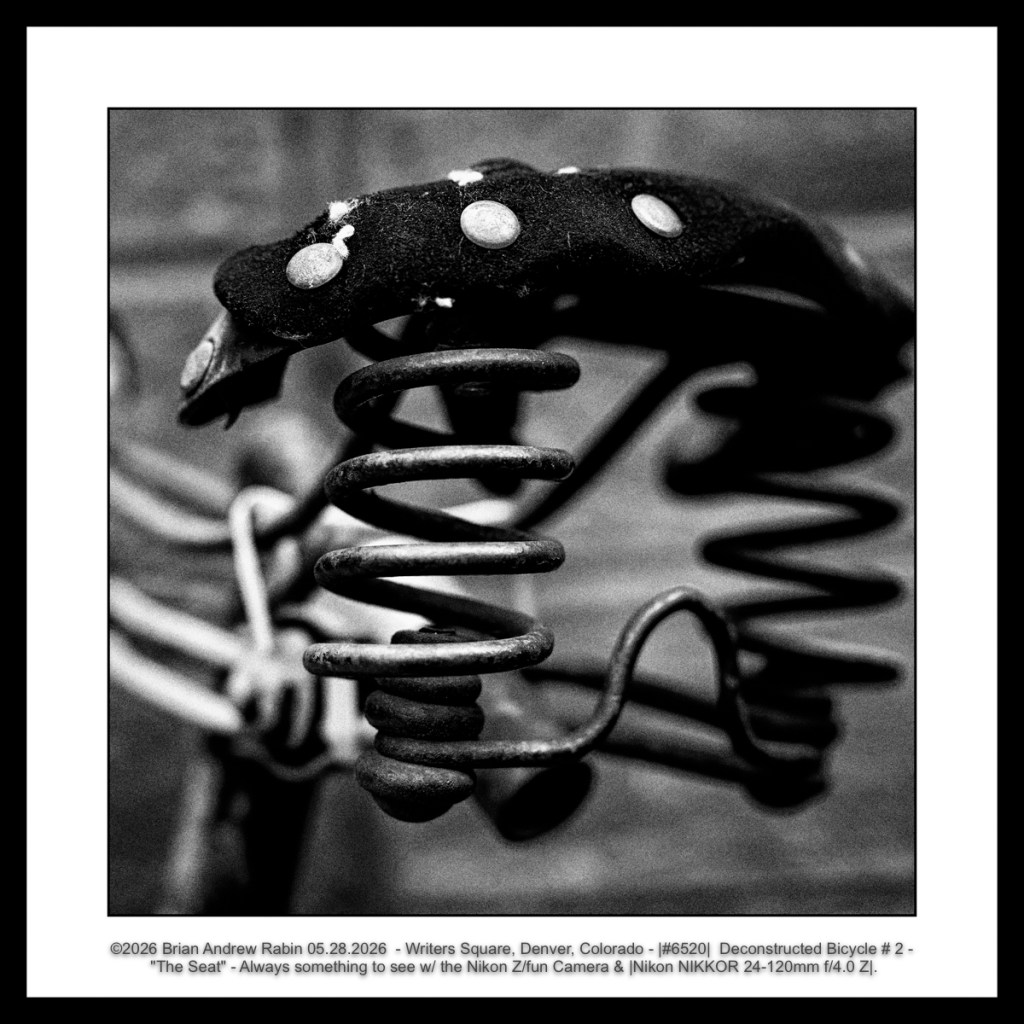
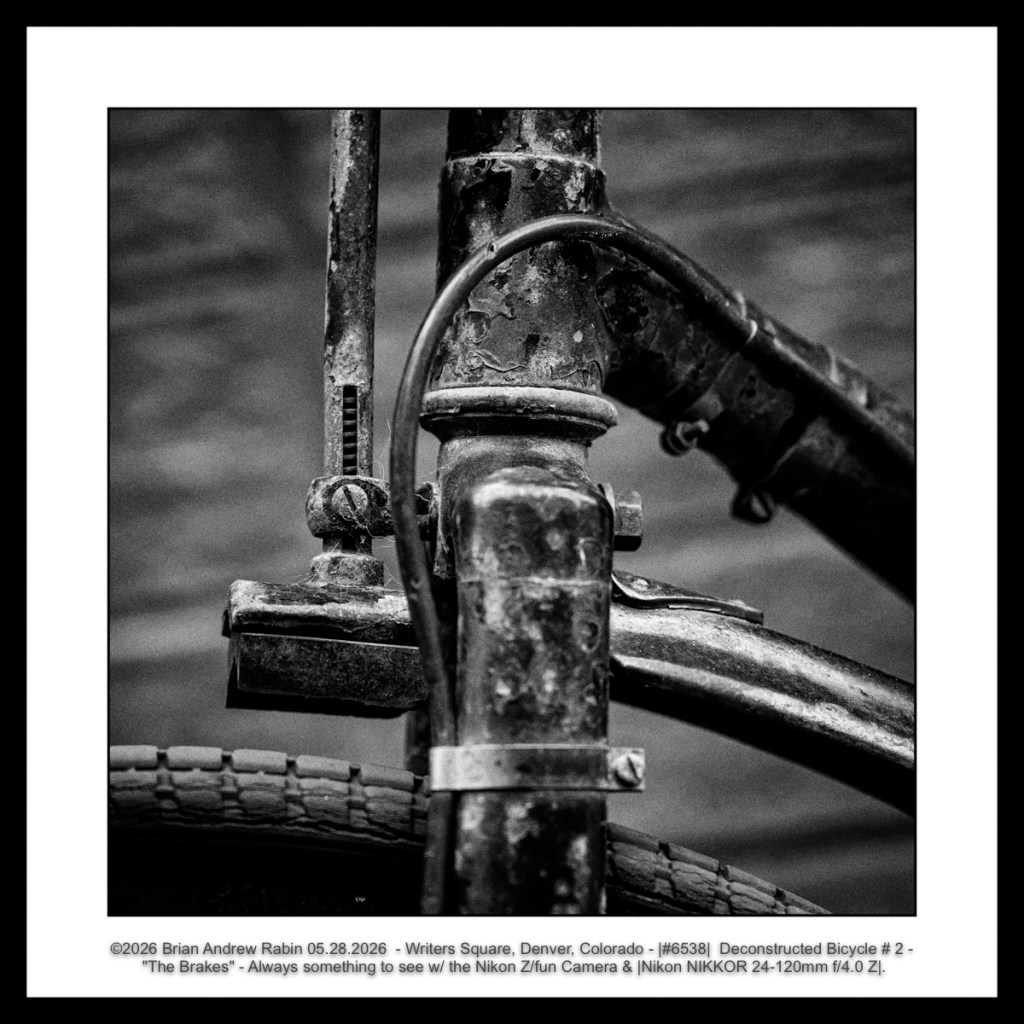
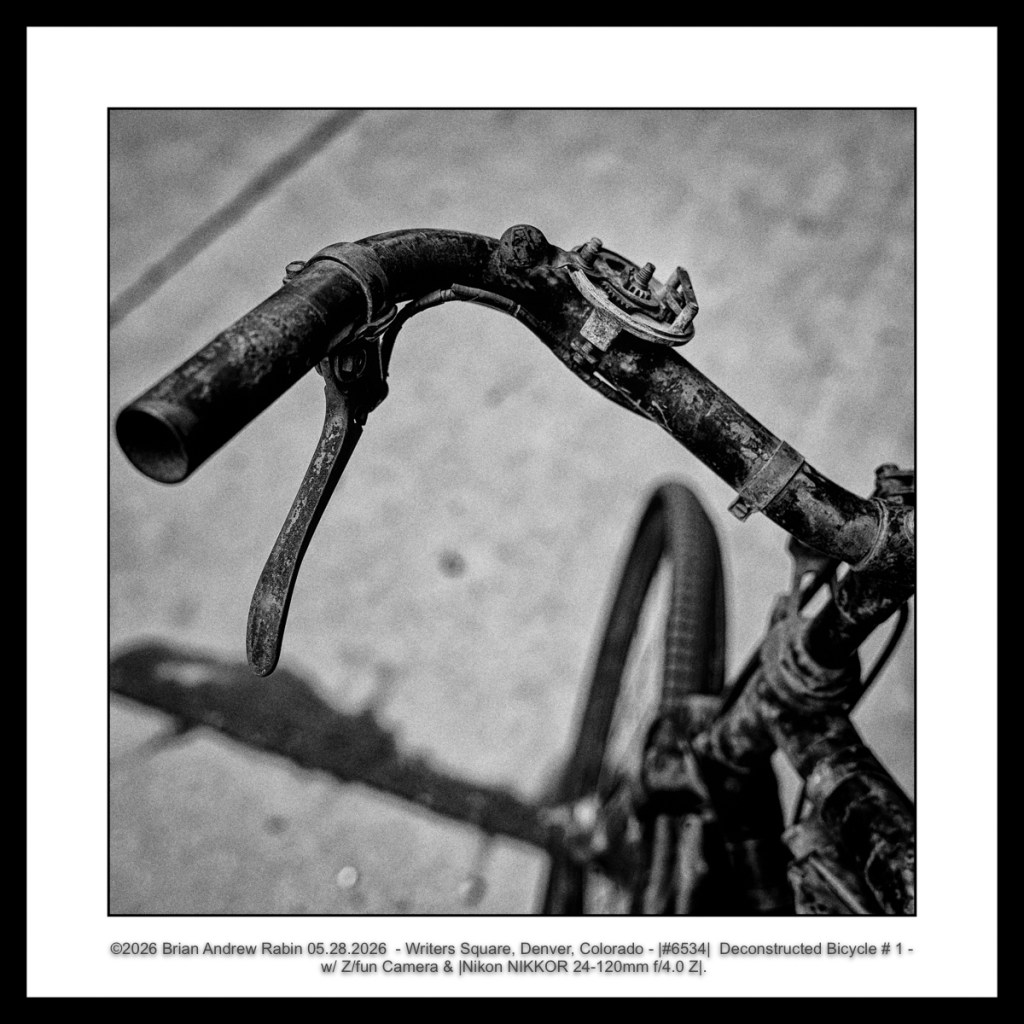
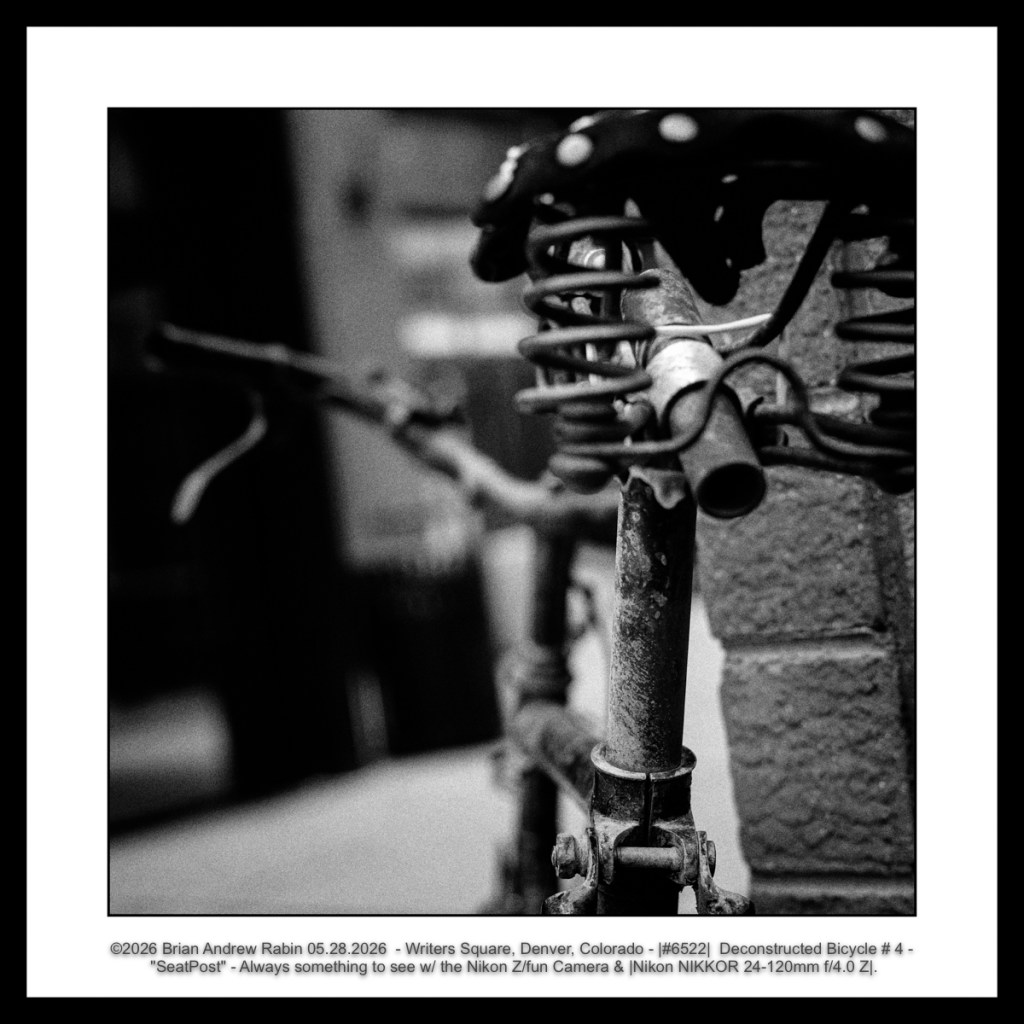
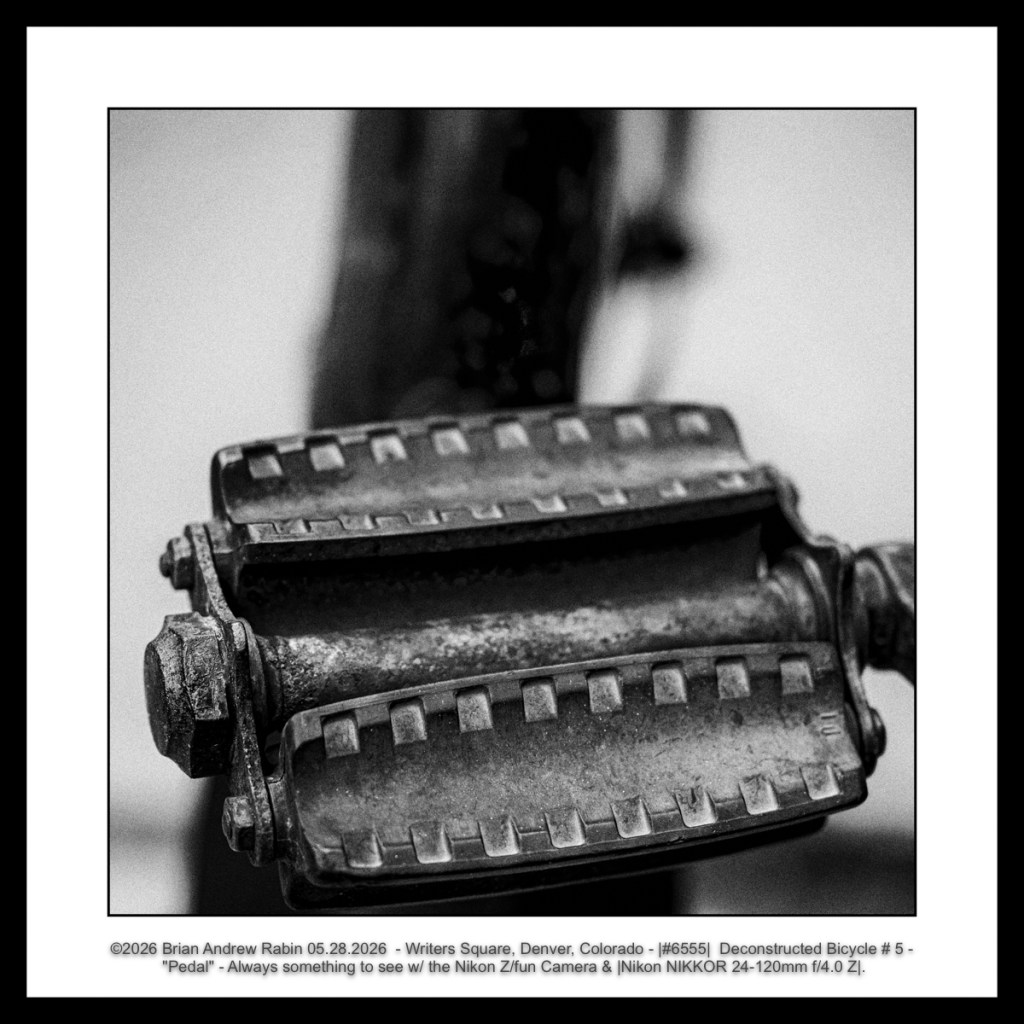
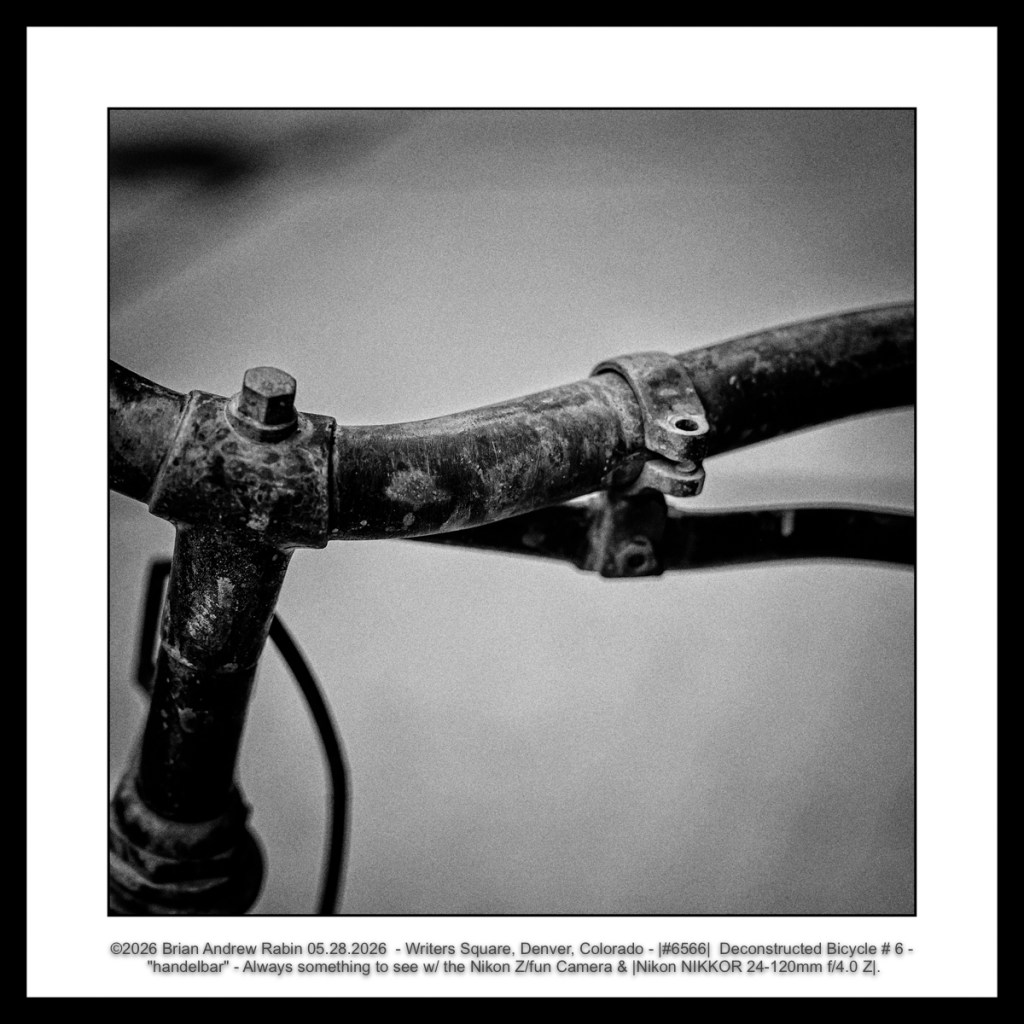
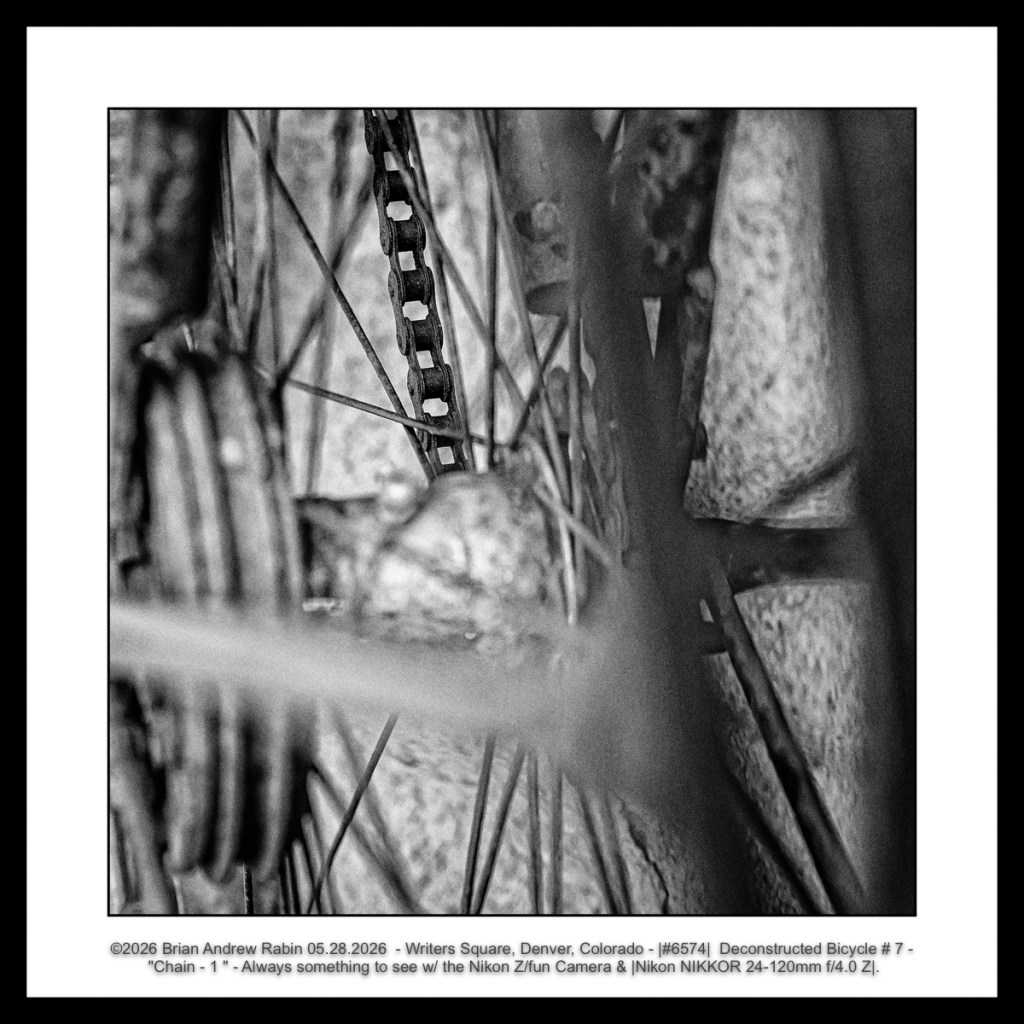
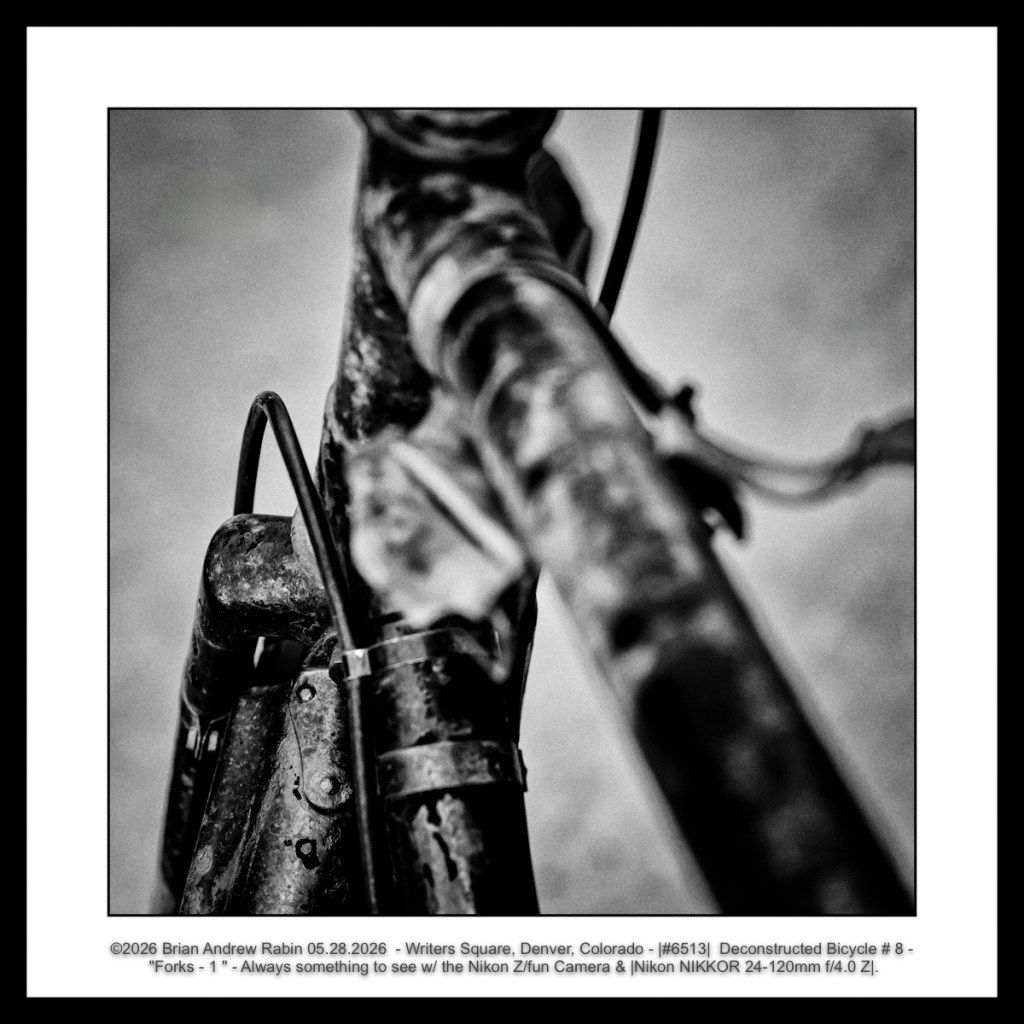
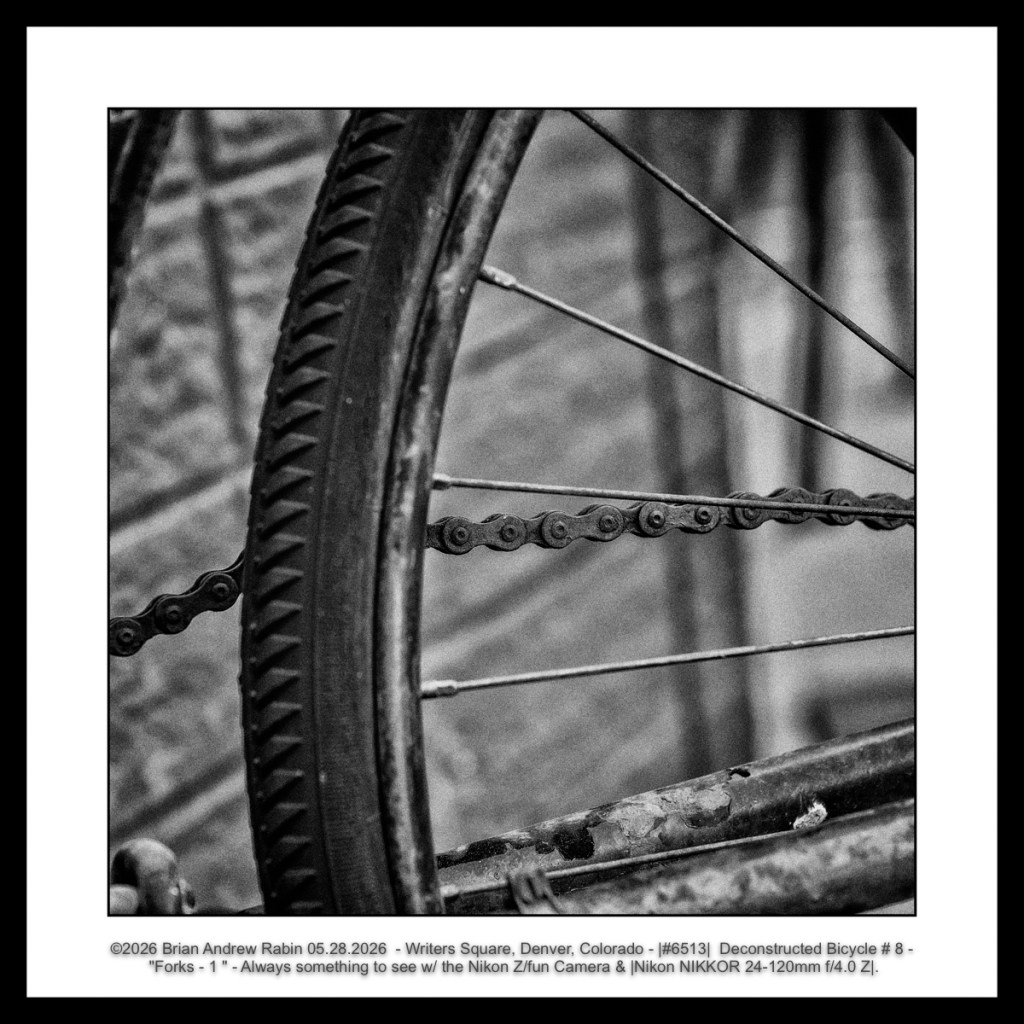
A bicycle, chained and forgotten, can become a kind of clock if you let it. I’ve photographed this same iron horse across fourteen years, in different seasons, different company, different versions of myself — and somewhere in the rust and the missing seat, time keeps a record I can’t quite read any other way. These nine images aren’t really about a bicycle at all. They’re about what accumulates, what disappears, and what gets left standing when everything else moves on.
I think about the first time I stumbled on this chained bicycle, back during one of our Doors Open Denver Street Photography lectures and photo walks that began in 2012, the year Mike’s Camera first partnered with the event. I return to this more recent encounter, fourteen years later, and notice how different the experience — and the reflection — feels now.
Over the years, the venues shifted along with everything else: that first year, lectures in the old, dilapidated Union Station; later, the Denver Post Auditorium on Colfax; and eventually, the Mike’s Camera store on the 16th Street Mall, the old Waxman camera building.
There were different people in my life back then, too. Lifelong friends who’ve since moved to other states, other countries. Coworkers who’ve moved on to other companies, other occupations, other paths entirely. Ambitions, aspirations, and ideologies have shifted too, the way mine have over these years — though not the way this old two-wheeler has, I thought, glancing at the rusty machine, decaying in place while I kept moving. Then again, maybe I’ve been standing in one place longer than I’d planned.
I remember one Doors Open Denver walk — Marc, Tim, and I found ourselves with a single guest left at our store on the 16th Street Mall, after I’d just finished a two-hour lecture on the history of street photography. I still have the last picture from that evening, the one that holds the whole night inside it whenever I look at it.
Sontag would probably say the photograph doesn’t just record that night, it replaces it — that by now, what I “remember” is largely the image itself, snow settled on that bicycle seat, and not the actual cold or the actual walk. The photograph has become the event, standing in for something that otherwise would have simply dissolved into the ordinary forgetting that happens to most evenings. Barthes, though, would be more interested in why I came back at all. He’d call this return itself a kind of punctum — not something in the frame, but something outside it: the pull of an old photograph to send you physically back to the place that made it, as if the picture were only half-finished and needed the site itself to complete it. Coming back to photograph this same rusted, decaying two-wheeler fourteen years later isn’t really about the bicycle. It’s what Barthes might call chasing the “that-has-been” a second time, hoping the place still holds some trace of who I was when I first stood there.
It was a Sunday evening, typical of a Colorado spring — a cold front moving in, a bit of moisture in the air, and the three of us thoroughly exhausted. It was day two of the weekend: five walks, five lectures, in and around the 16th Street Mall, and this was the last one — number six. One person still wanted to take a photo walk.
At the time, I was put off. How much can I give — this constant grind is unsustainable — even as my eyes and my smile said, “Sure thing, let’s go.” Being the professionals we are — and understanding that the guest’s experience always comes first — we headed out for one final walk.
Looking back, I’m glad we took it. It was wonderful — relaxing, refreshing.
We started at the top of the 16th Street Mall, by the Burger King, a corner where a few people without homes were quietly gathered, doing what they could to get through the evening. Looking back now, and considering today’s homelessness crisis, I find myself thinking about how this is just one symptom of a larger structural problem — what happens in a one-to-many economy, where a handful of companies and the billionaires who run them concentrate wealth at a scale that displaces countless workers along the way.
One person at the top, many pushed out at the bottom. My mind wanders, even as I write this — how can this possibly be sustainable?
From the Burger King and it was a mile and a quarter on foot, and the storm rolled in cold and wet right as we set out. By the time we reached Writers Square, the bicycle seat — now totally gone — was blanketed in white, snow still falling around us.
The cushioning of that seat now is Gone, like a decade and a half.
I recall it was a quiet walk — peaceful, wonderful, relaxing, after two full days of lectures and walks. It was snowy and still.
As I edit these paragraphs and read the line above, my mind wanders to another snowy Sunday night. It was my first snow living in New York City, in Greenwich Village. I had just exited the Kettle of Fish, its old location on MacDougal Street. I was making my way back to my dorm room at NYU, and it was peacefully quiet.
I can smell the snow falling on the ground and I can feel the cold on my face and hands. I remember the smells of the city as I close my eyes and trace my steps back to Weinstein Hall — I was smoking a freshly lit cigarette, Today , I can smell the cigarette and taste the beer still on my tongue and feel my feet walking and my legs moving down the quiet NYC street.
That was a long time ago. – 40 years.
Back in Denver, a few weeks ago, the day I created the photographs above unfolded quite differently from that snowy walk years earlier with Marc, Tim, and our students and store customers.
Nick and I were filming snippets to advertise my upcoming street photography class, which begins at Writers Square. While I was photographing the nine shots shown above, waiting for Nick to arrive, a security guard passing by informed me that this was private property, and that I could not take pictures here.
“OK, Boss,” I said, and kept shooting. She said she guessed I could finish up since there were no people in the pictures, and I kept creating photographs, repeating
“OK, Boss,” never letting my eye leave the viewfinder, never acknowledging her presence — because her presence was meaningless, and a reflection of the world we live in today. A world that is unsustainable in the same way the rust on this bike is — visible, creeping, undeniable.
Unlike that snowy night, when Marc, Tim, and our guest were invigorated by the peacefulness of the cold and the falling snow, today I was reminded of the small power struggle of this-is-mine-and-that’s-yours — that we can’t share this public space with you because you’re not a landowner of this space.
“OK, Boss,” keep walking on. A rent-a-cop with no real authority, looking for her piece of power on an otherwise peaceful Denver morning, while I was still trying to shed the last of a cold and a lingering cough.
Robert Adams, I imagine, would walk up to this bicycle slowly, the way he approached the tract houses and vacant lots of the American West for decades — looking not for what was wrong with the scene, but for whatever order might still be found inside it. In Beauty in Photography, Adams insisted that a photographer’s task was to locate “affirmation,” a coherence of form that persists even in places marked by neglect, sprawl, or decline. He wouldn’t ask whether this bicycle is sad. He’d ask whether the frame holds together — whether the geometry of a collapsed spring, a rusted fork, a bare seat post, still suggests some quiet structural integrity worth honoring, even as the object itself falls apart.
But Adams would likely turn just as quickly from the bicycle to the ground it’s chained to. His career, especially in The New West, was less about individual objects than about what development and ownership do to the American landscape — how quietly and thoroughly shared space gets divided into “mine” and “not yours.” He’d probably find the security guard’s interruption more telling than the bicycle itself: a small, almost bureaucratic enforcement of boundary in a plaza that looks public but isn’t, a reminder that even the ground beneath a rusting bike belongs to someone, and that someone has decided who gets to stand there with a camera.
In the end, I think Adams would say the photograph and the encounter are the same subject, just at different scales — one is a bicycle quietly losing its form to time, the other is a place quietly losing its openness to ownership. He wrote that landscape photography, done honestly, records “what we have done to the land and what the land, in turn, has done to us.” Perhaps this corner of Writers Square is doing exactly that: showing a decaying, forgotten object inside a space that insists, gently but firmly, that it was never really ours to begin with.
The rent-a-cop, like the cold I was fighting, was hard to pin down — but she bothered me, annoying and exhausting in equal measure. Like that lingering cough, I couldn’t seem to shake her pretend sense of authority. I was just taking pictures — this is not my forefathers’ America… or is it?
Two visits, fourteen years apart, and the same bicycle has outlasted both the company I kept and the moods I carried. The first was wrapped in snow and silence, made gentler by exhaustion and good company at the end of a long weekend. The second came wrapped in something else — a low, petty friction that had nothing to do with the bicycle and everything to do with the world around it.
The bike doesn’t care either way. It just keeps rusting, keeps shedding parts, keeps sitting there for whoever happens to walk by with a camera and a little patience. Maybe that’s the real subject here — not the decay of an object, but the decay and accumulation of everything around it, including me.
Final Thoughts:
Sontag would have me believe that in kneeling before this bicycle, camera raised, I am doing to it what the first fall into language did to the world: abstracting it, appropriating it, converting a living — or once-living — thing into a “piece of reality” I can carry away and call knowledge. She is not wrong, exactly. There is a version of this act that is theft. There is a version of every photograph I have ever made that is a small closing of a hand around something that was never mine to hold.
But I have spent forty-five + years doing this, and theft is not what it has felt like from the inside.
What it has felt like is the opposite of the cave. Plato’s prisoners mistake shadows for the world because they have never turned around — the wall is all they have ever been shown, all they have ever been permitted to see. But the camera has been, for me, the turning around. It is the instrument that has made me stop and look at what I would otherwise have walked past — the chain, the rust bleeding down through the paint, the particular angle of collapse a frame makes when a bicycle is no longer permitted to be a bicycle.
Sontag says the photograph refuses experience by converting it into an image. I have found the reverse to be at least as true: the photograph has been how I arrive at experience, how I am finally forced to look long enough at a thing — or a person, or a street, or the seven minutes of a dog sniffing the same square foot of grass — to understand what it is.
So when I raise the camera to this bicycle, I am not only appropriating it in Sontag’s sense. I am also, in the same gesture, trying to know it — the way you come to know a face by drawing it, slowly, badly, over and over, until the looking becomes a form of attention that ordinary seeing never demands.
If there is a Faustian bargain in this, and I think there is, then the energy I have gotten in exchange for whatever psychic cost Sontag warns of has not been mastery or power. It has been presence — a discipline of staying with things a beat longer than I otherwise would have, of letting Judie’s leash and this decomposing frame and forty years of half-noticed streets become, through the accumulation of frames, a life I actually paid attention to living.
Sontag is describing a real danger. I do not doubt that the danger is real for me too — that some of what I call attention is actually a way of standing at one remove, souvenir-hunting instead of inhabiting. But I have come to believe the camera can cut the other way: not a wall between me and the world, but the very thing that has kept turning me back toward it.
Golden Super Cruise
Presented By:Golden Super Cruise
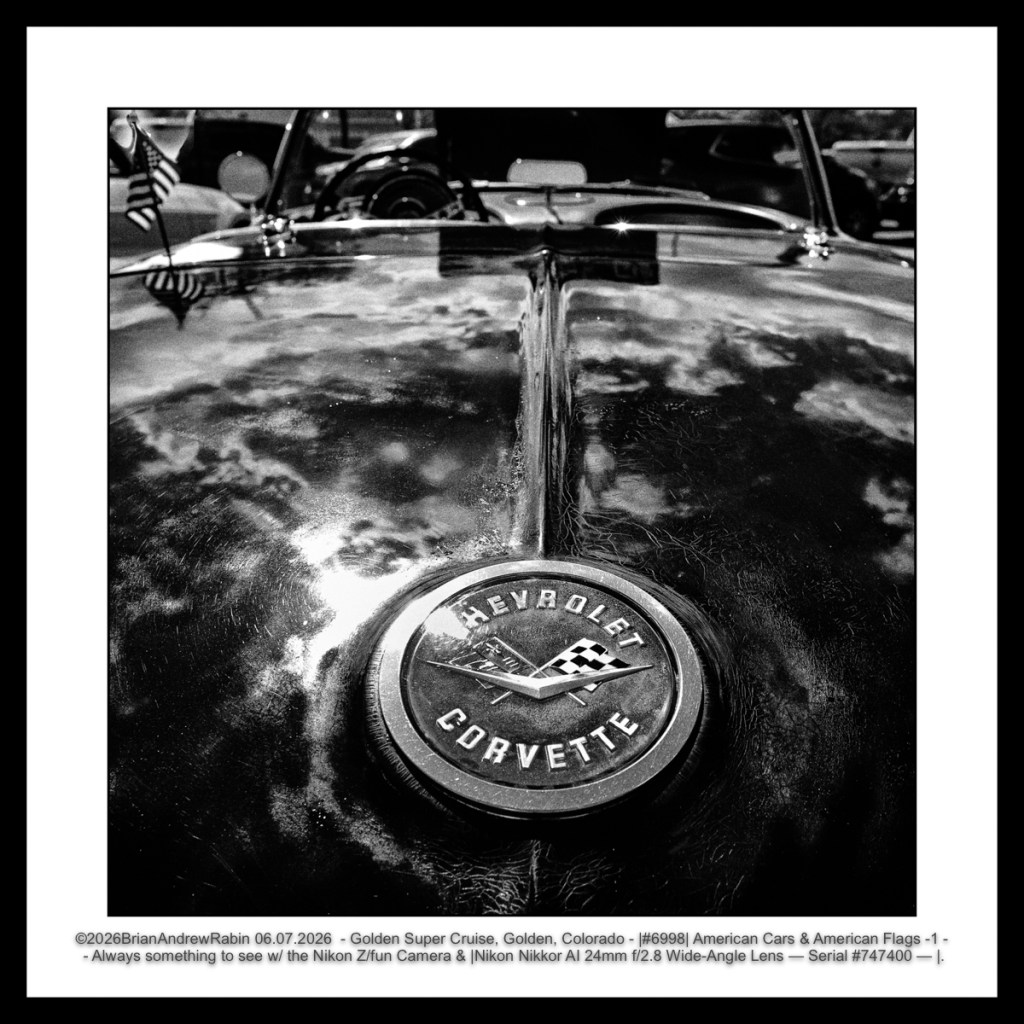
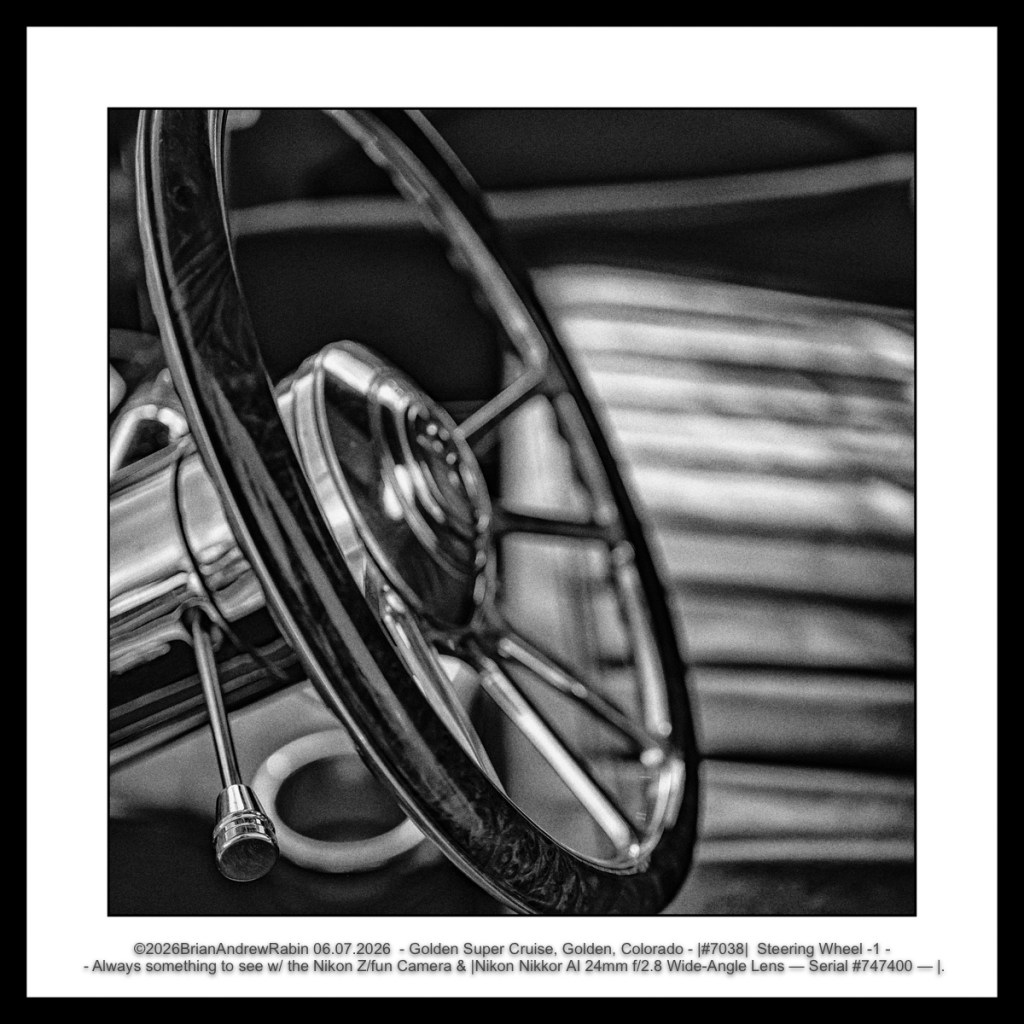
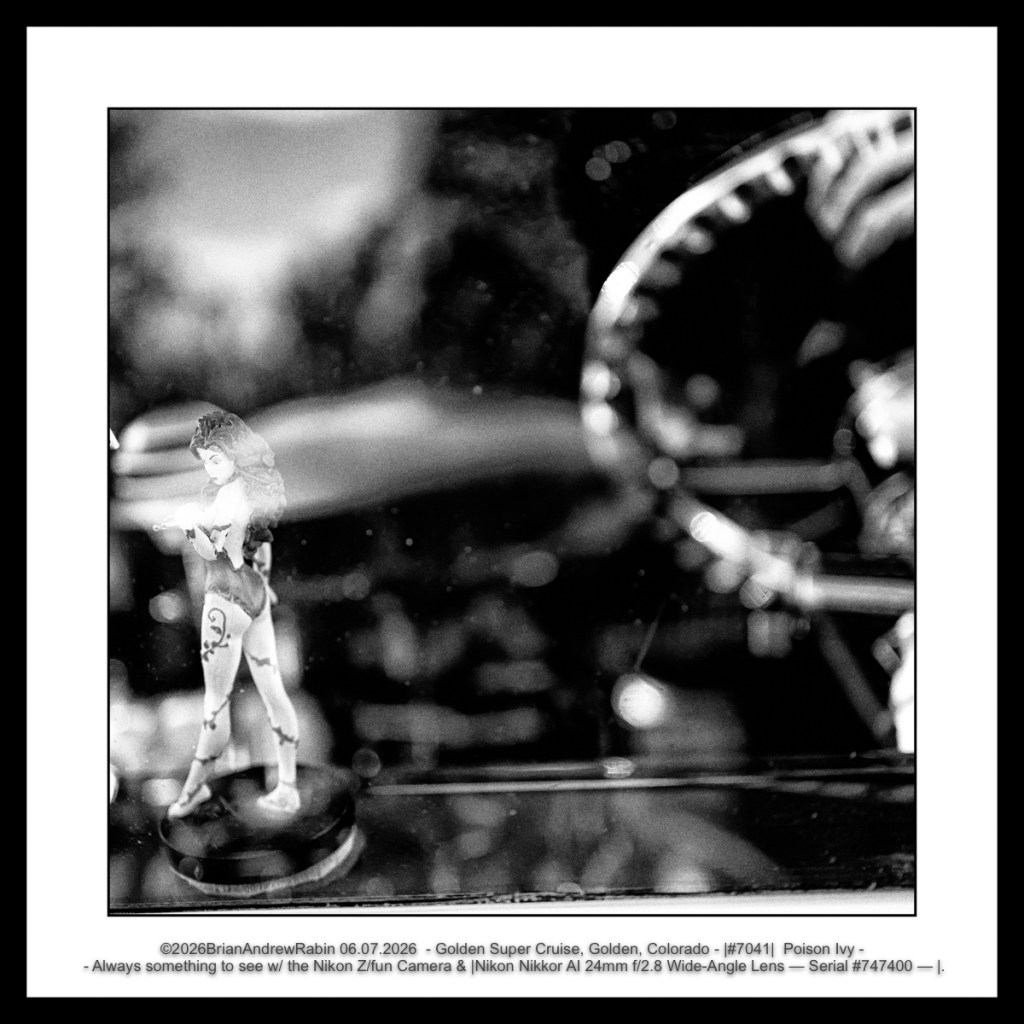
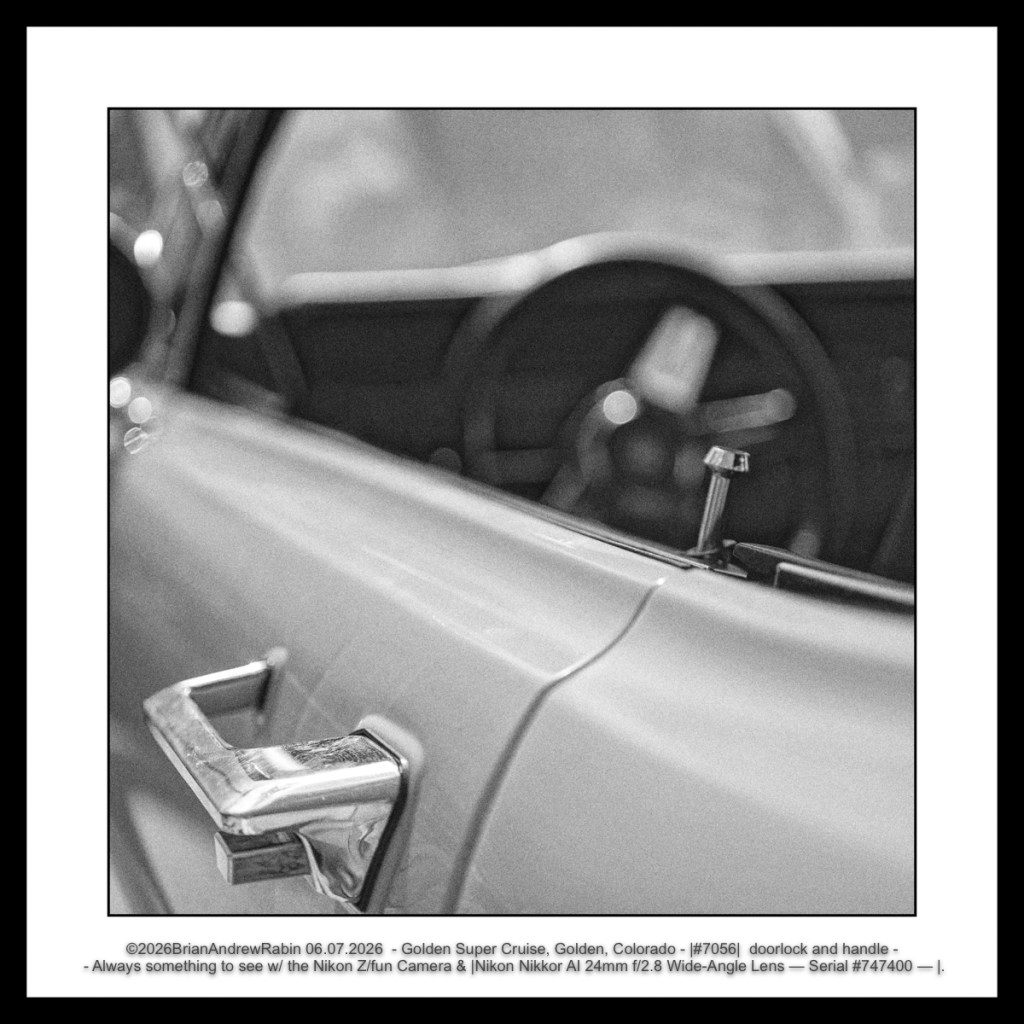
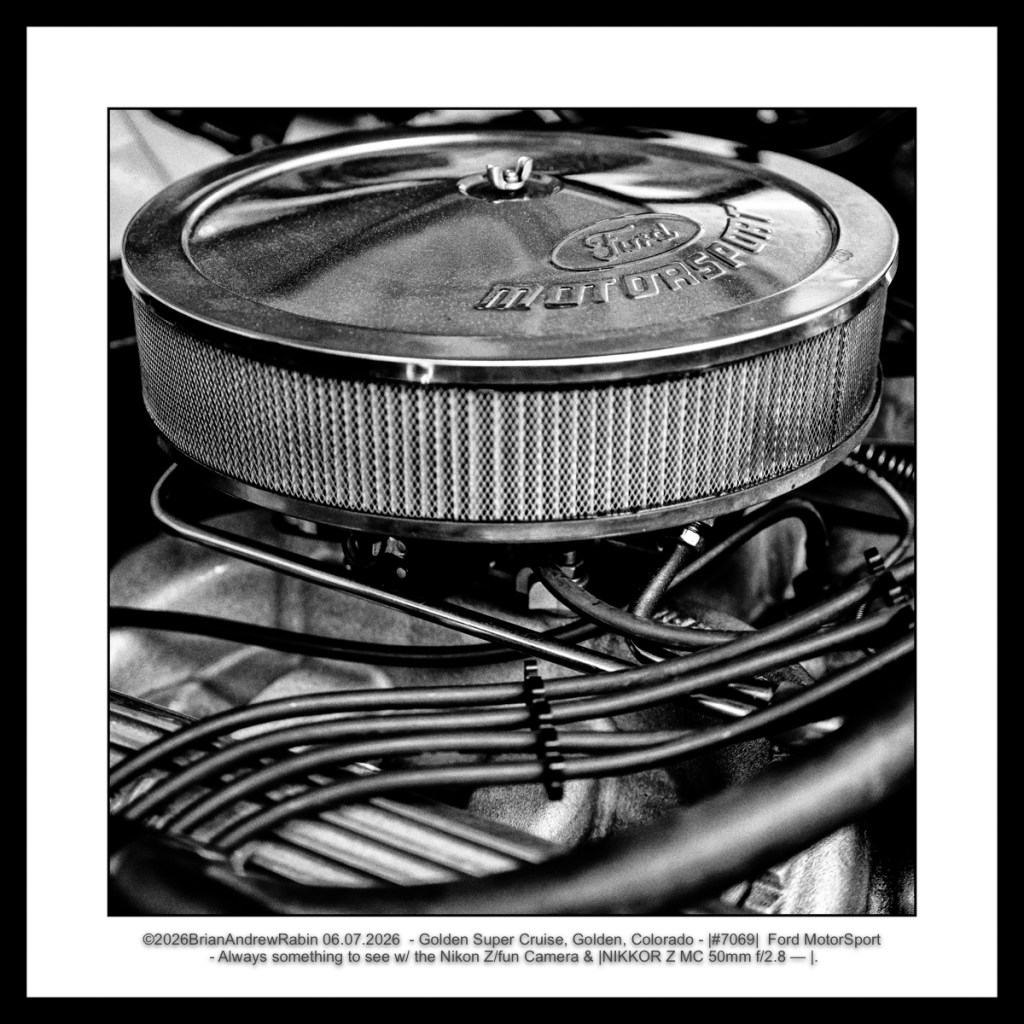
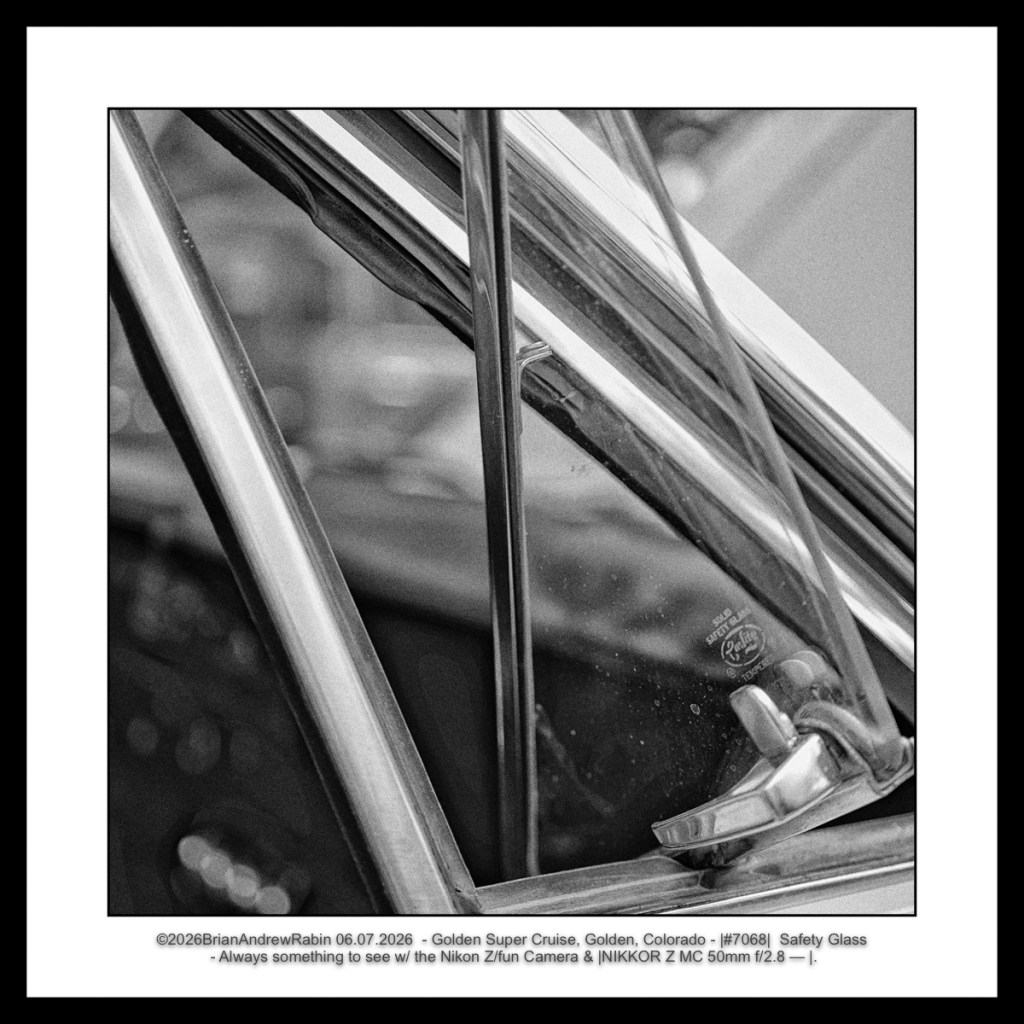
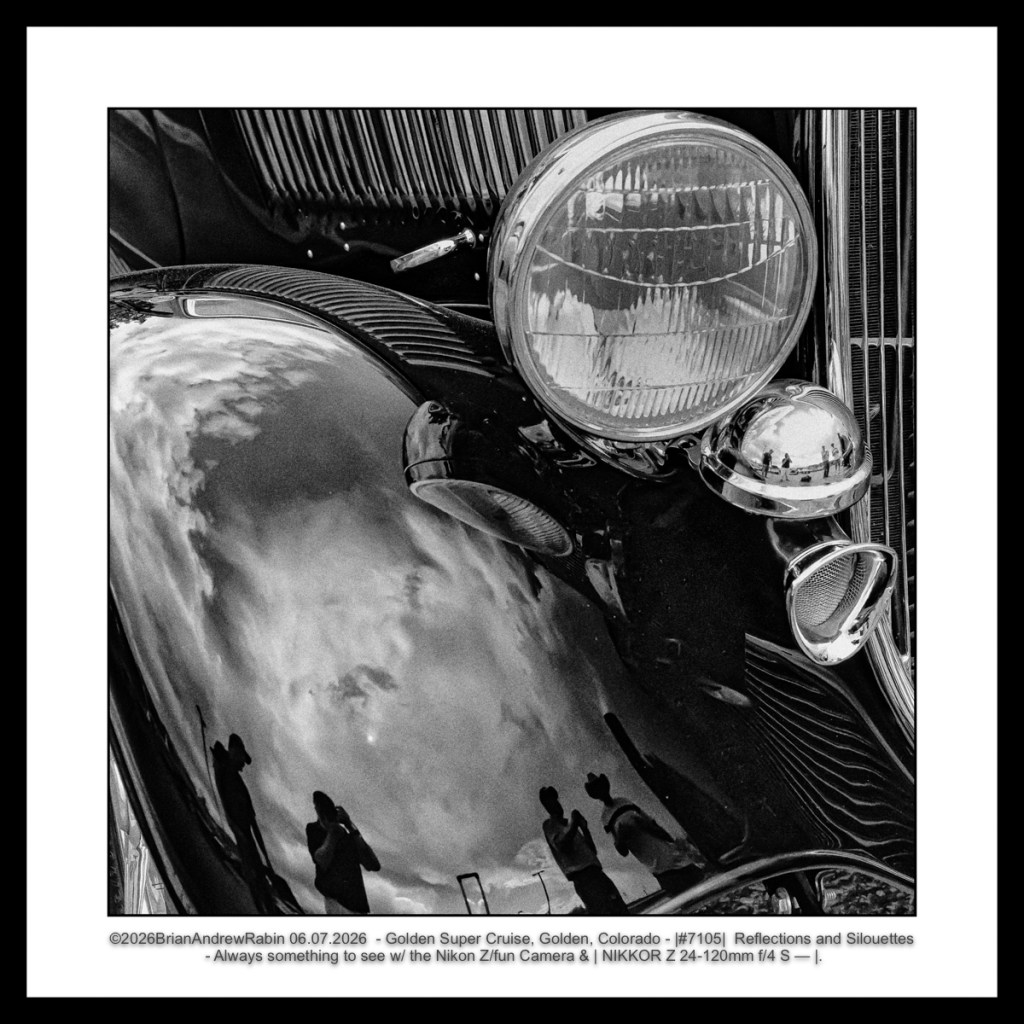
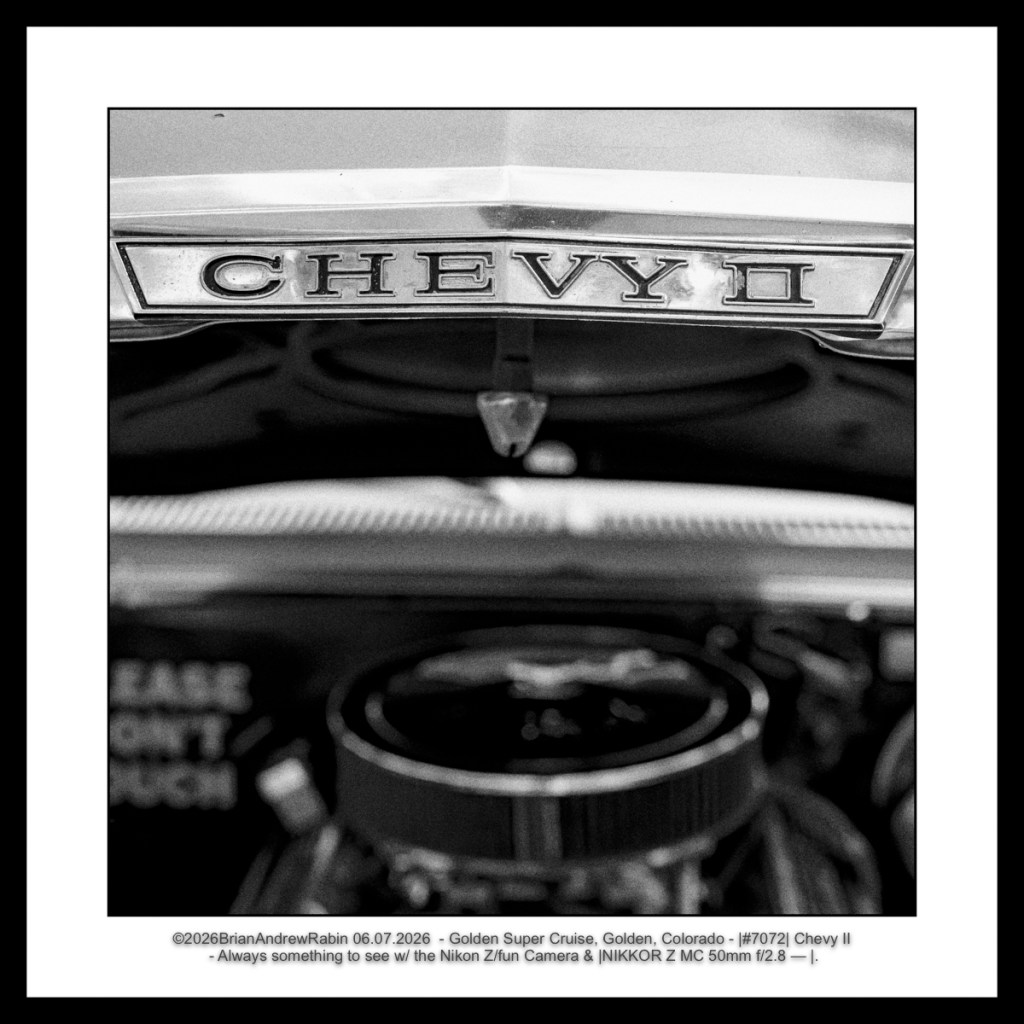
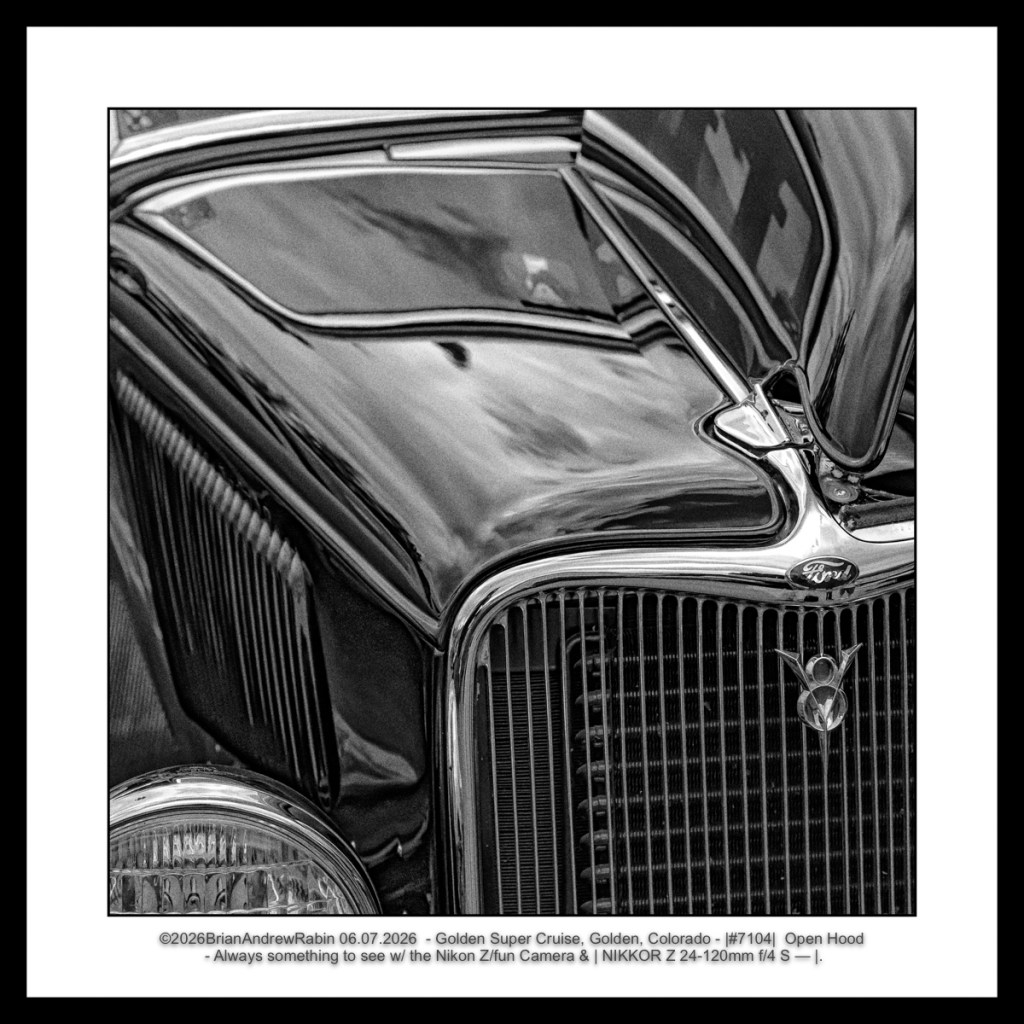
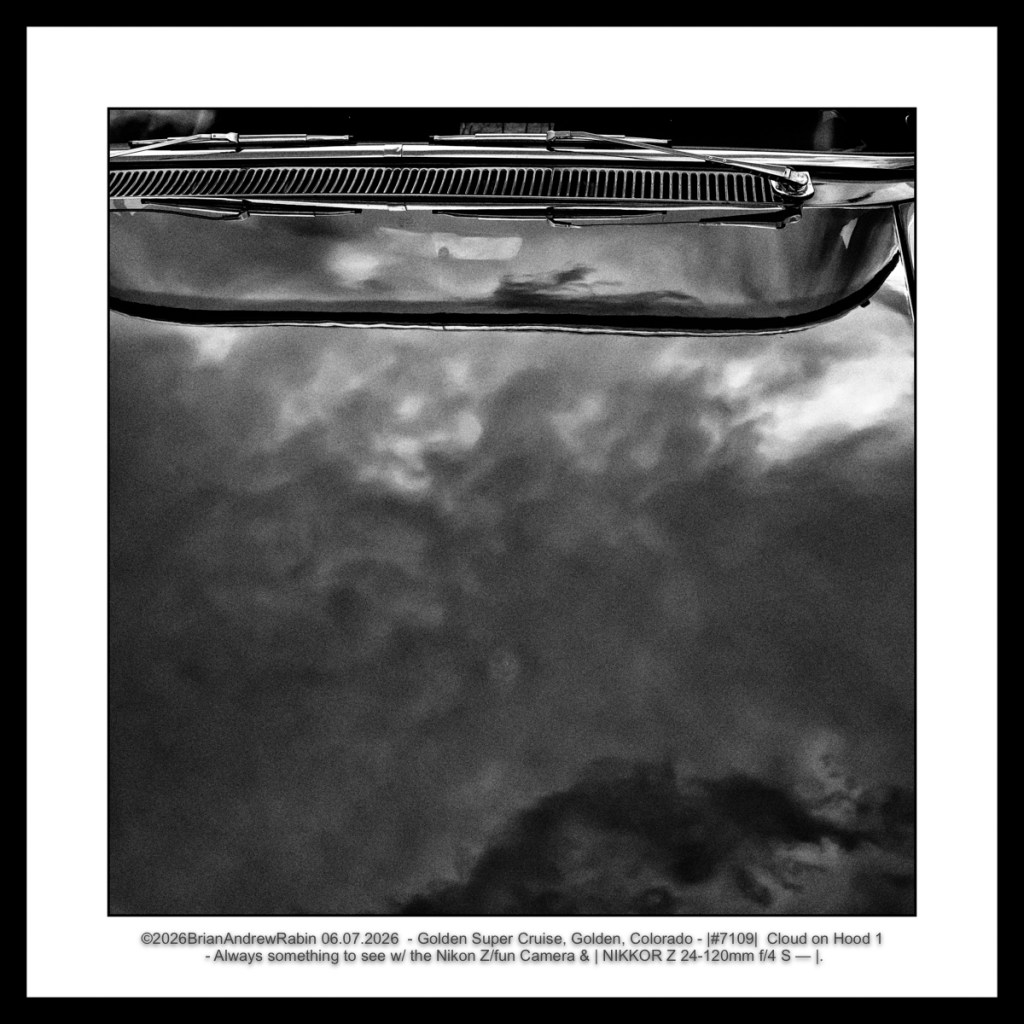
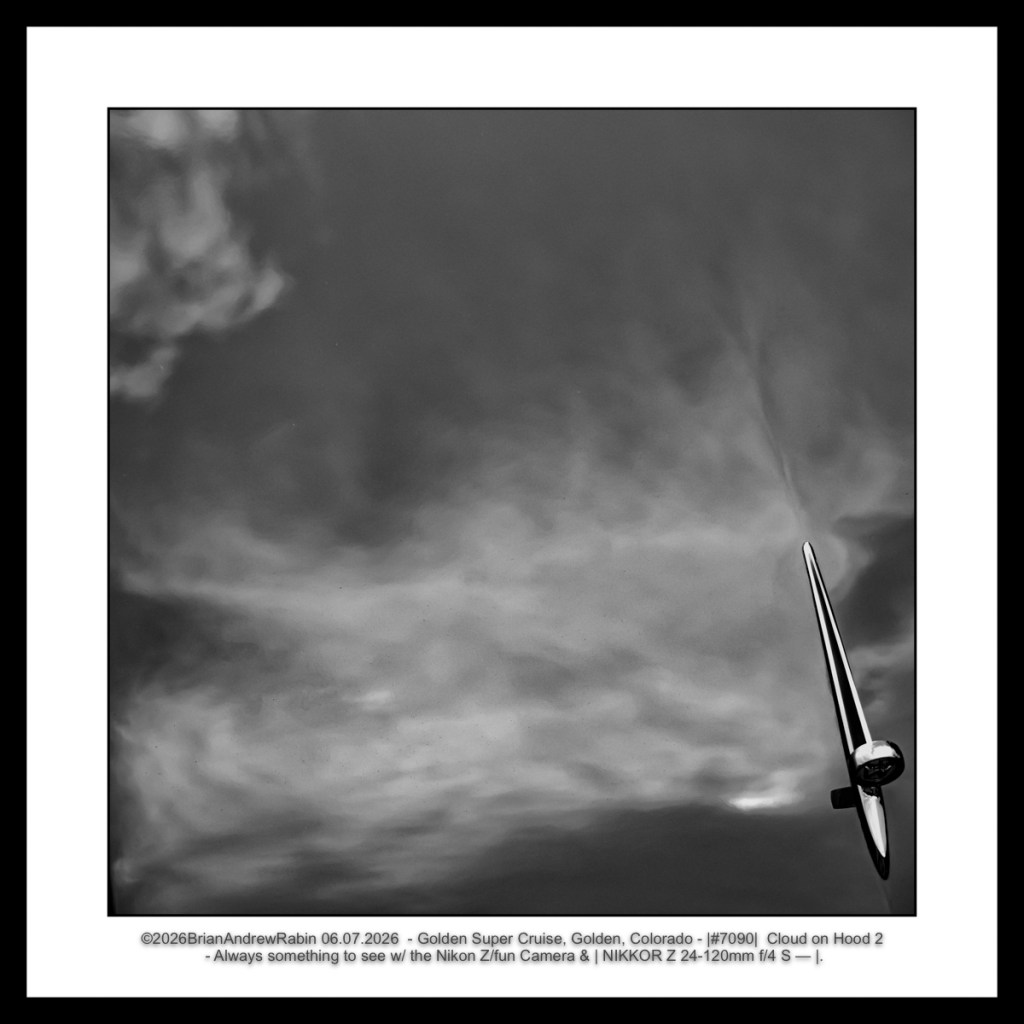
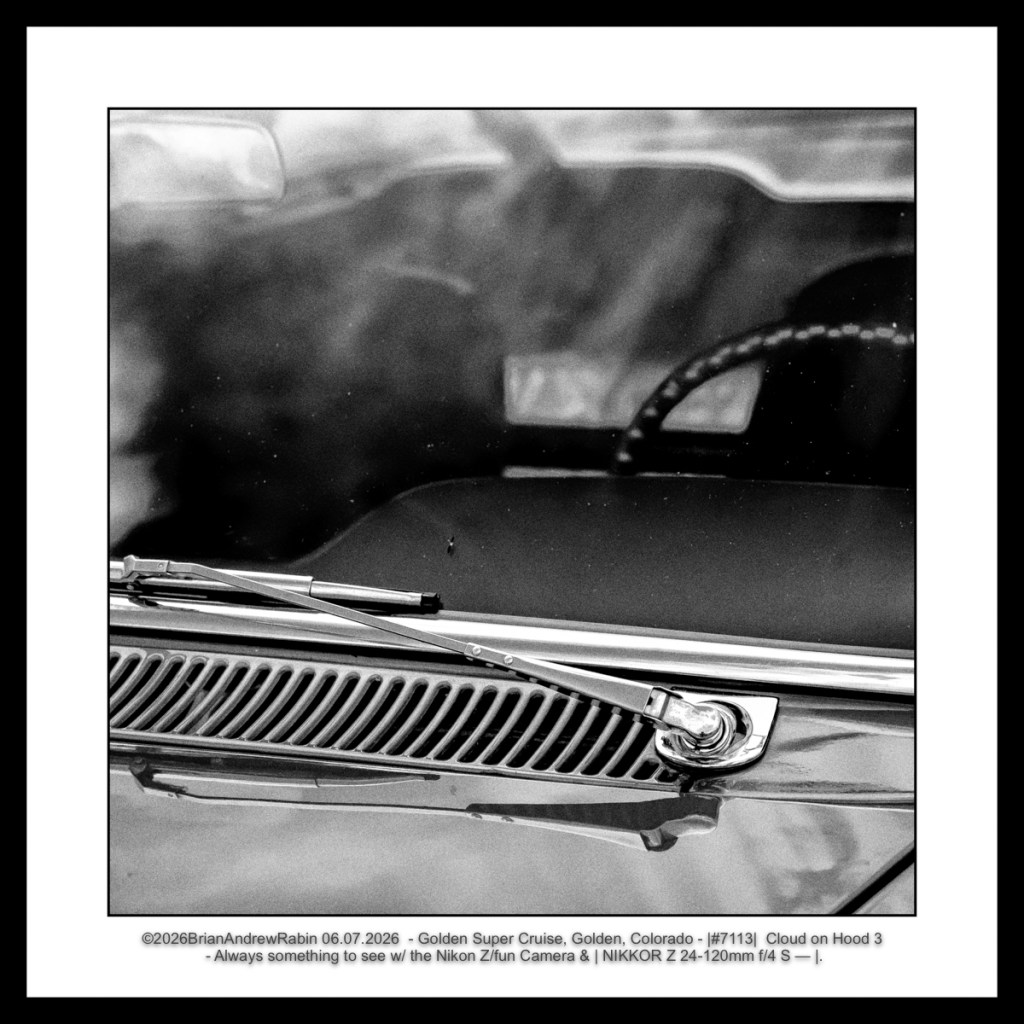
The Golden Super Cruise takes place the first Saturday of each month, May through October. This is a true community tradition — no scheduled entertainment, no official vendors, no information line. Just great cars, open roads, and good people. If you’ve cruised with us before, come out as always. If you’re new, it couldn’t be easier: start at South Golden Road and jump right in — the community will take care of the rest. As you enjoy the evening, please support Golden’s local businesses, who have always been gracious hosts, and as always, pack out your trash — you’re what makes this work. One courtesy reminder: drive straight through all roundabouts, especially at South Golden Road and Ulysses at the top of the hill. Use the roundabouts to cool down and space out, then loop back through the Quaker roundabout. Please pass that along to fellow participants.
Boulder Farmers Market –
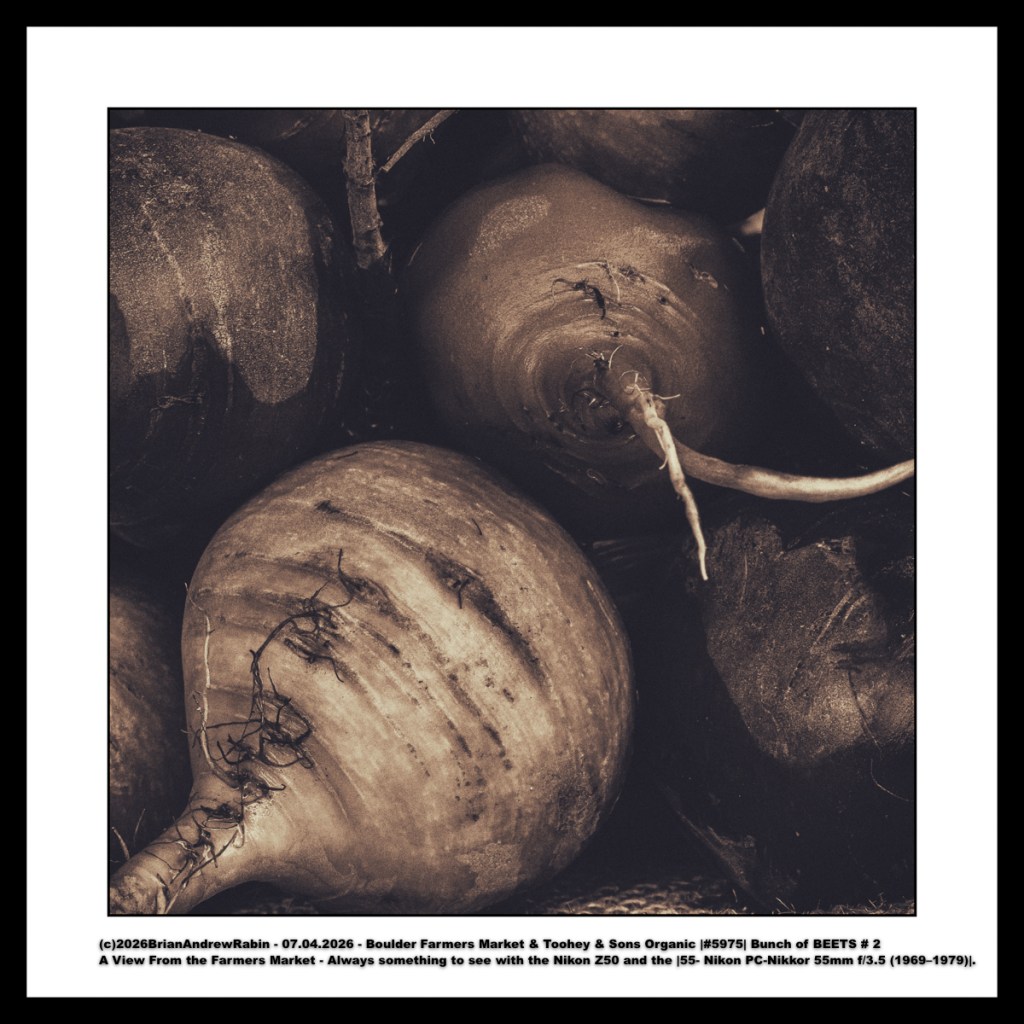
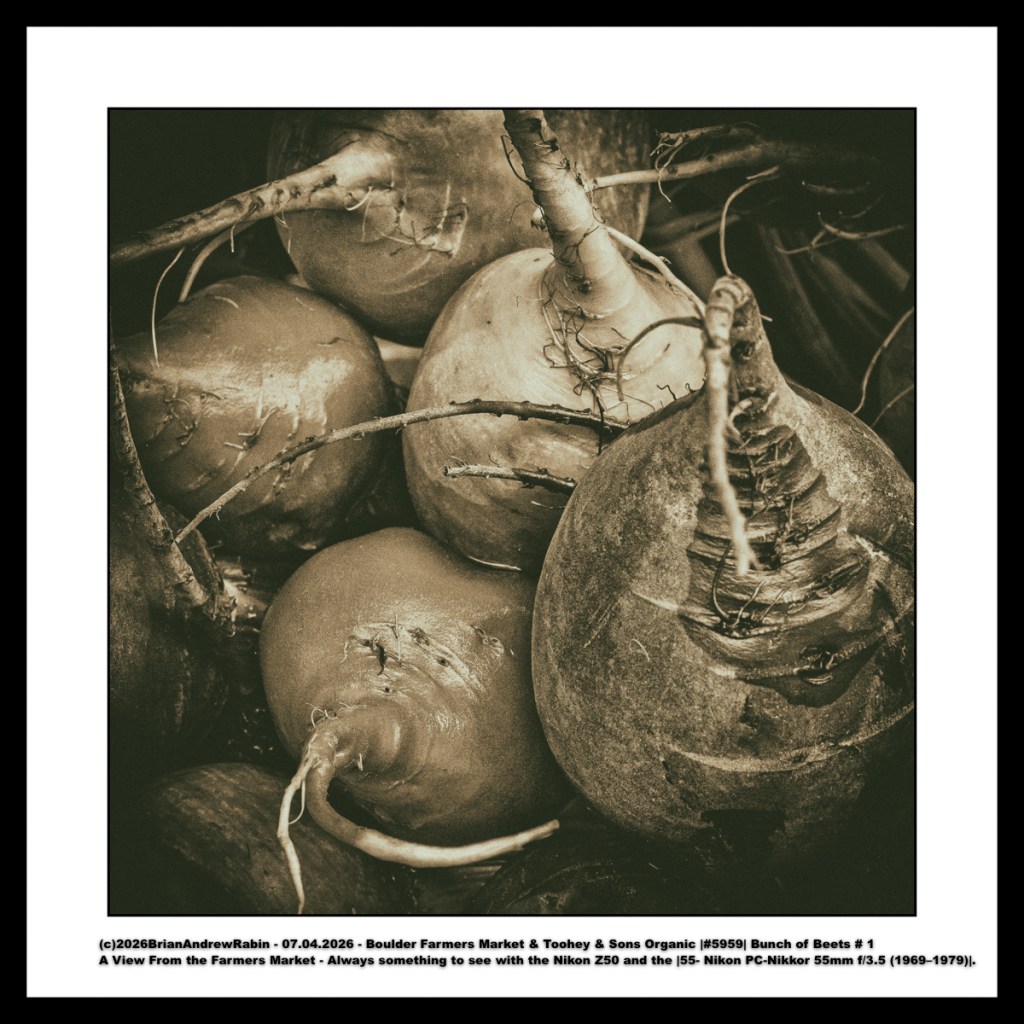
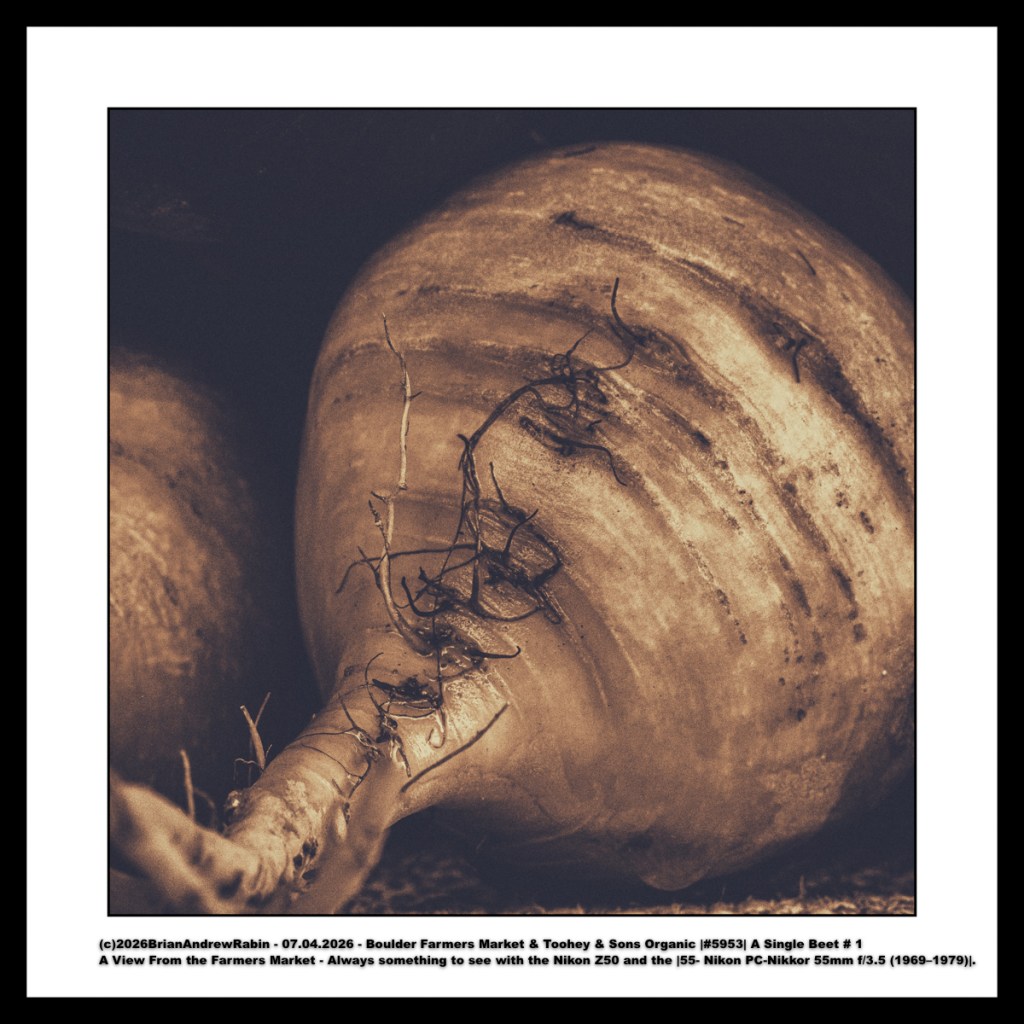
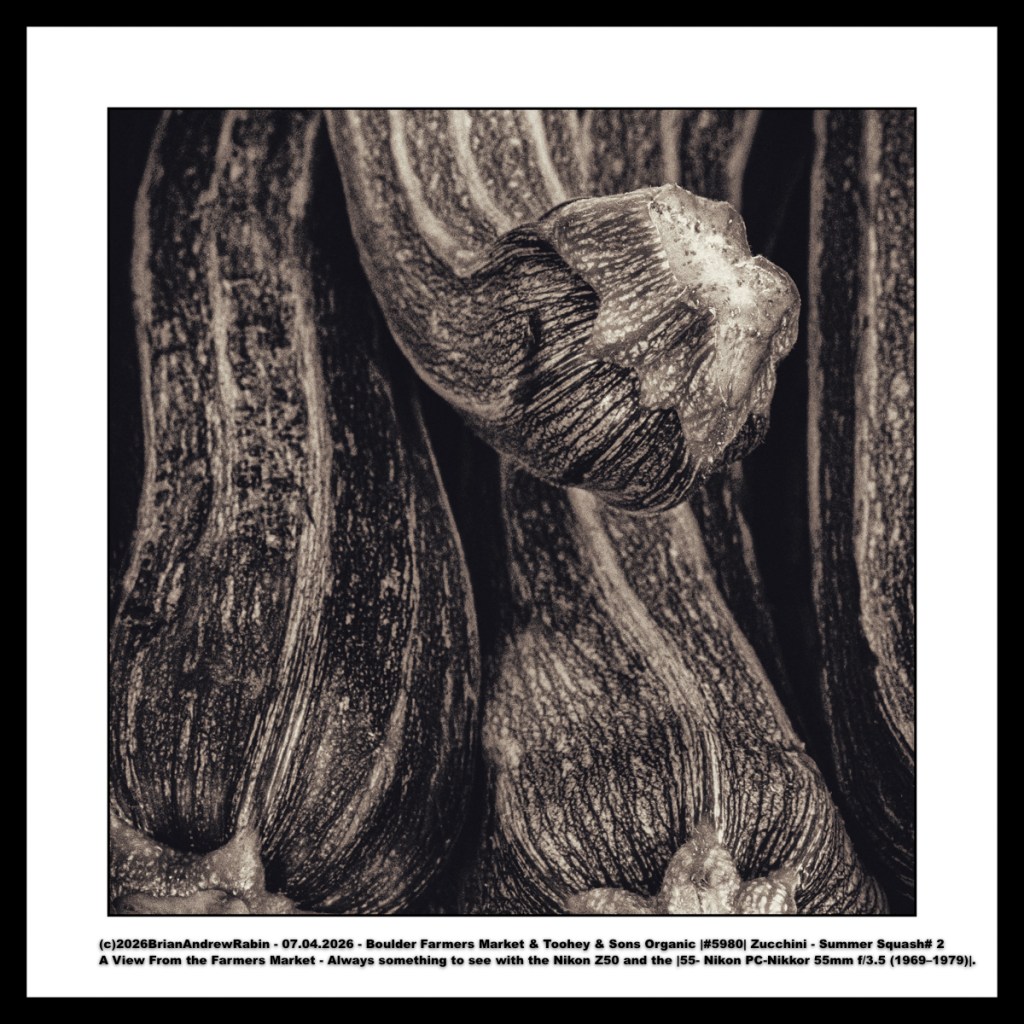
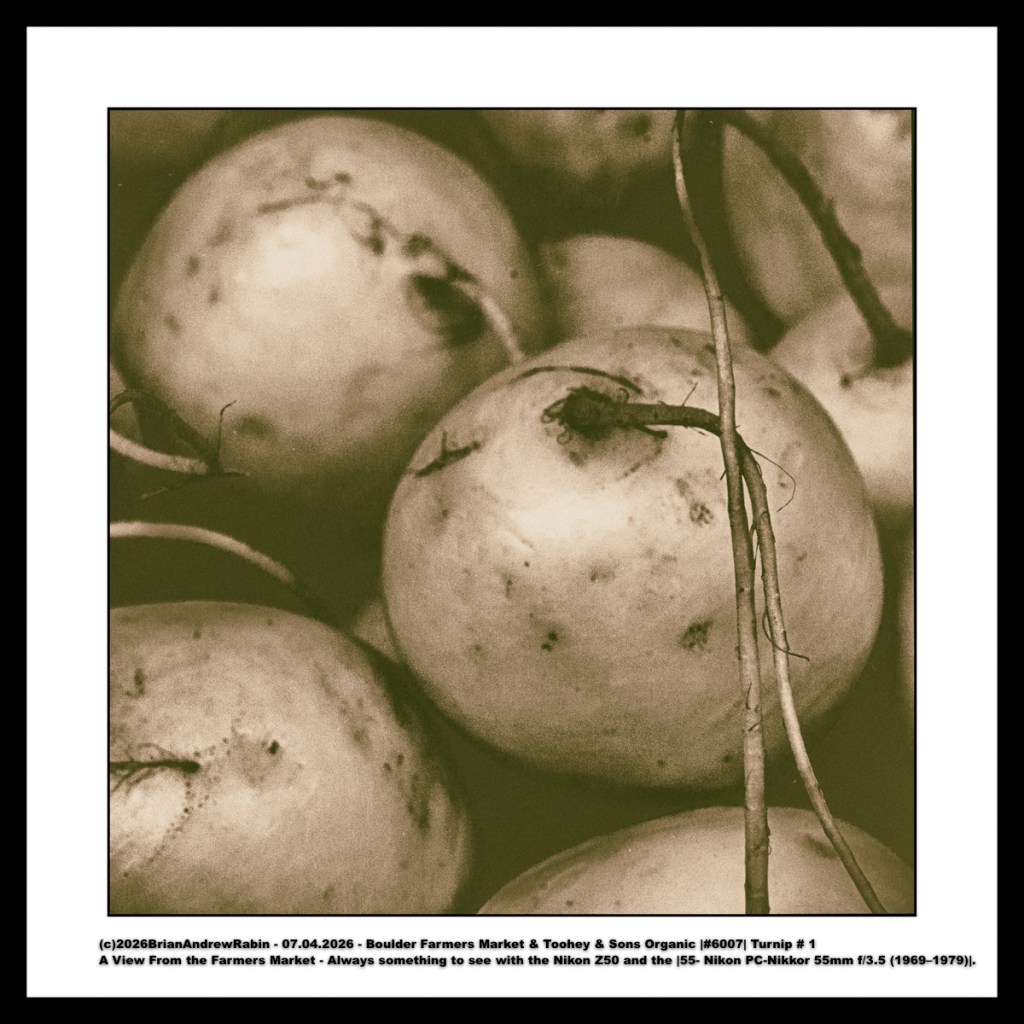
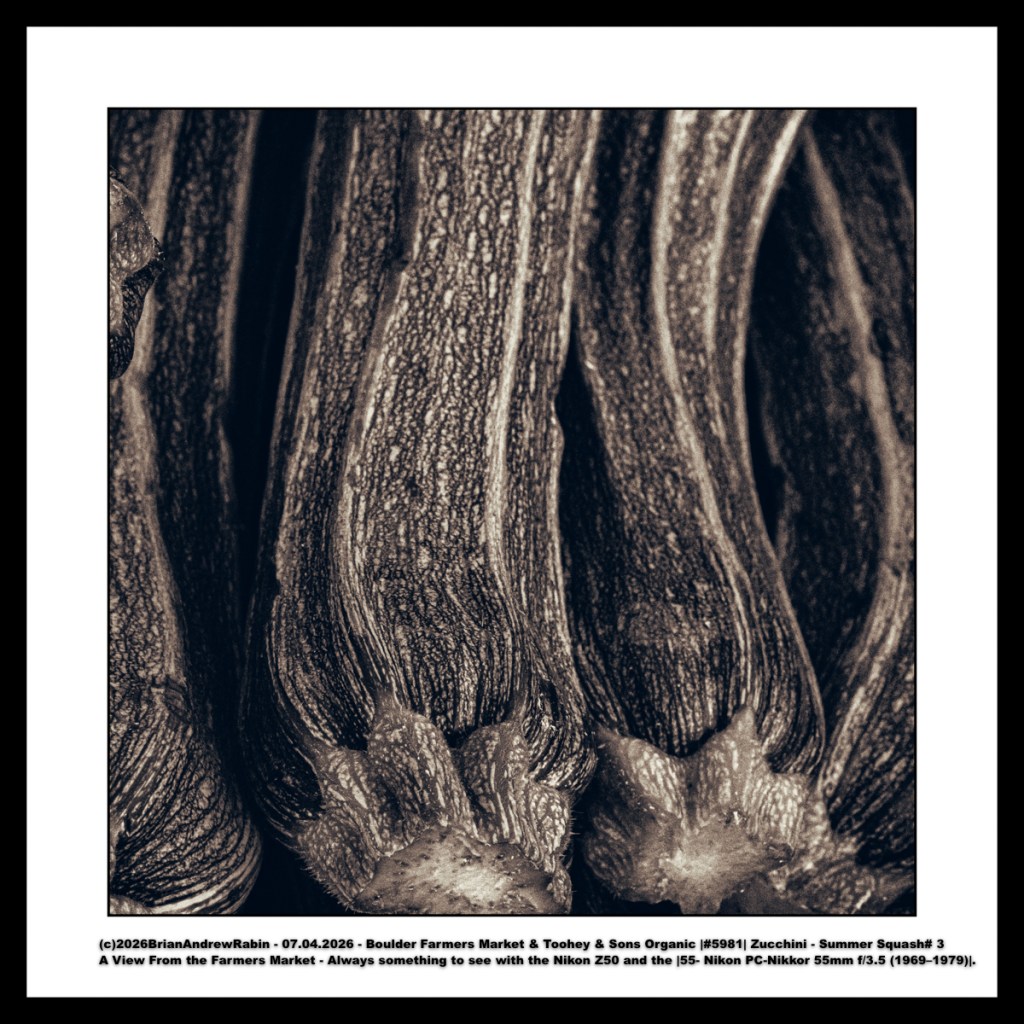
2026.07.11 – Bokeh and the Nikon – 55- Nikon PC-Nikkor 55mm f/3.5 (1969–1979).
click first image to enlarge and view series. click all other images individually for image description.
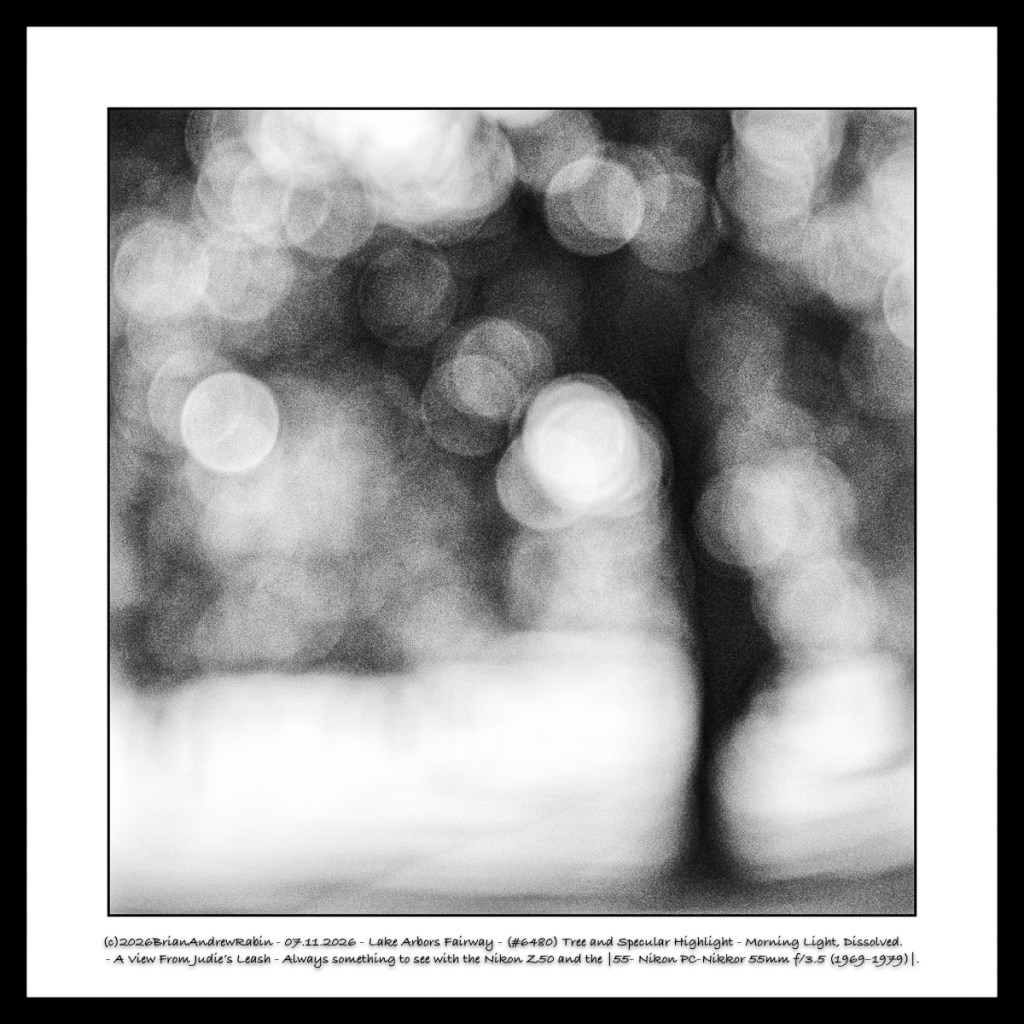
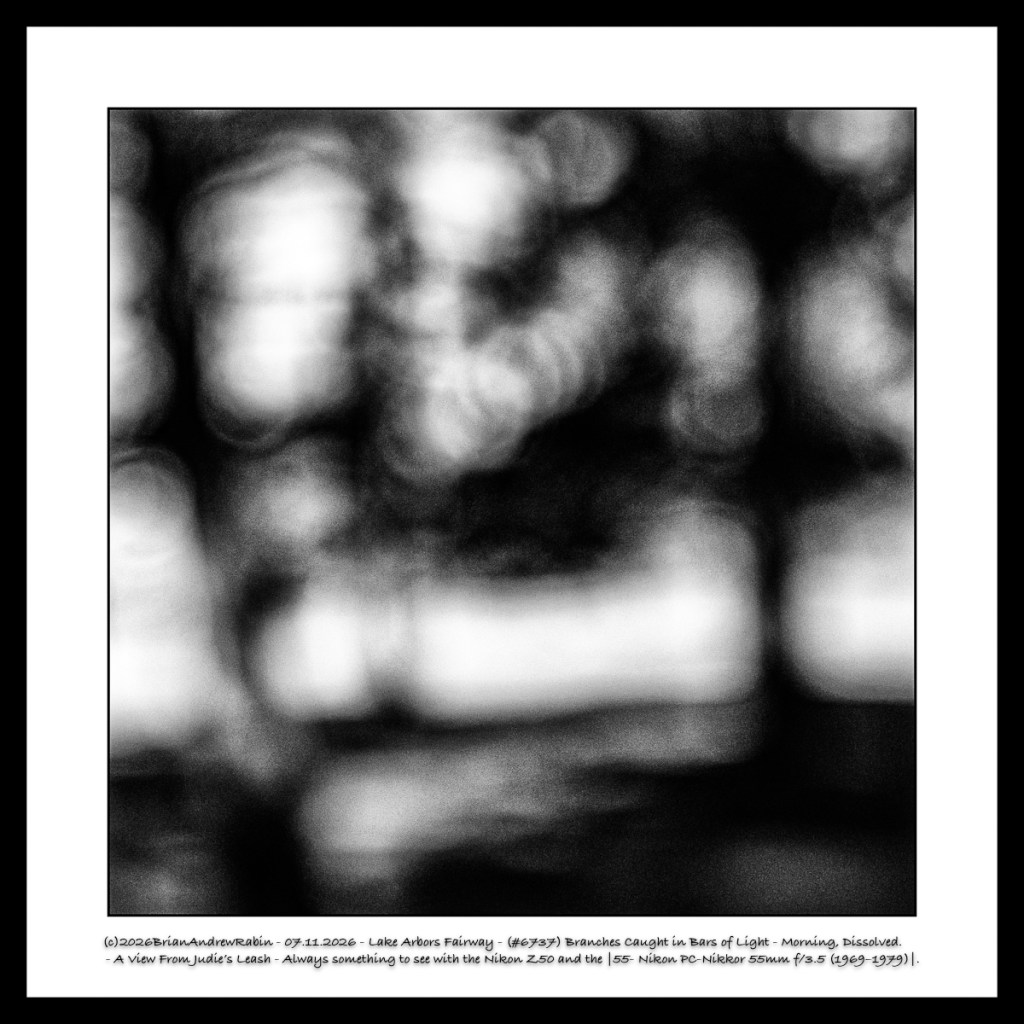
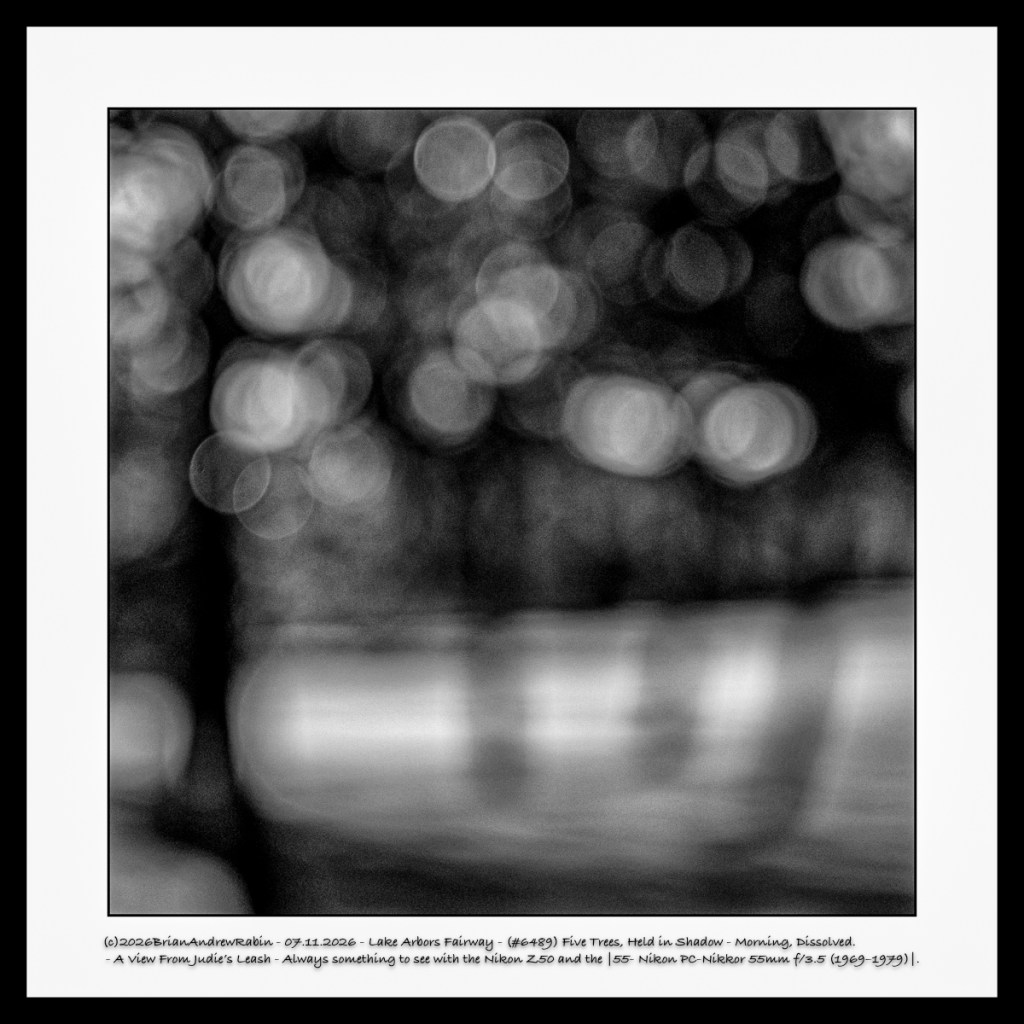
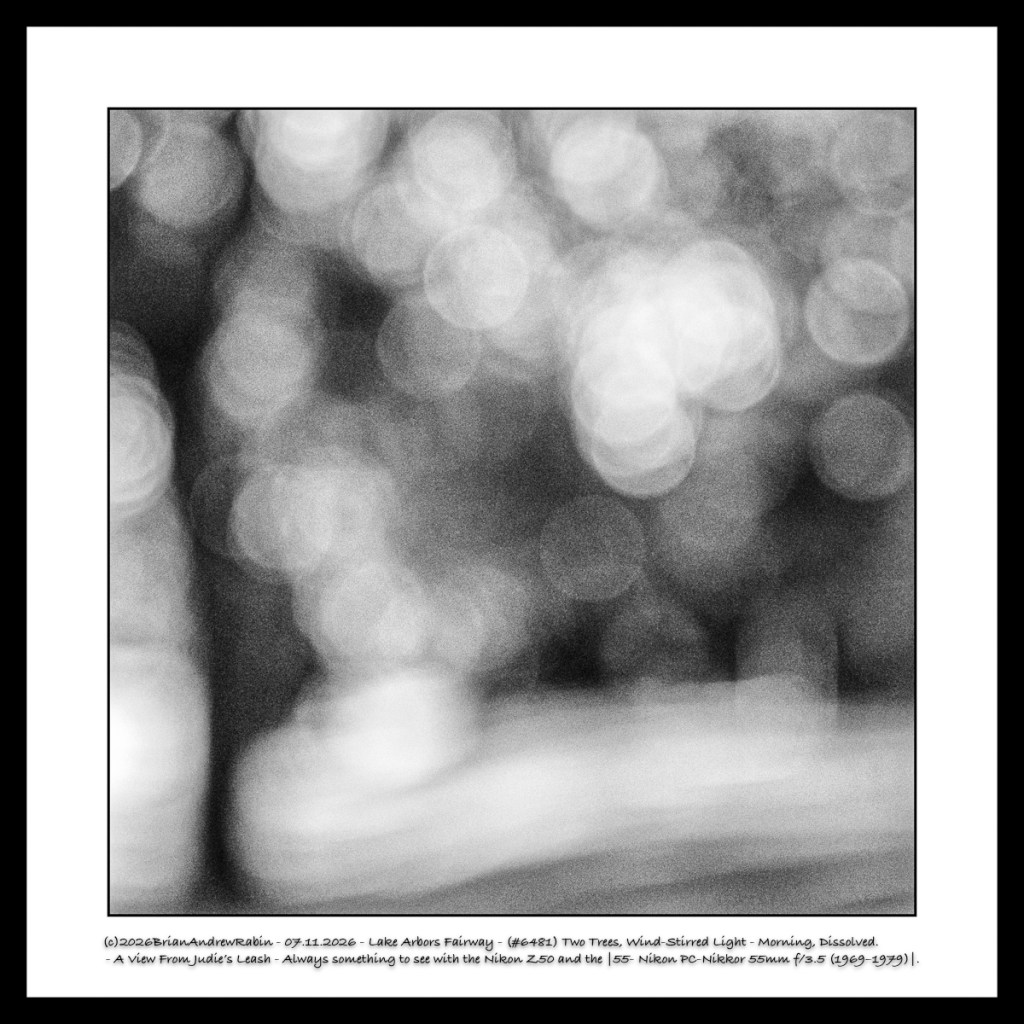
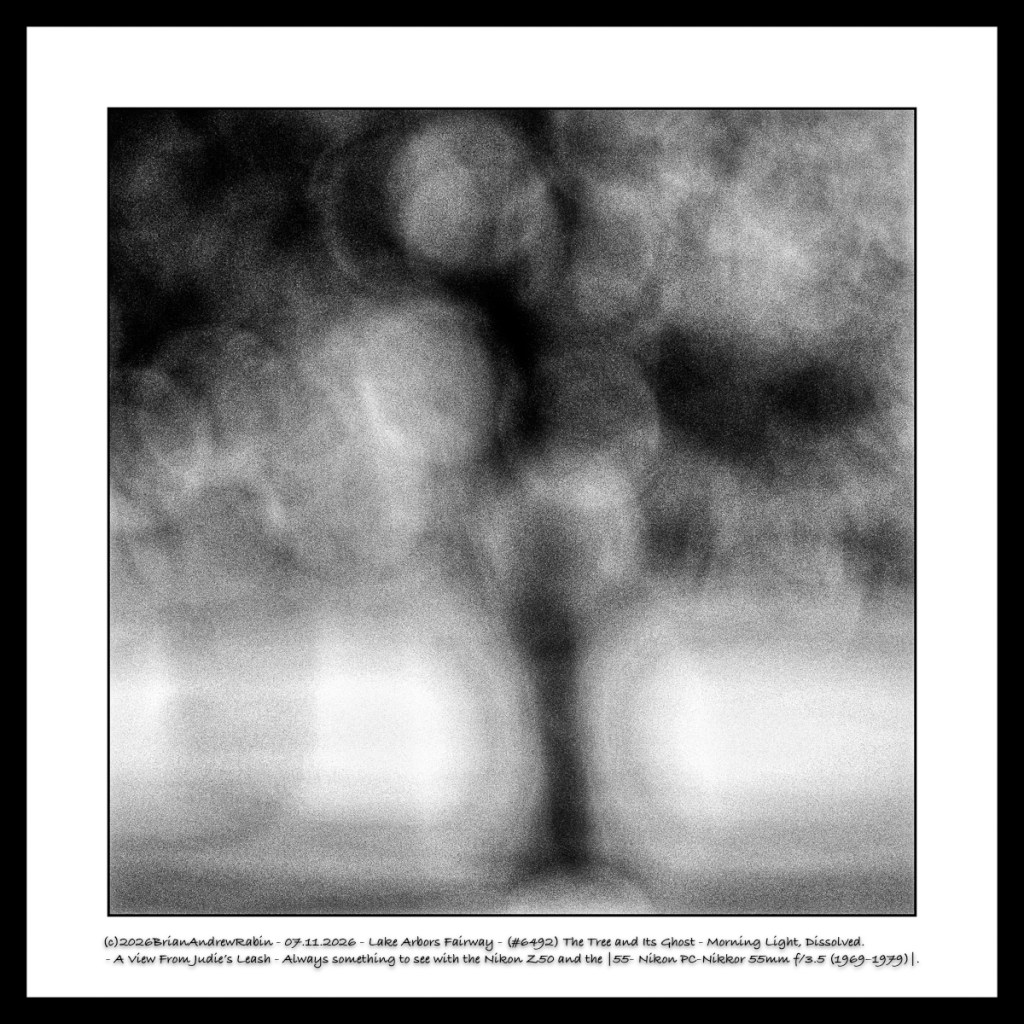
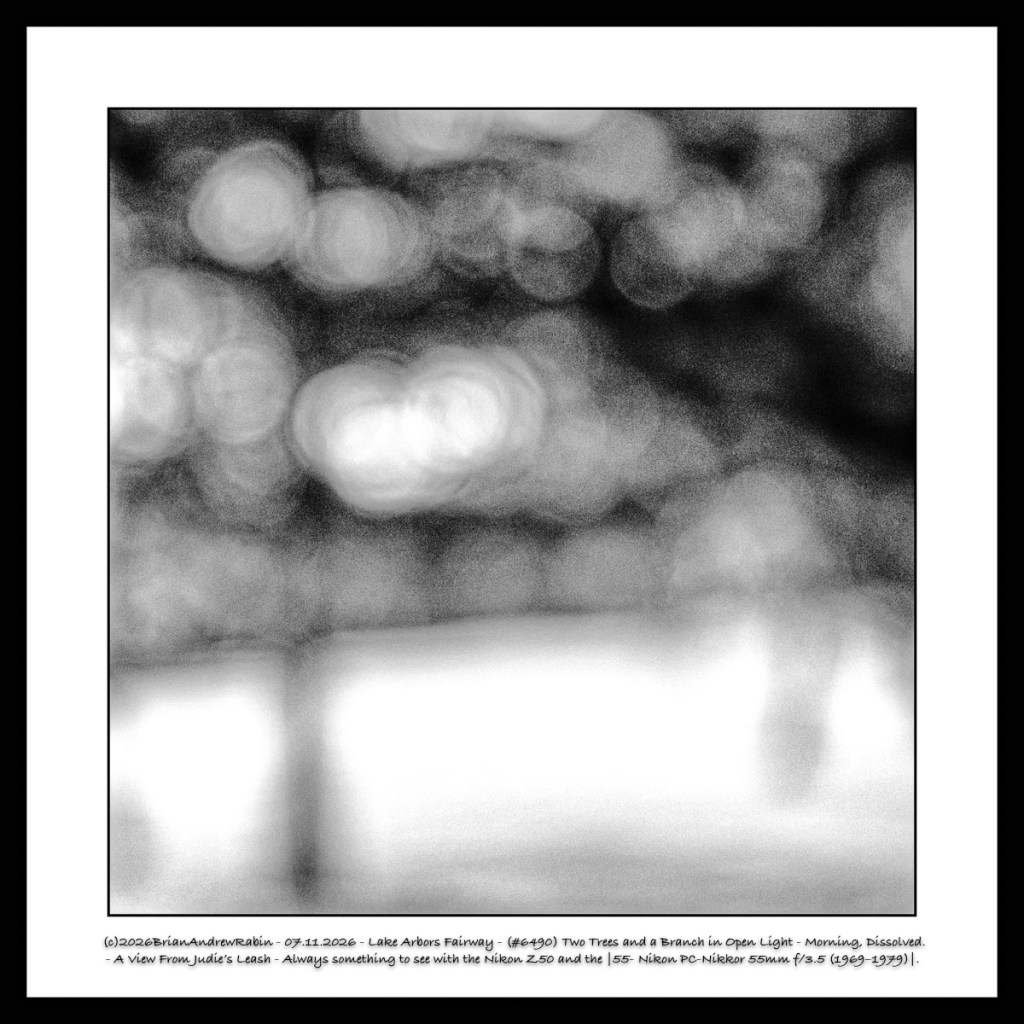
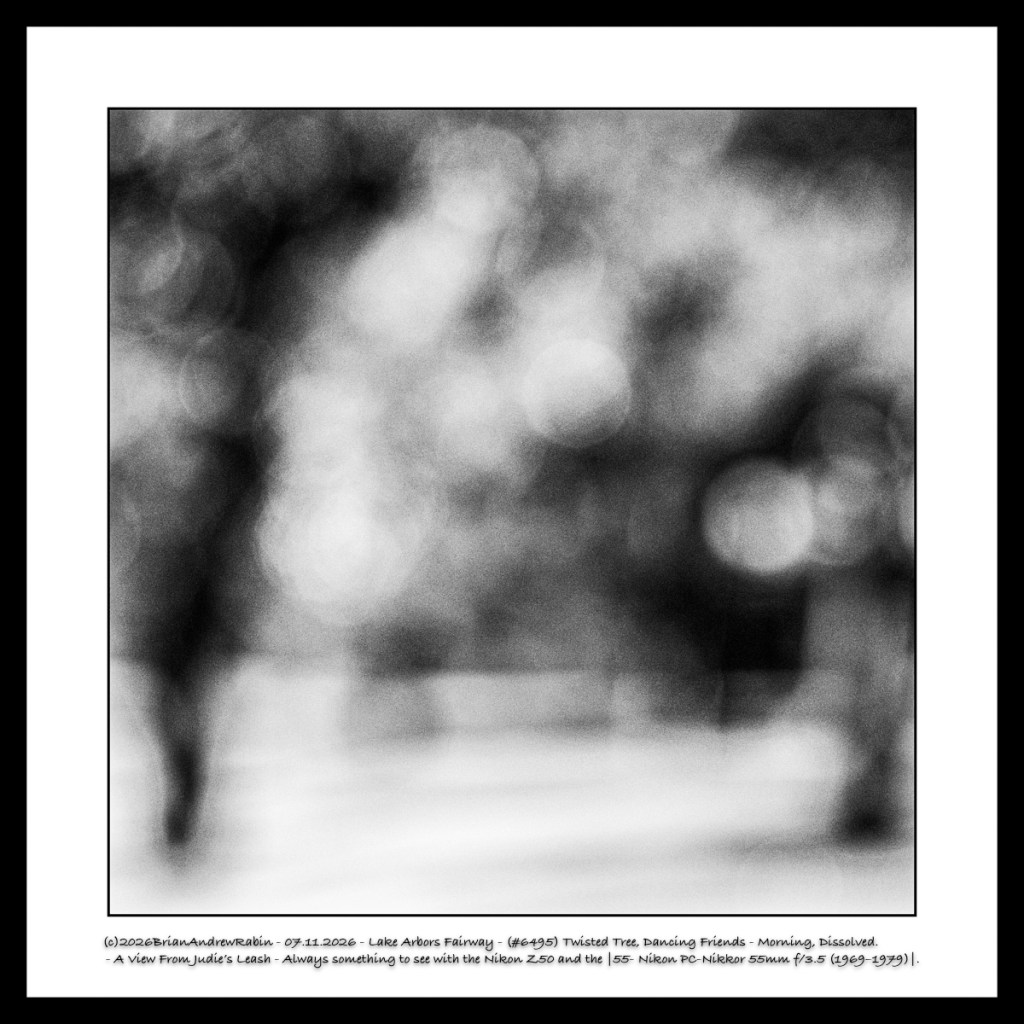
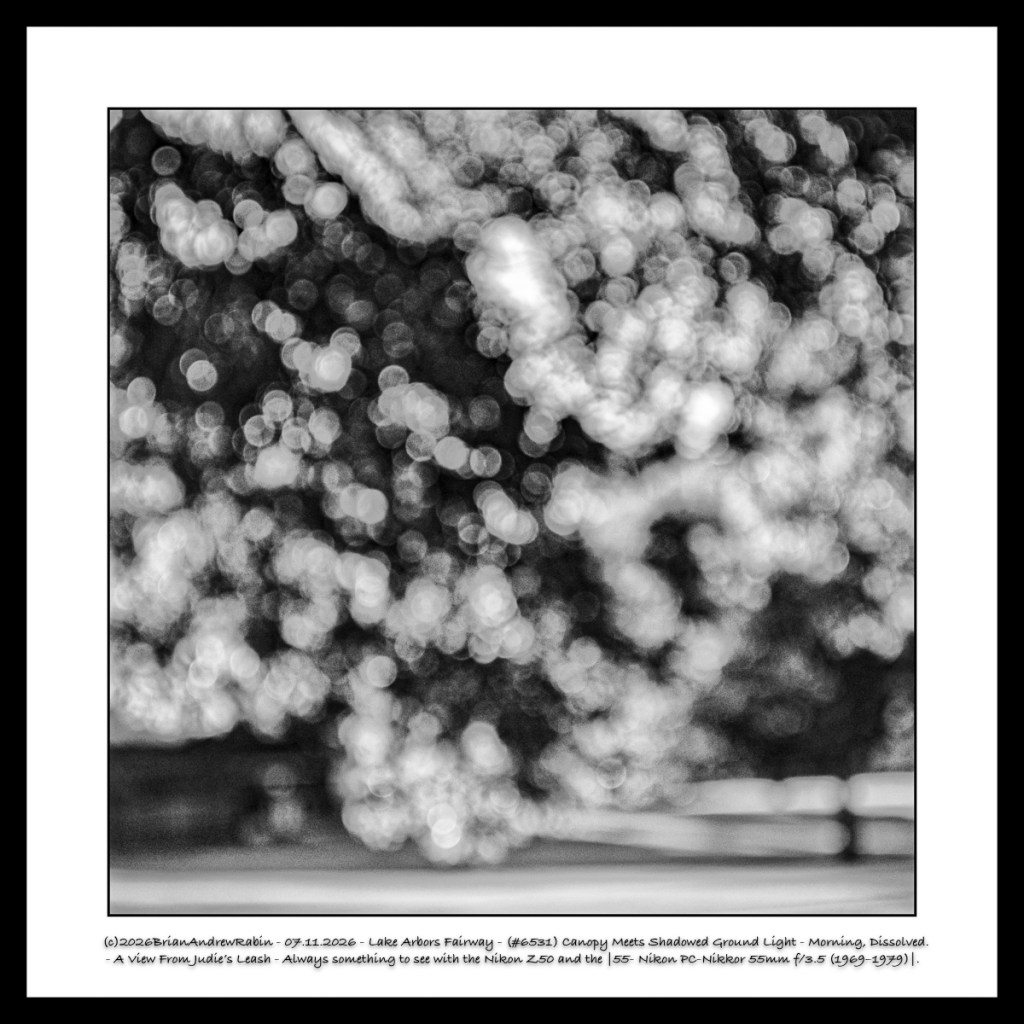
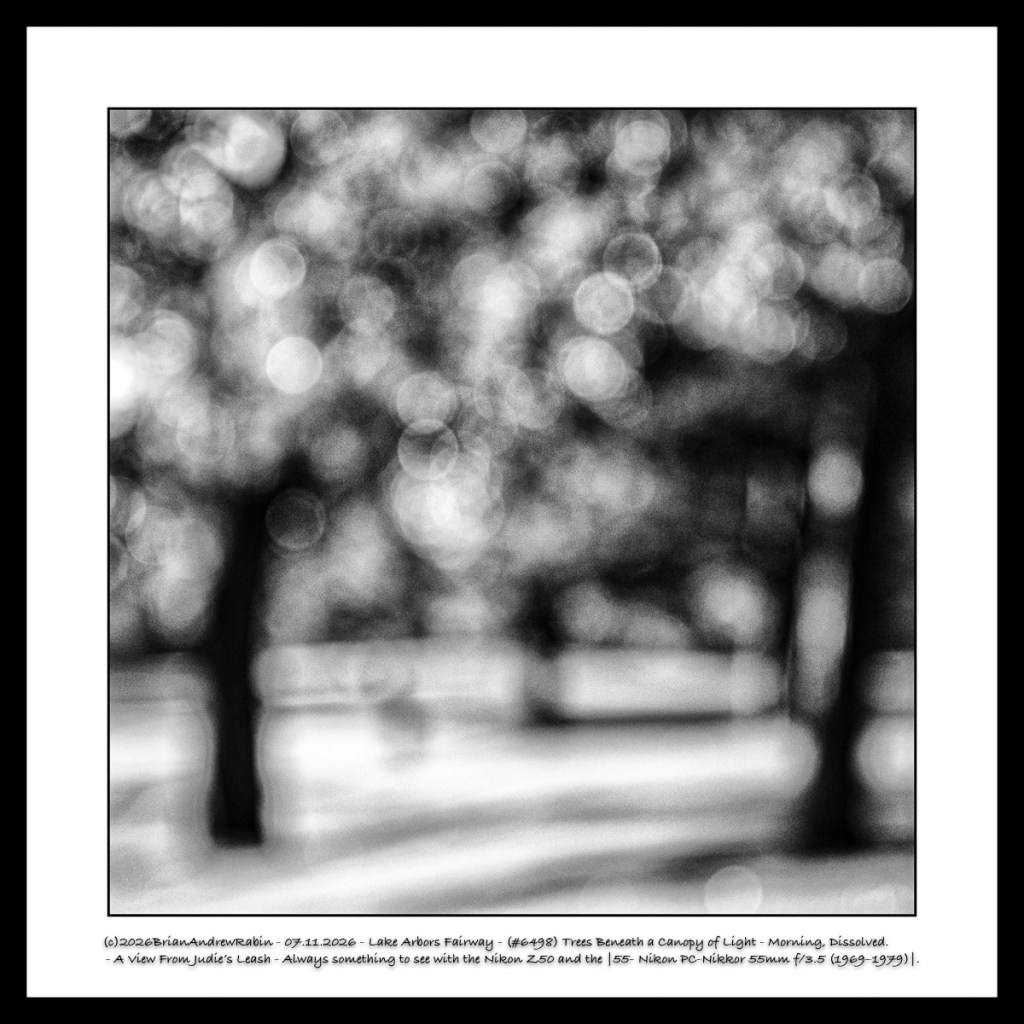
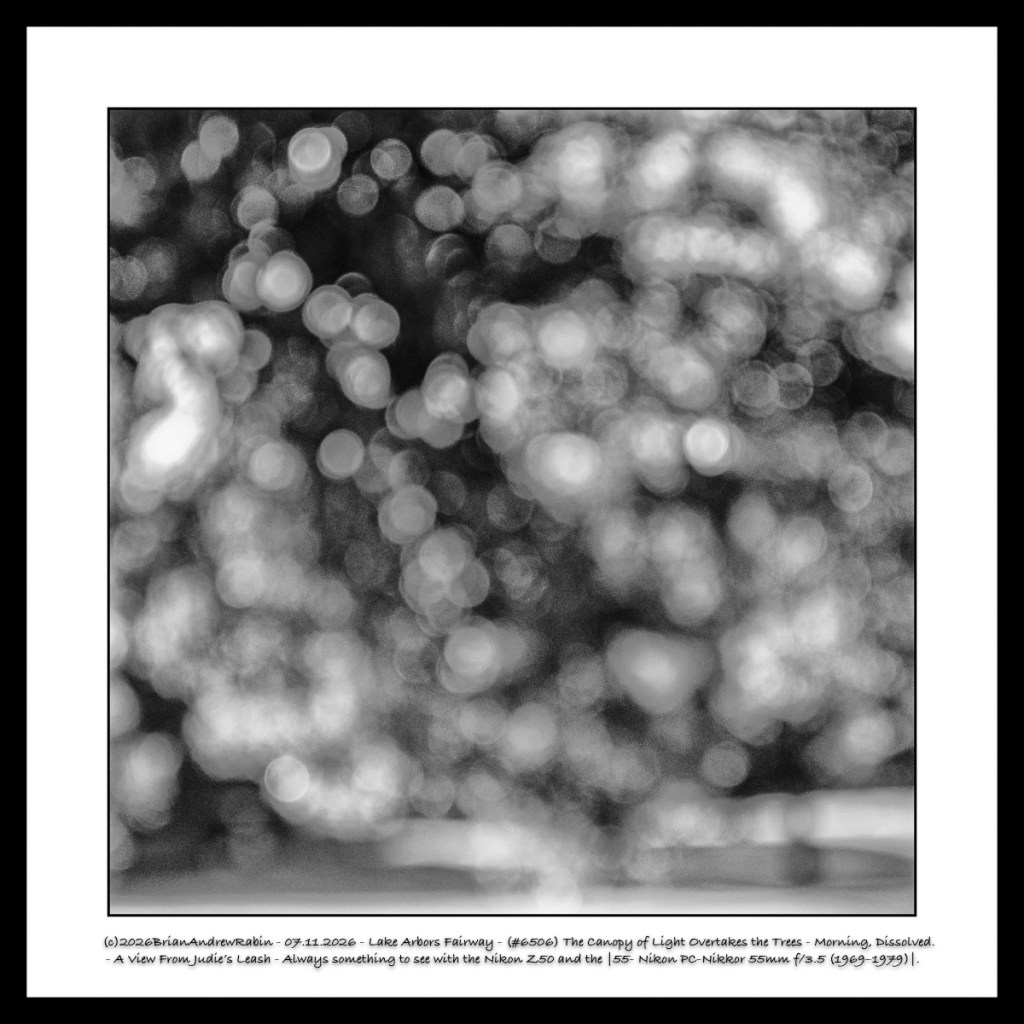
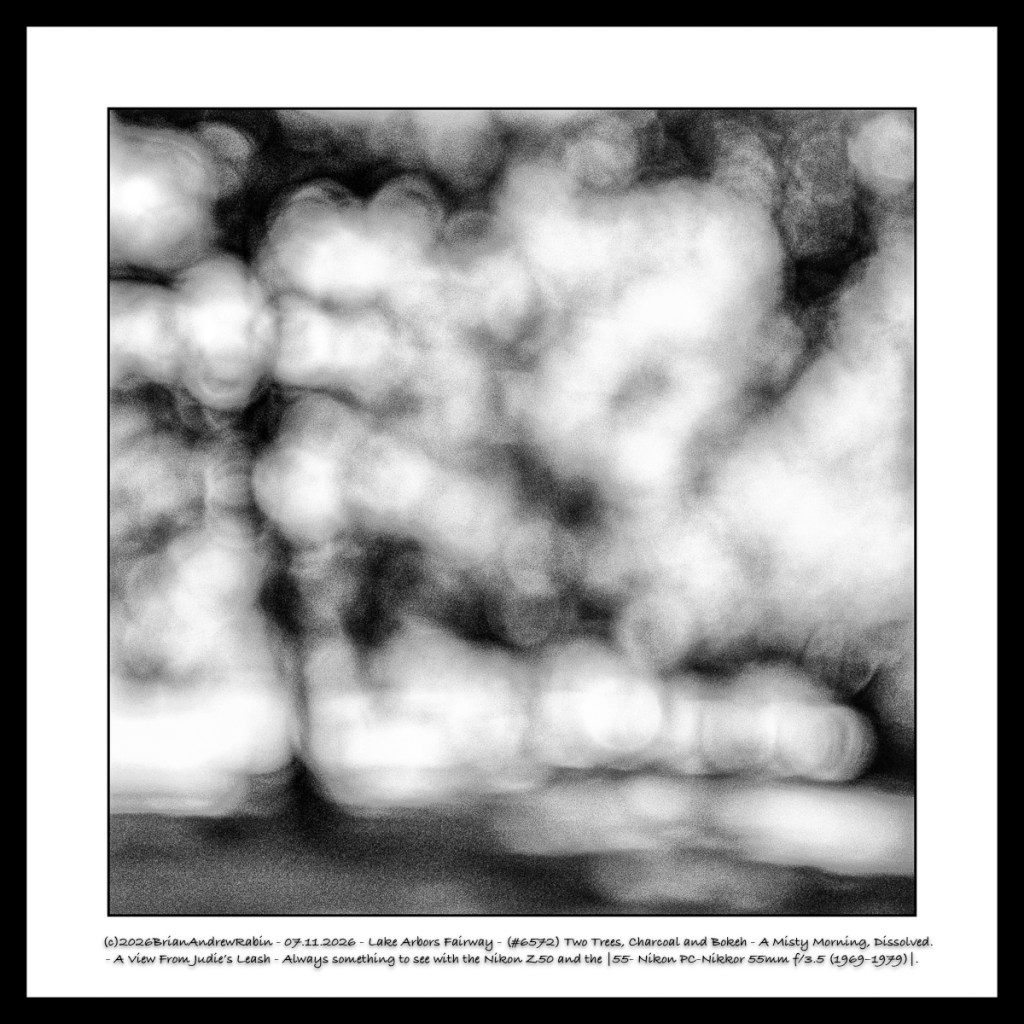
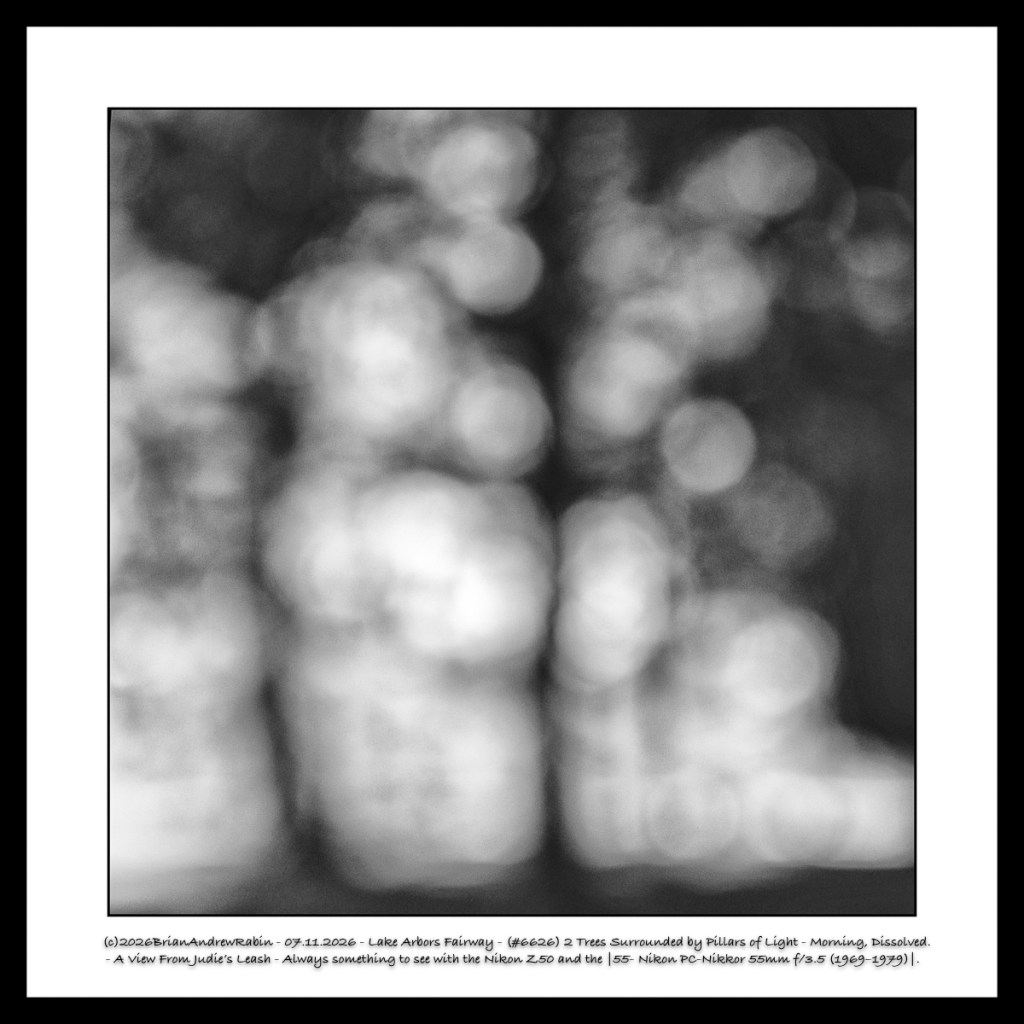
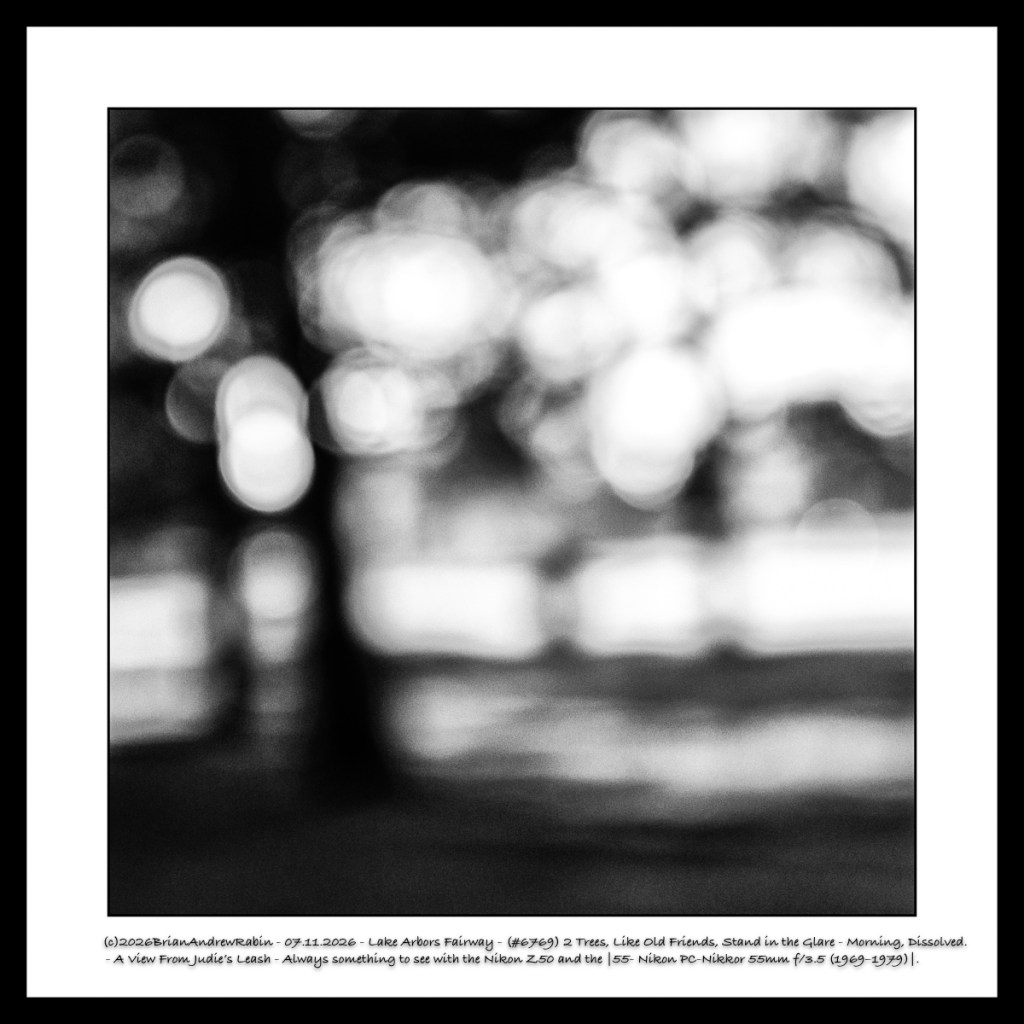
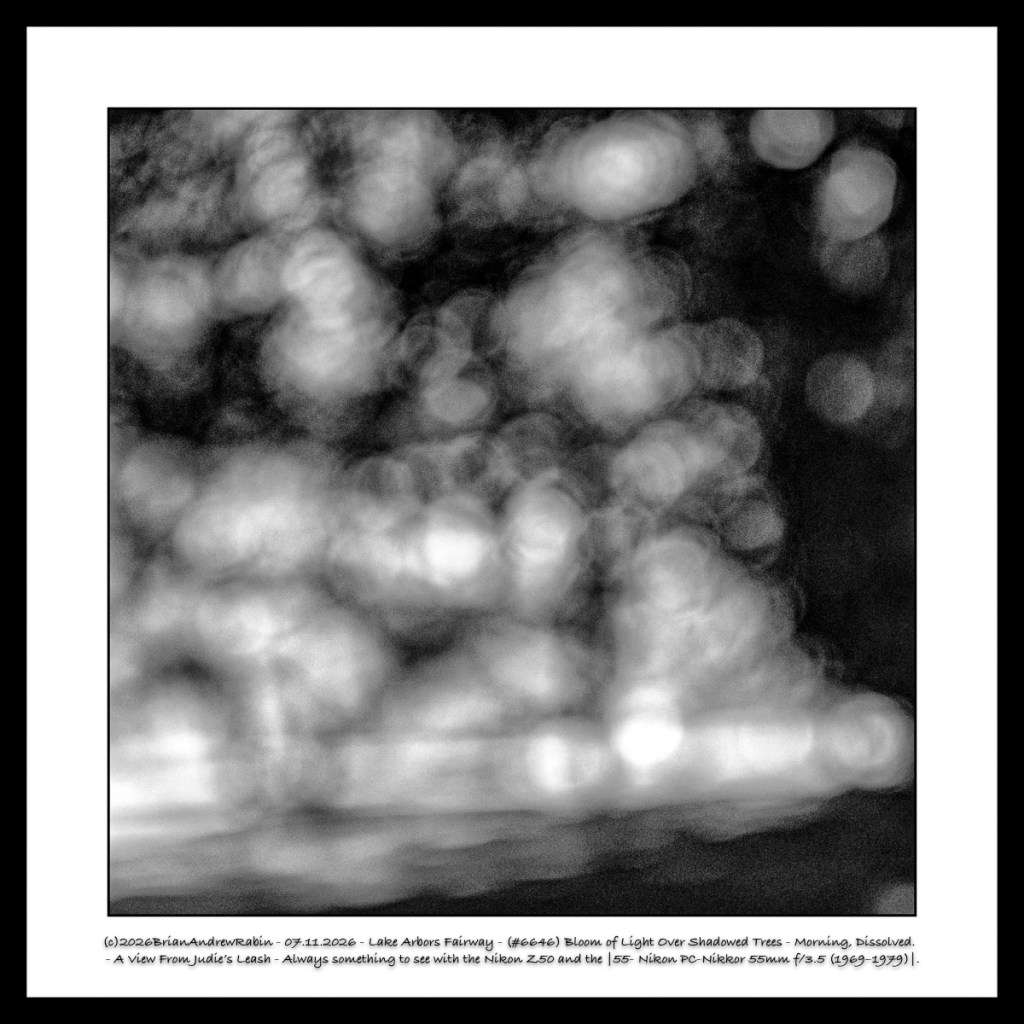
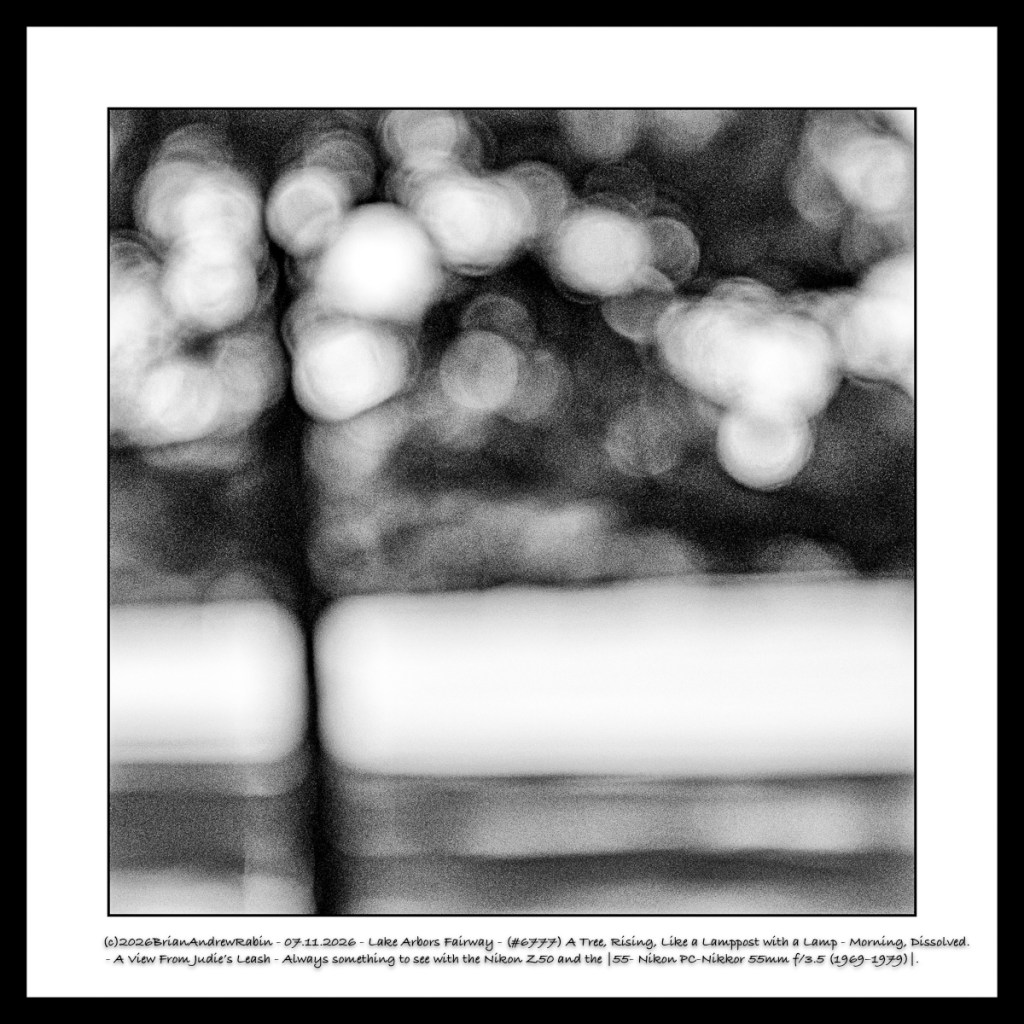
Morning is a special time for me these days—the only time I have to breathe, to be me. I cherish the quietness. Many mornings it’s just me and a camera and a view from Judie’s Leash—this series of 15 images, purposely processed in a grainy black-and-white fashion using Lightroom and Nix Silver Efex software. Shot out of focus to capture the specular highlights (bokeh), letting everything else fall where it may as shapes and texture, it reflects my life in the present.
These fifteen bokeh shots have caused me to think of the three “isms” — Pointillism, Impressionism, and Pictorialism — movements that each, in their own medium and era, chose to render light as soft, dissolved fields of color and form rather than sharp, literal fact, precisely the effect bokeh creates when a lens dissolves points of light into luminous, unfocused orbs.
Pictorialism is the isms most directly present in these images, since it was born from photography grappling with the very question a bokeh-filled frame raises: can softness, blur, and atmosphere carry as much artistic weight as sharp documentary clarity? Photographers like Alfred Stieglitz, Edward Steichen, and Julia Margaret Cameron insisted the answer was yes, using soft-focus lenses, long exposures, and hand-worked printing processes to let mood and interpretation take precedence over optical precision — treating a photograph as an expressive object shaped by the photographer’s eye, not a neutral mechanical record. A field of bokeh operates on the same principle: what’s technically “out of focus” becomes the emotional and compositional heart of the image, dissolving hard edges into glowing, painterly shapes the way Cameron’s soft-focus portraits dissolved sharp detail into feeling, or the way Steichen’s gum-bichromate prints turned a photograph into something closer to a tonal painting. In that sense, these bokeh shots sit squarely in the Pictorialist lineage — images that trust blur and light to do the expressive work that sharpness and description would otherwise carry.
The bokeh is like my morning walks—bright and hopeful, as I’m constantly pulled along from one scene to another by Judie the pug. The forms and shapes we interpret in the images are like the rest of my day falling into place: uncontrollable, shaped by circumstance, much like the unique character these images take on through the 50+-year-old 55mm macro lens.
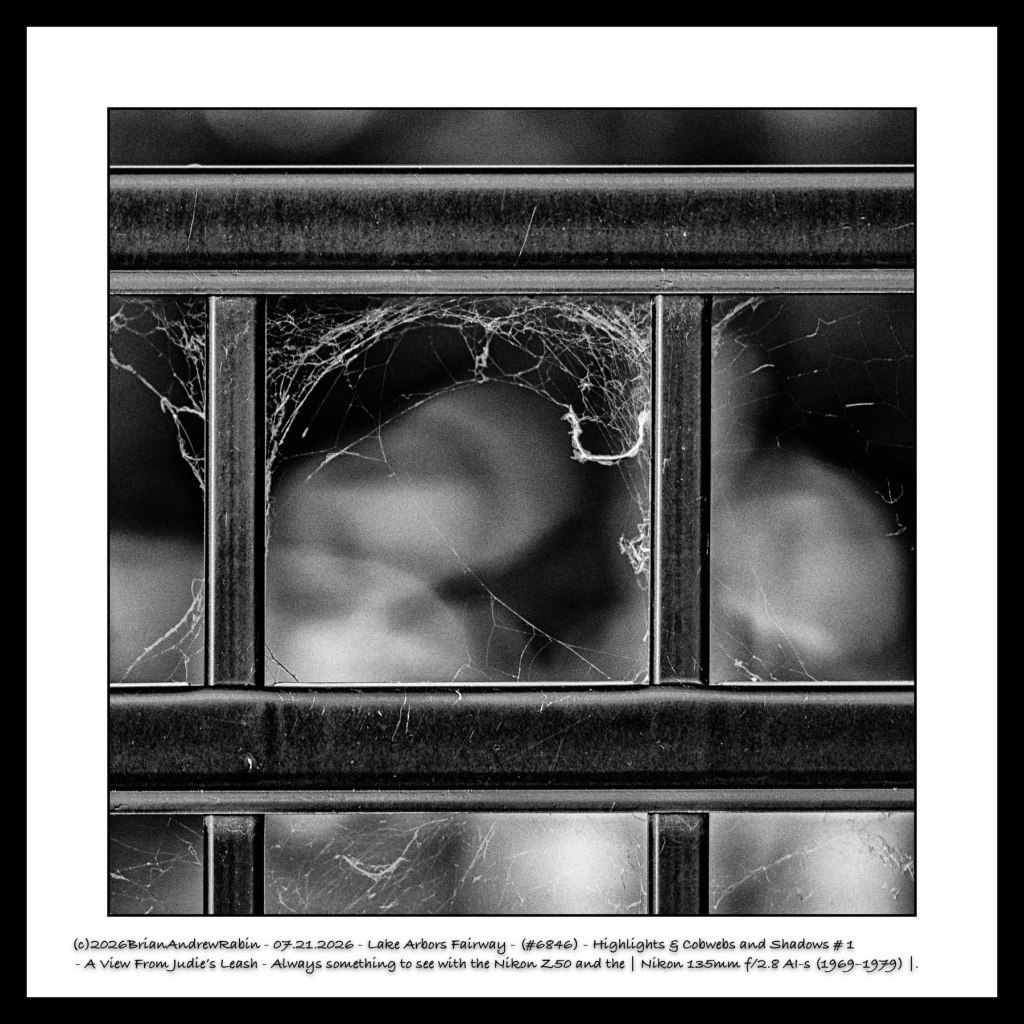
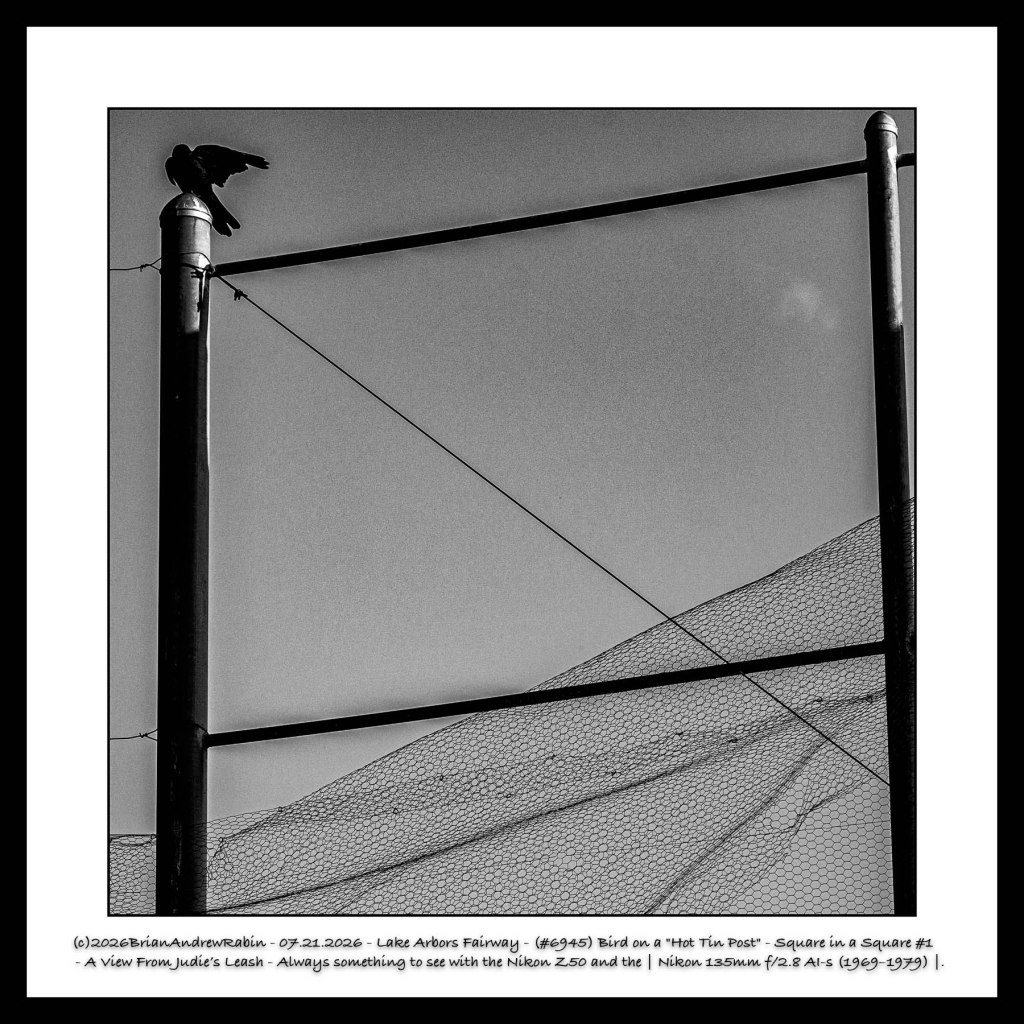
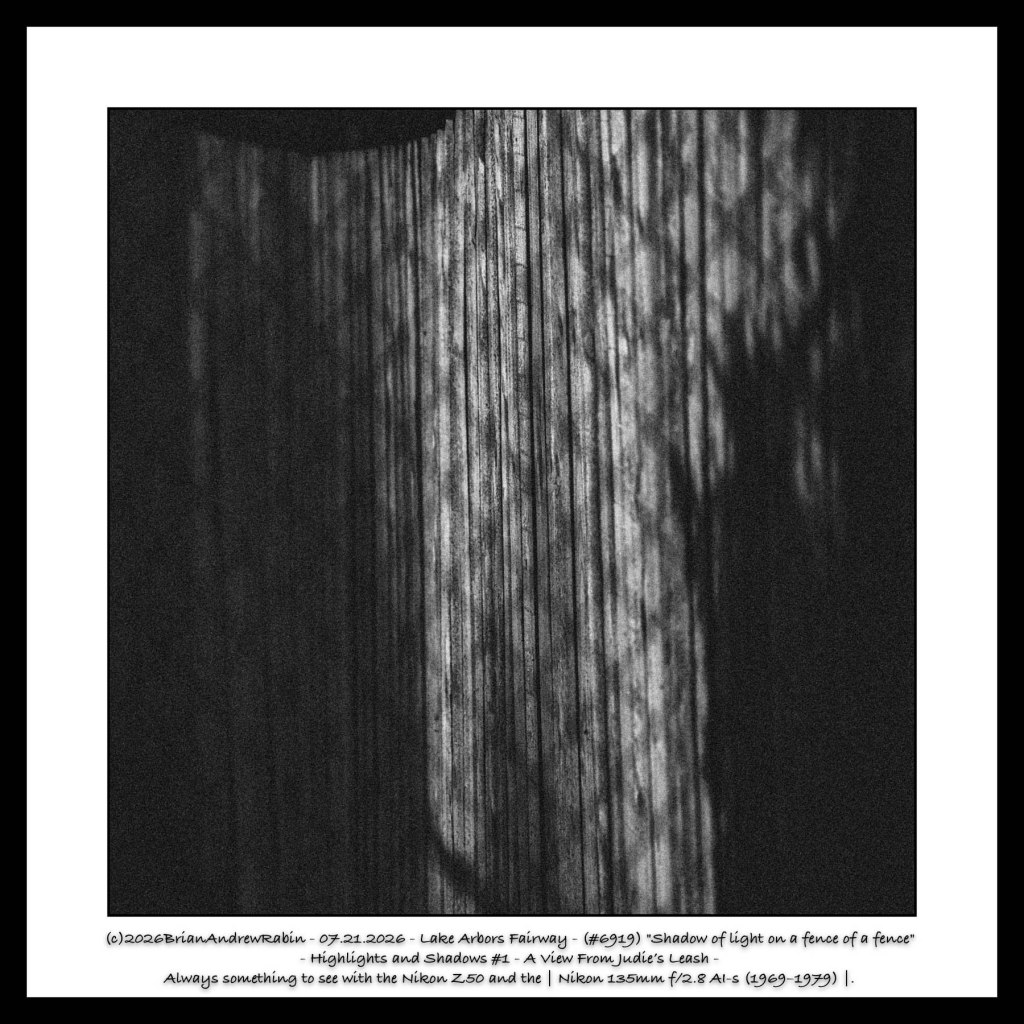
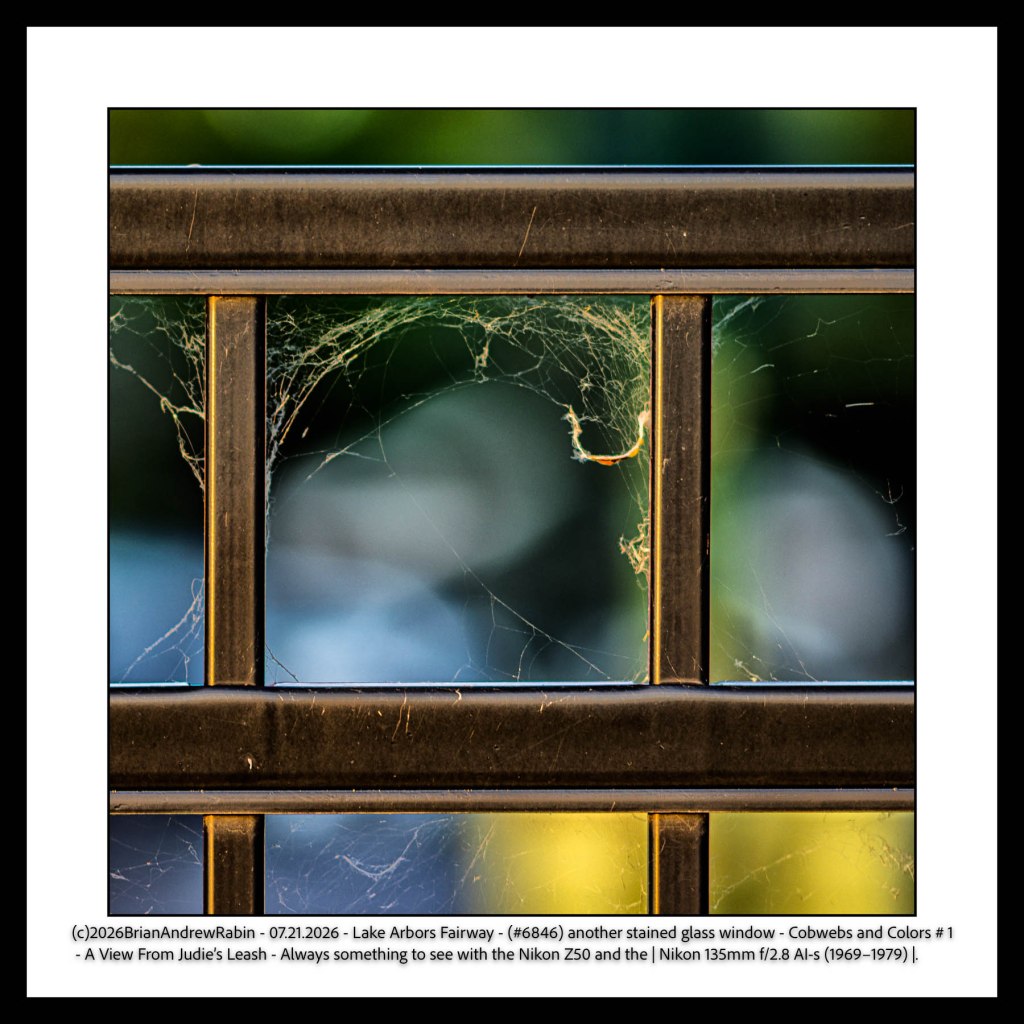
2026.07.21 – Always something to see with the Nikon Z50 and the | Nikon 135mm f/2.8 AI-s (1969–1979) | and a View from Judies Leash.
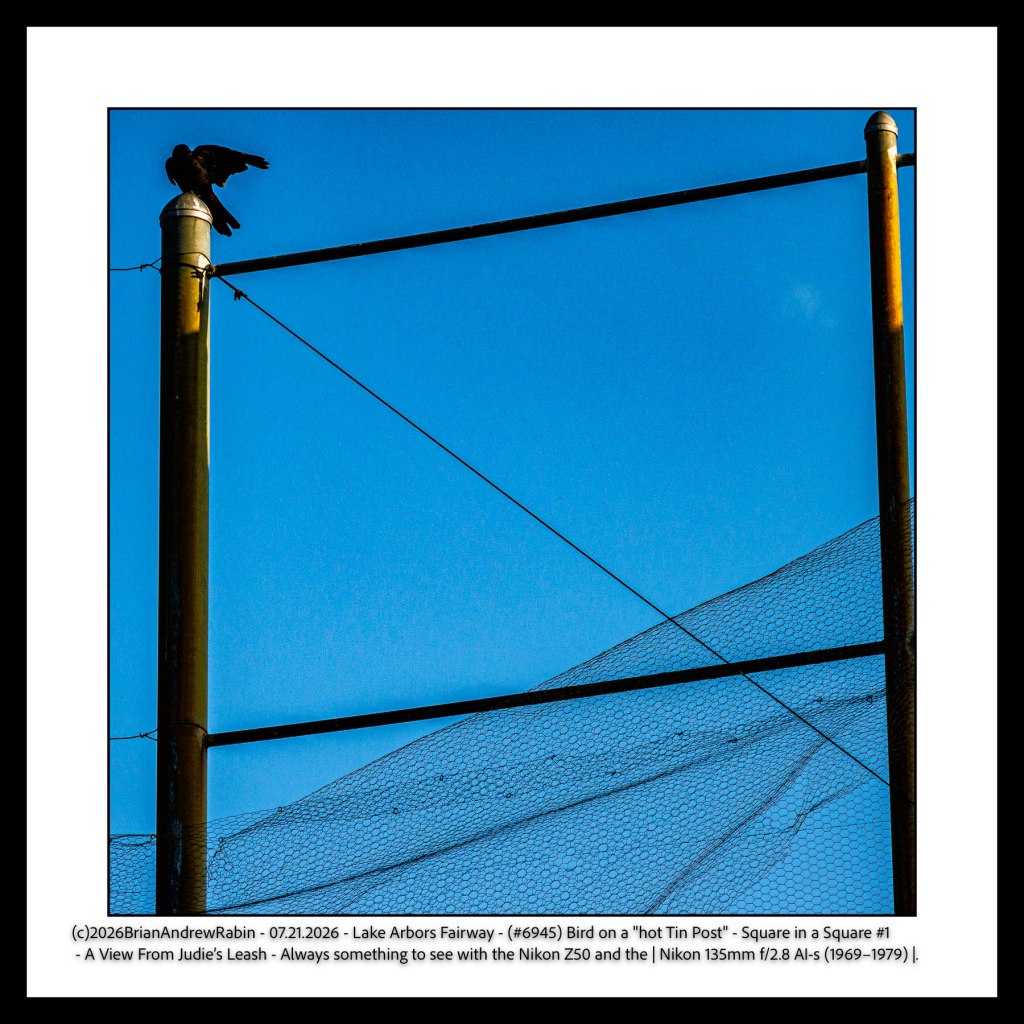
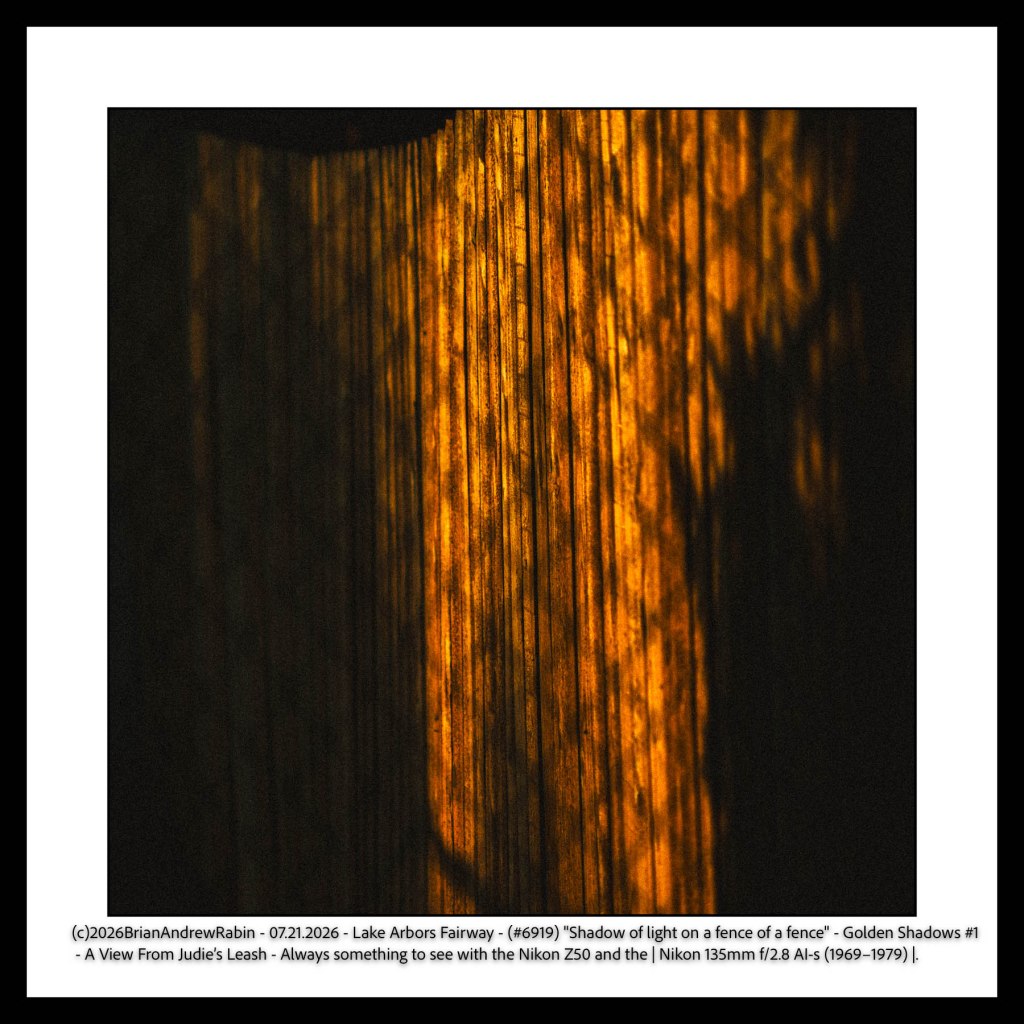
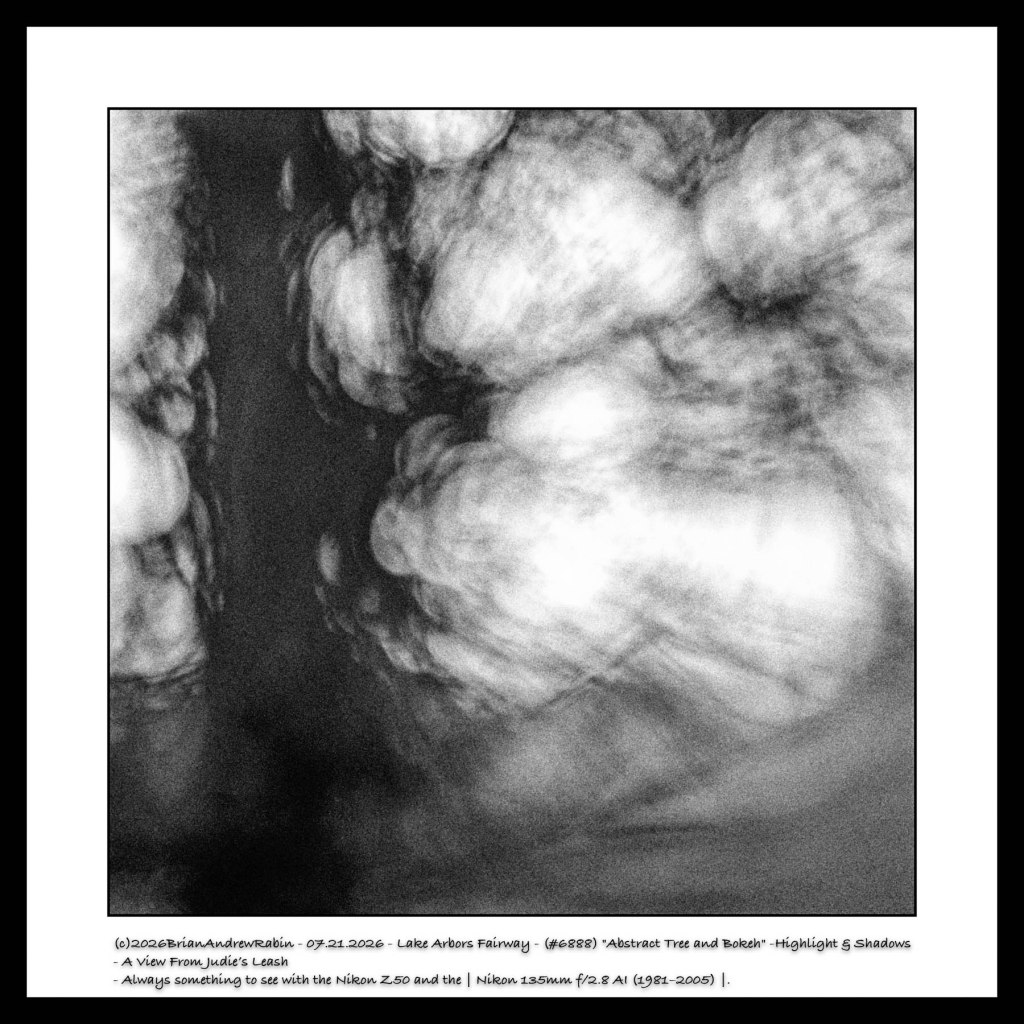
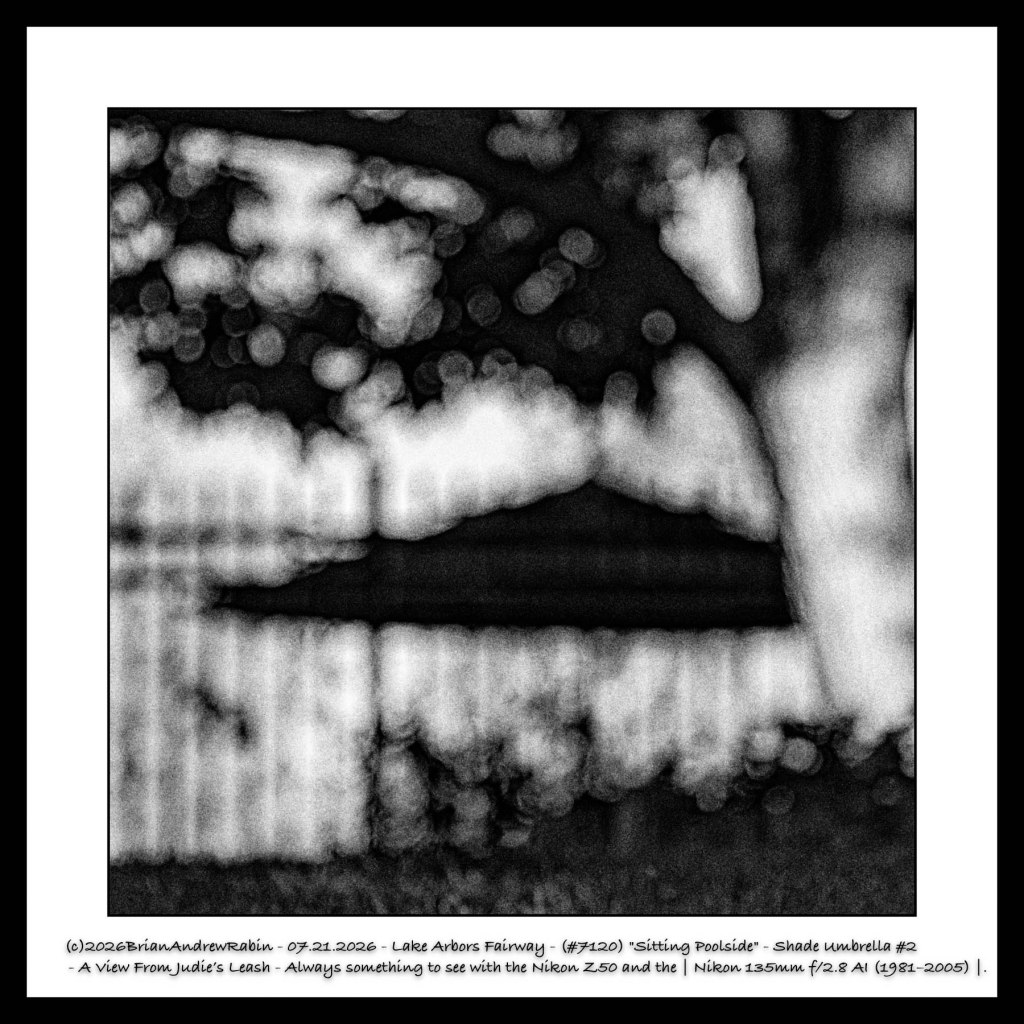
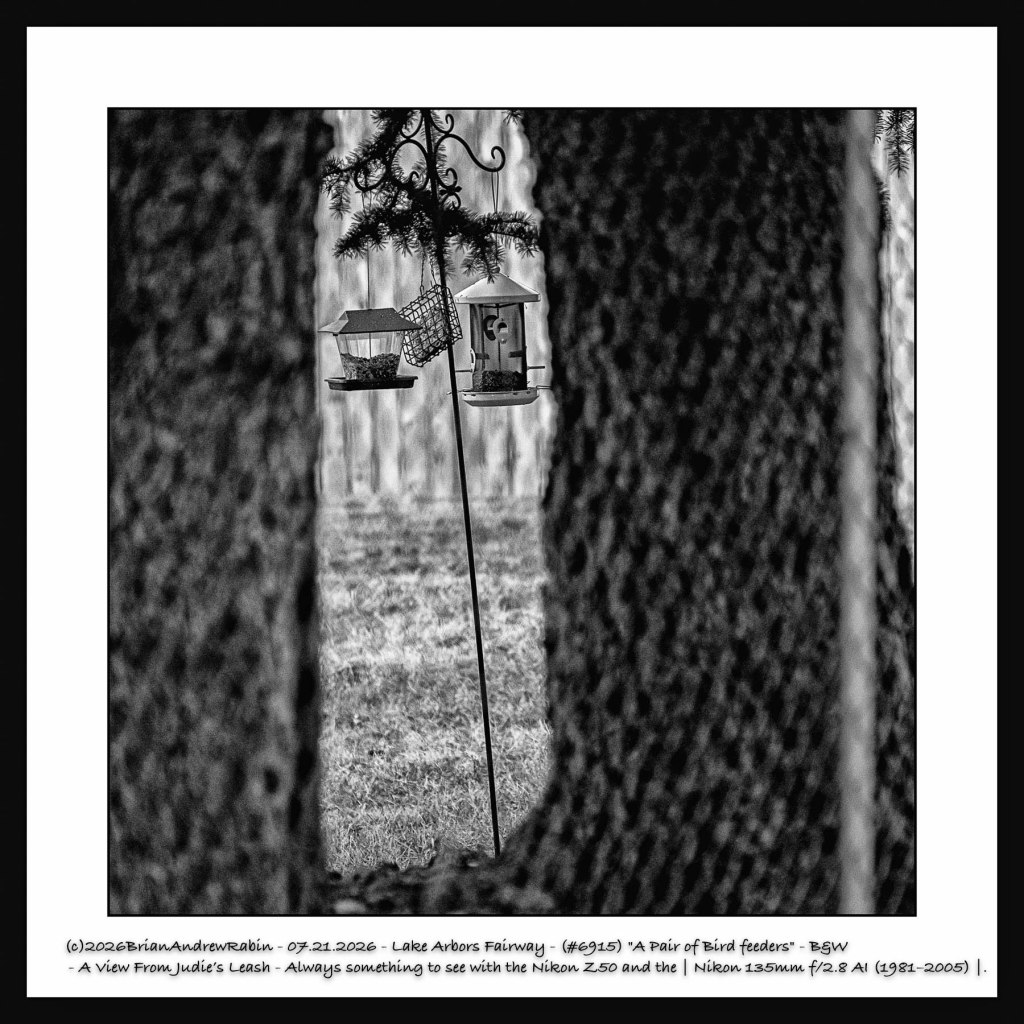
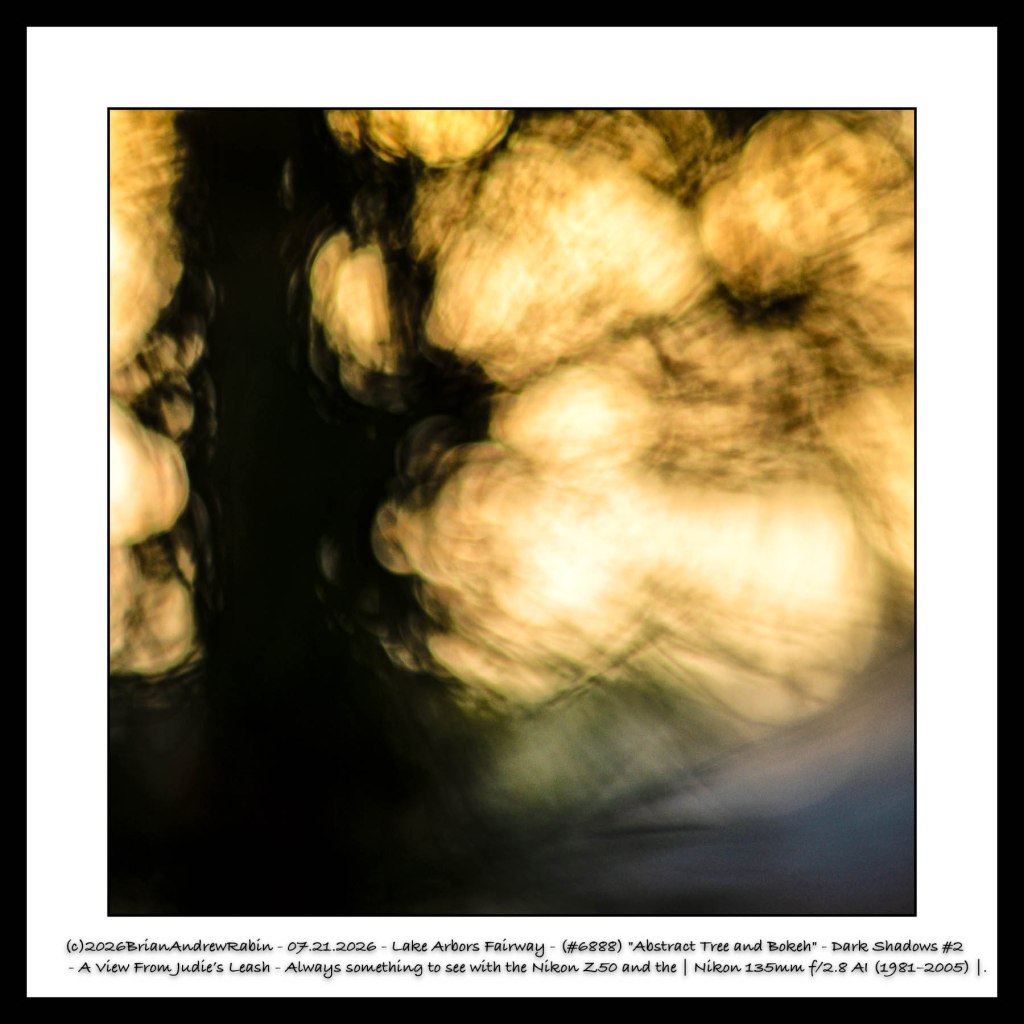
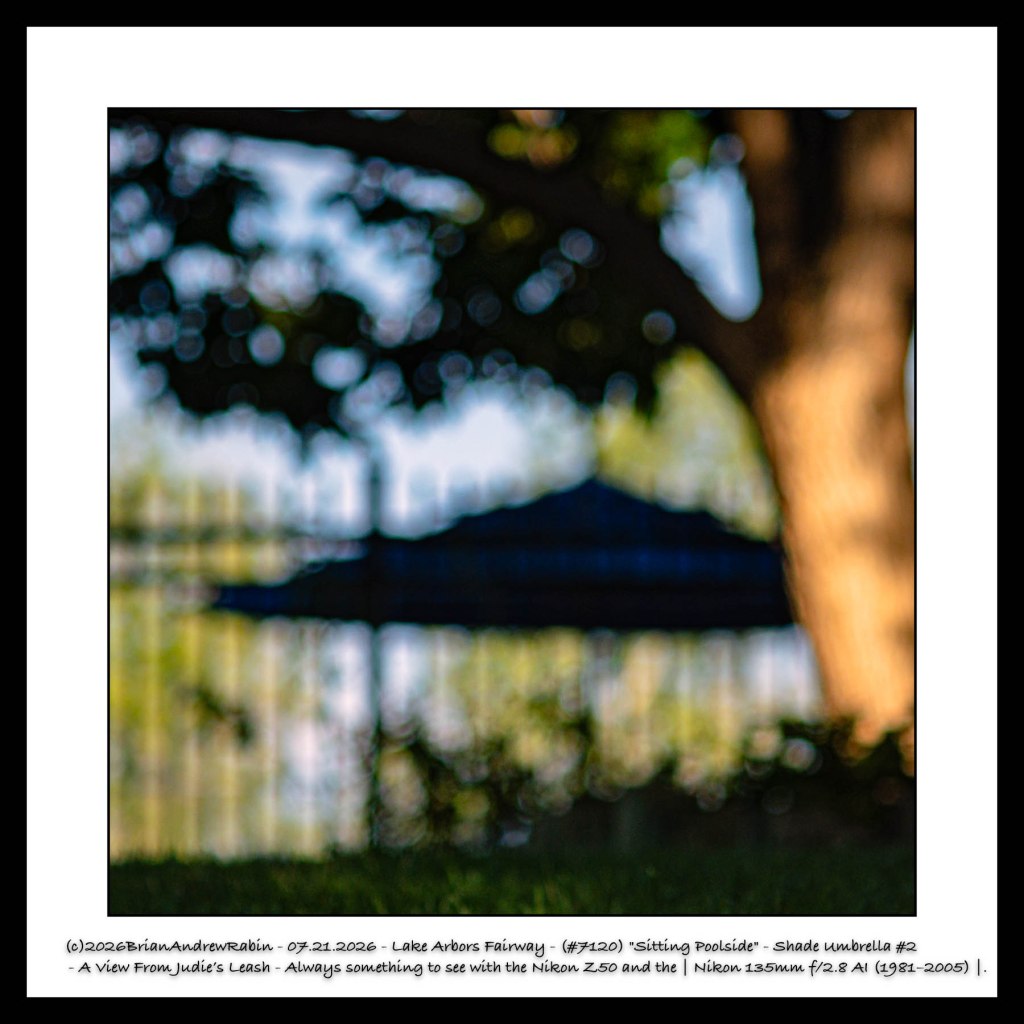
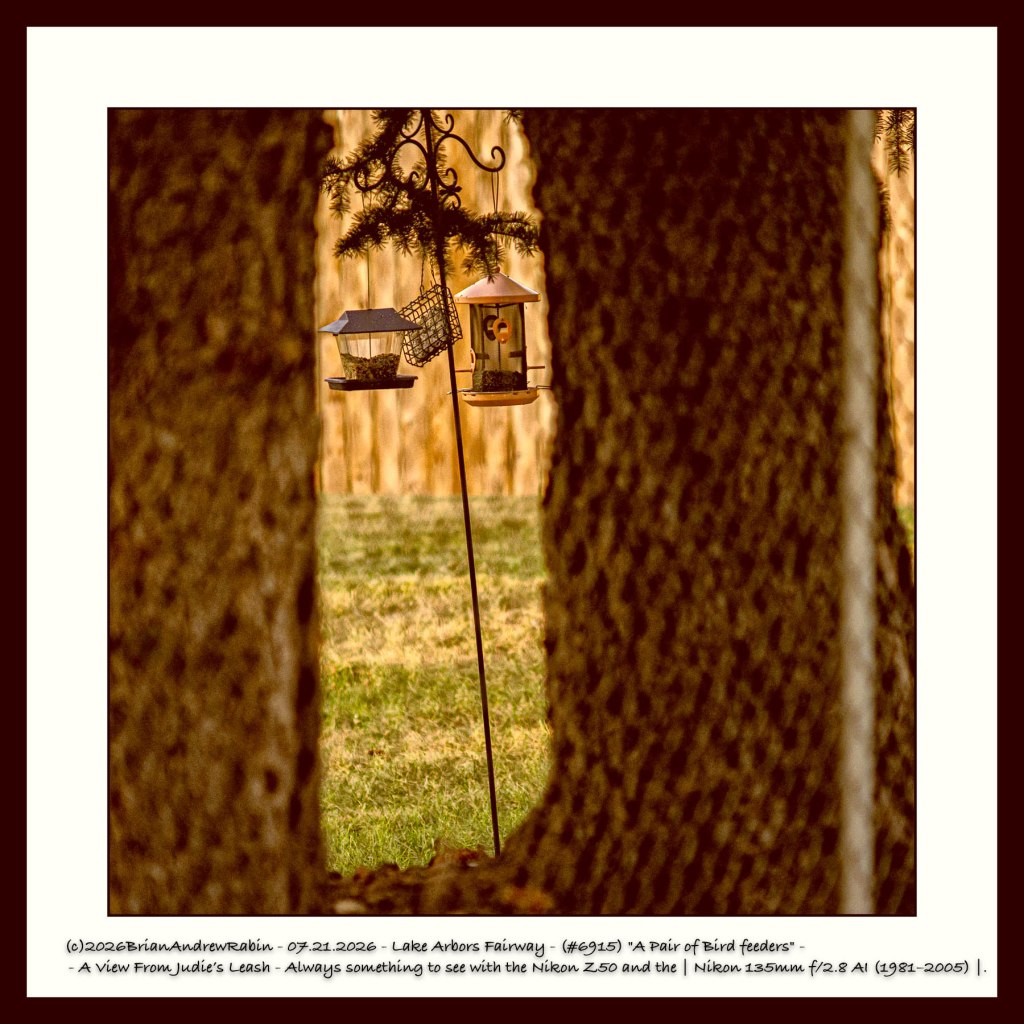
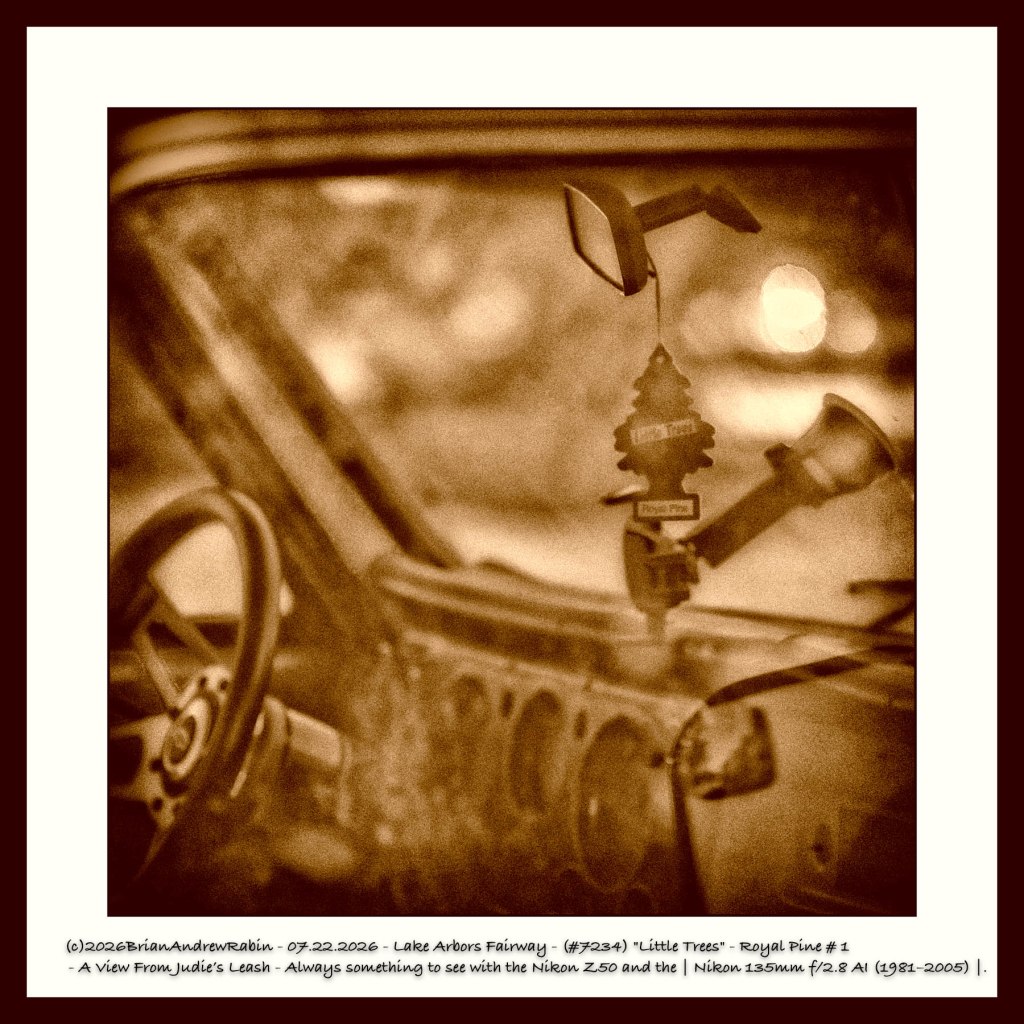
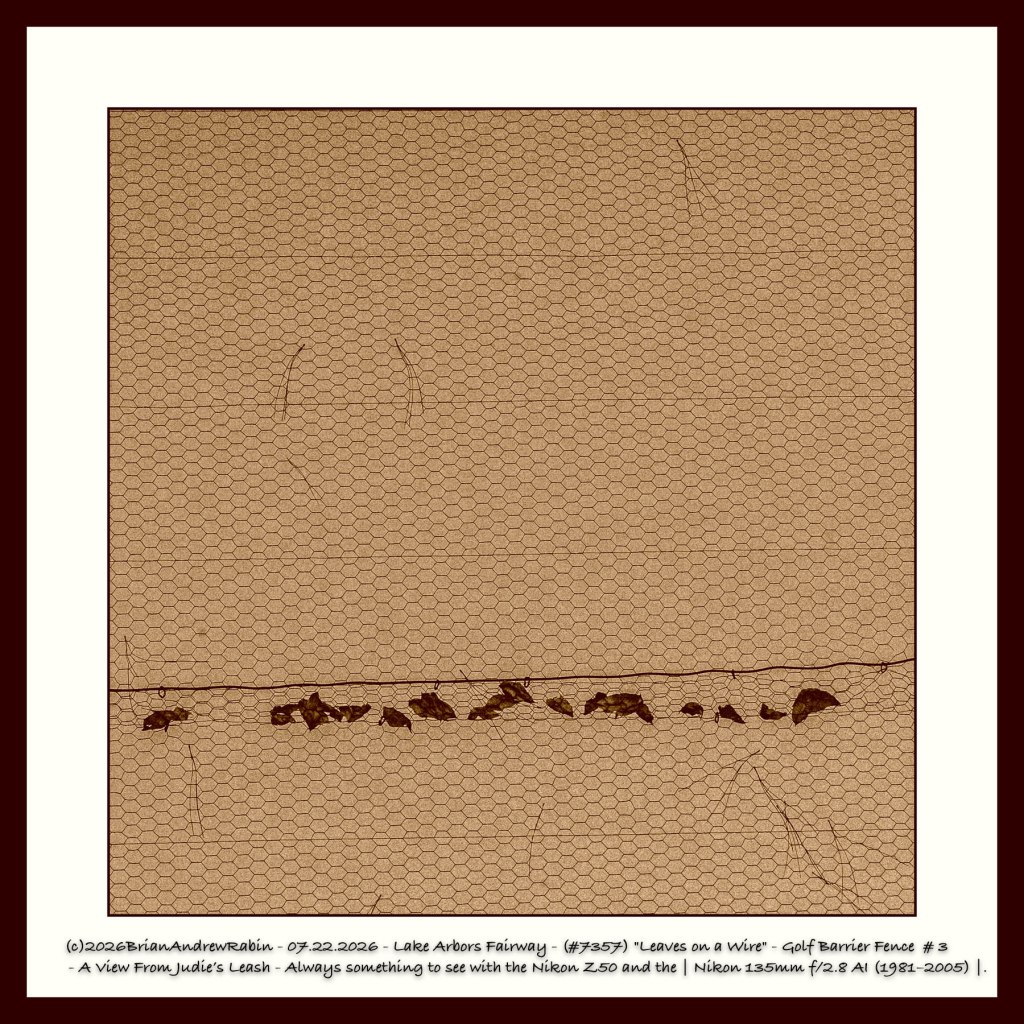
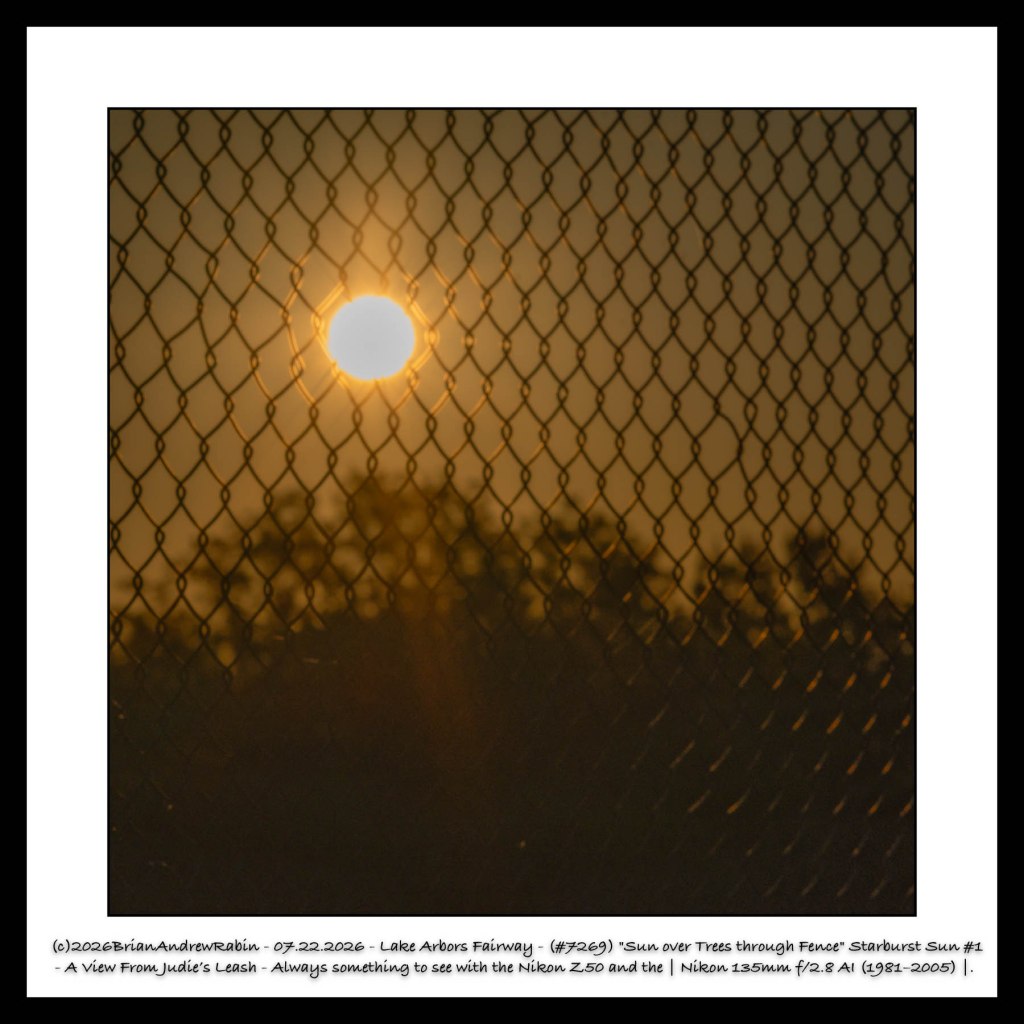
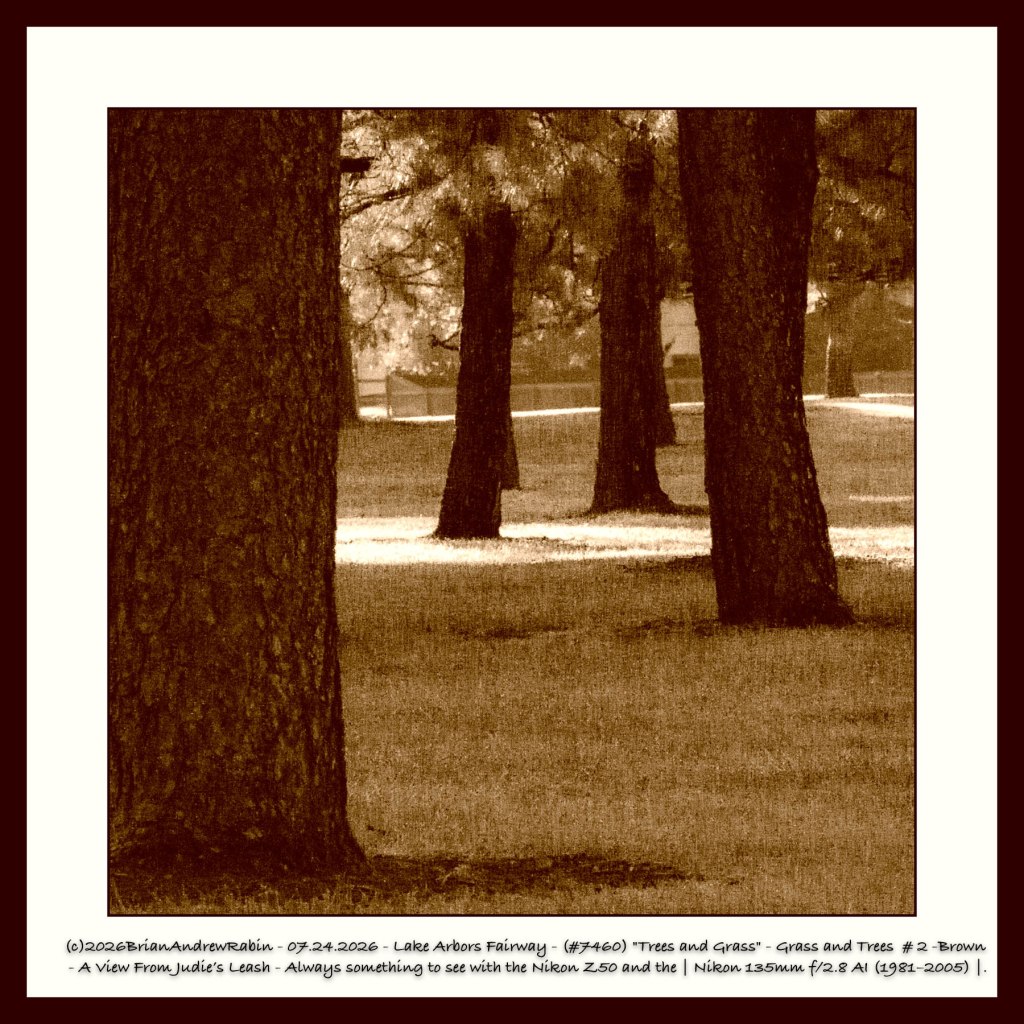
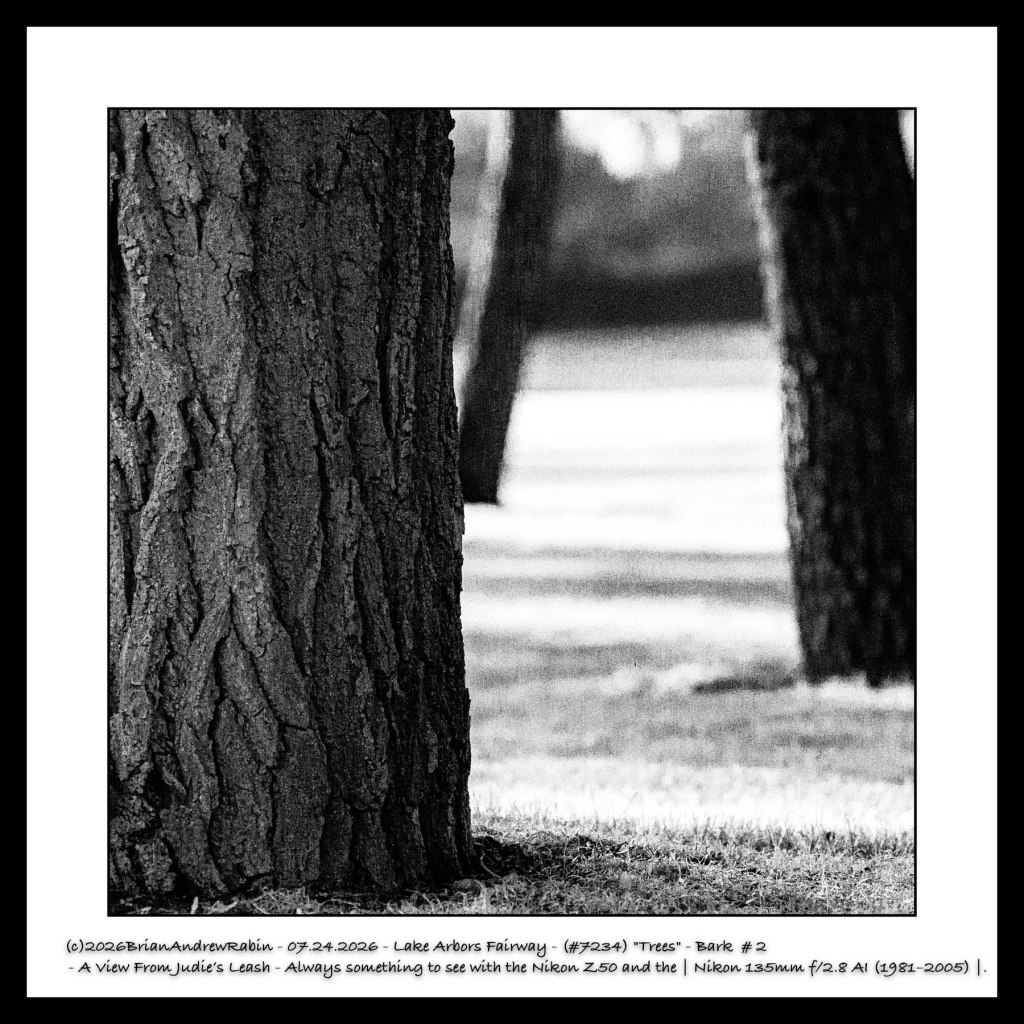
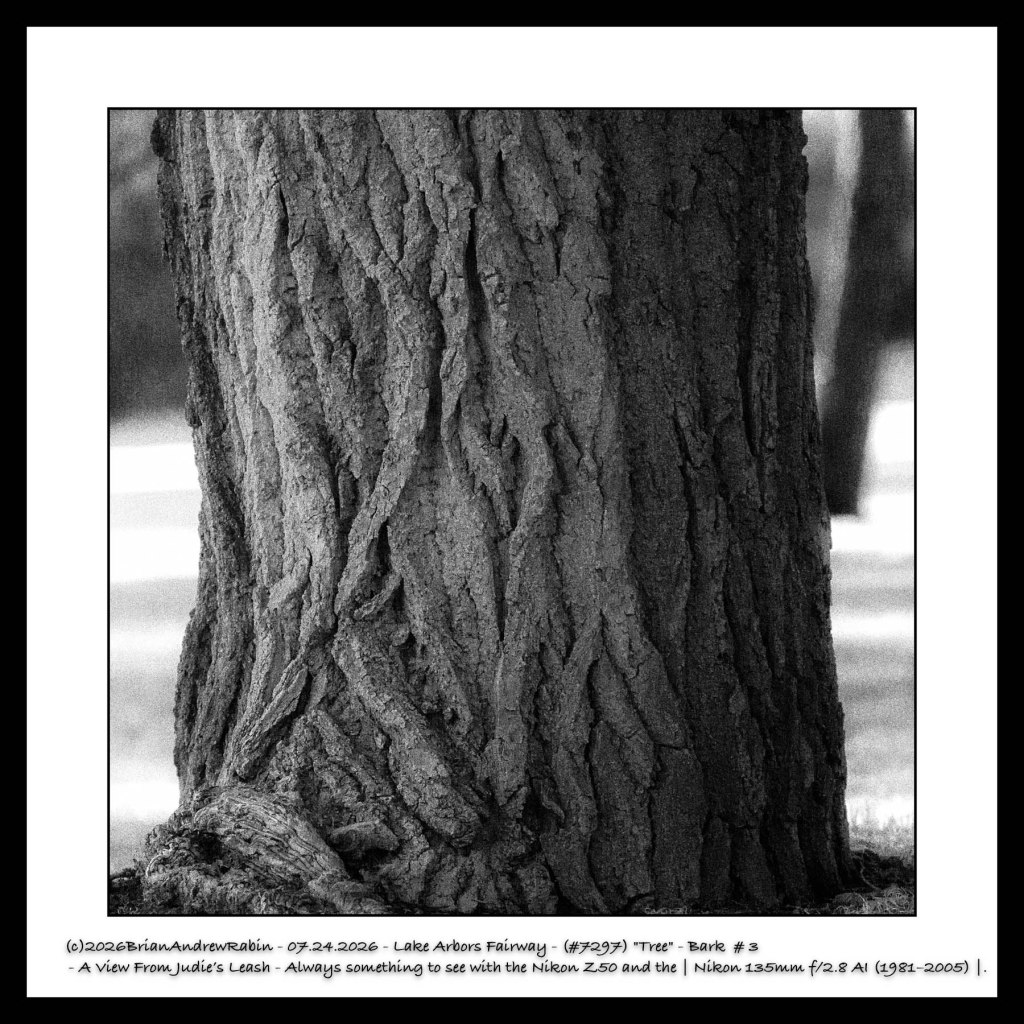
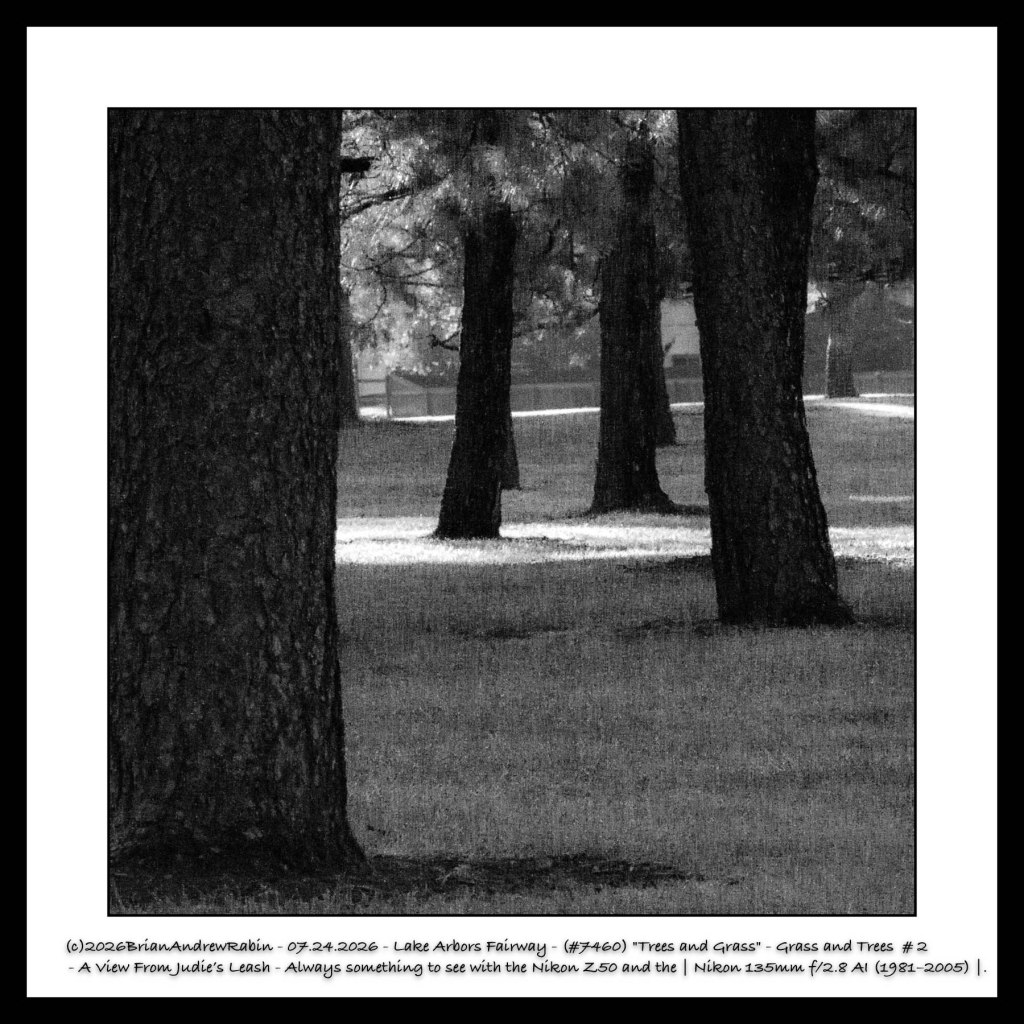
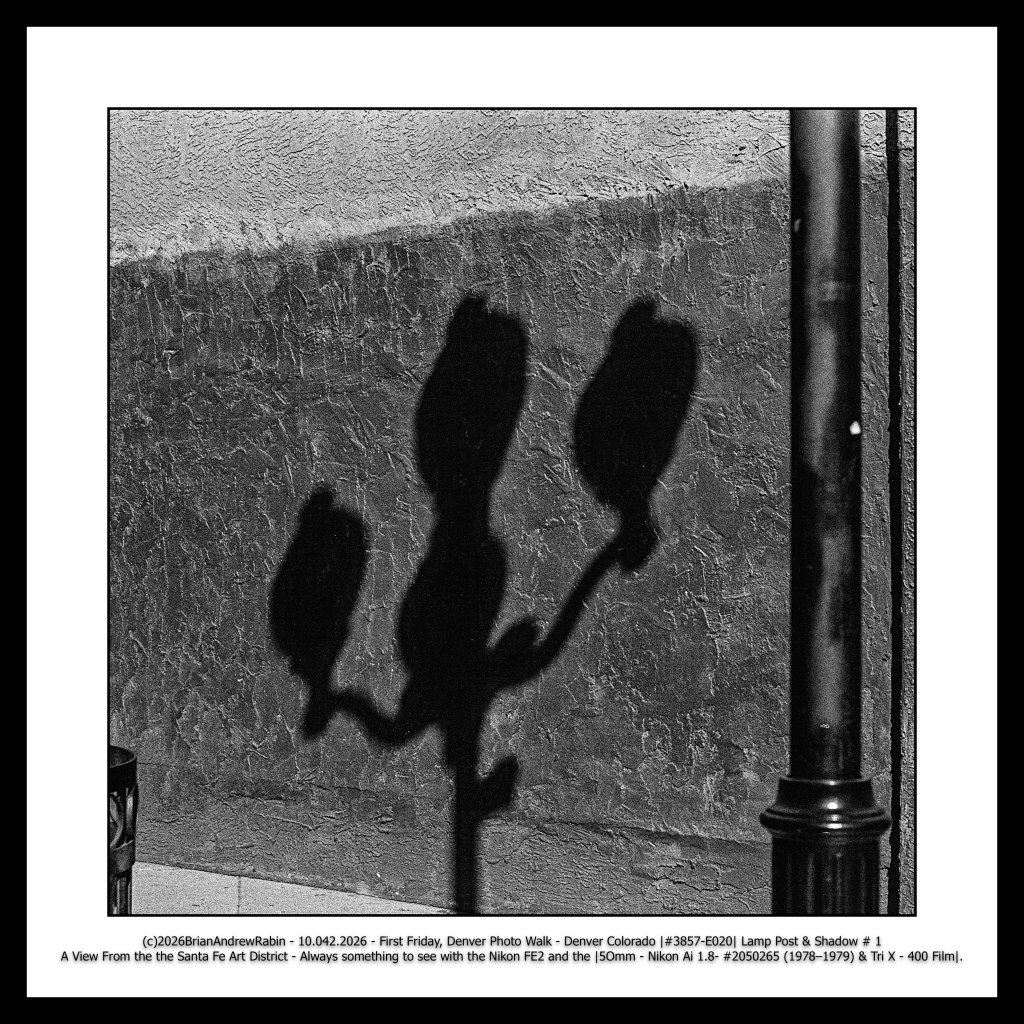
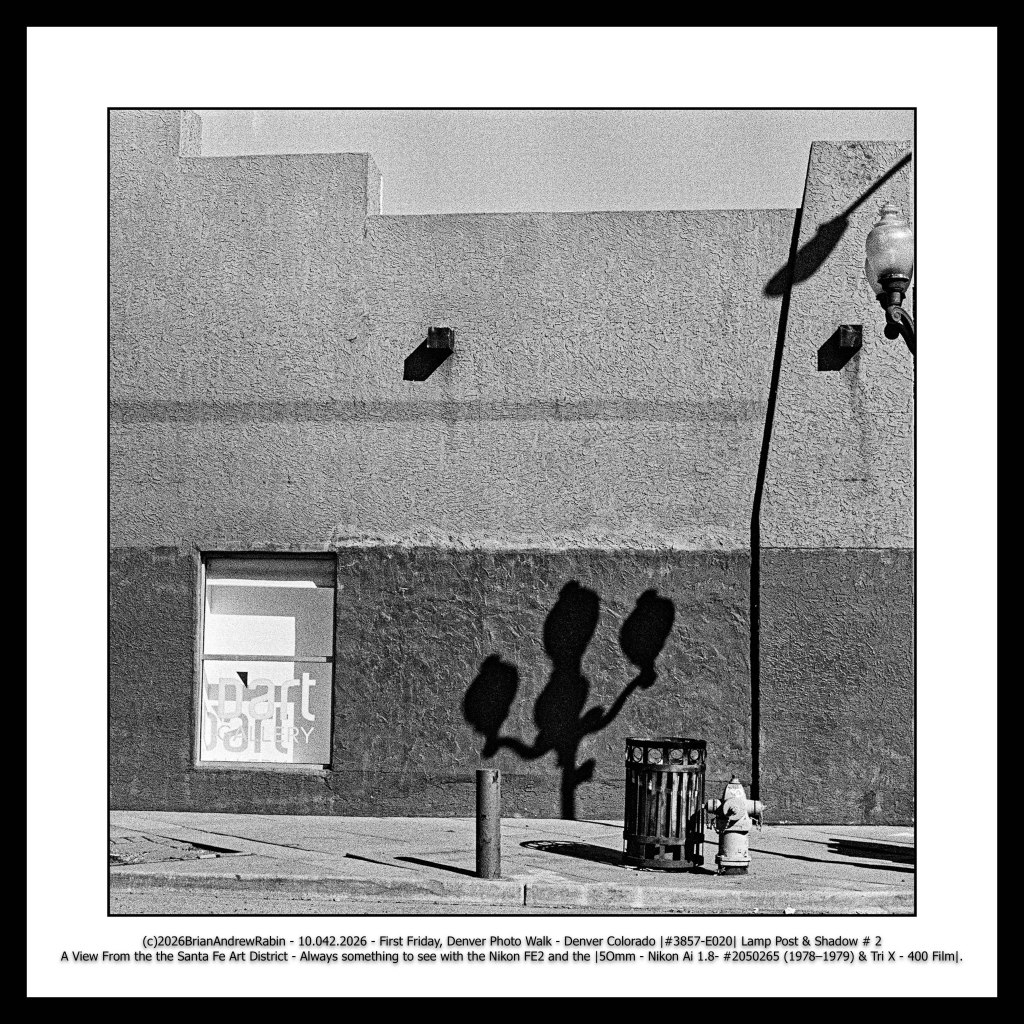
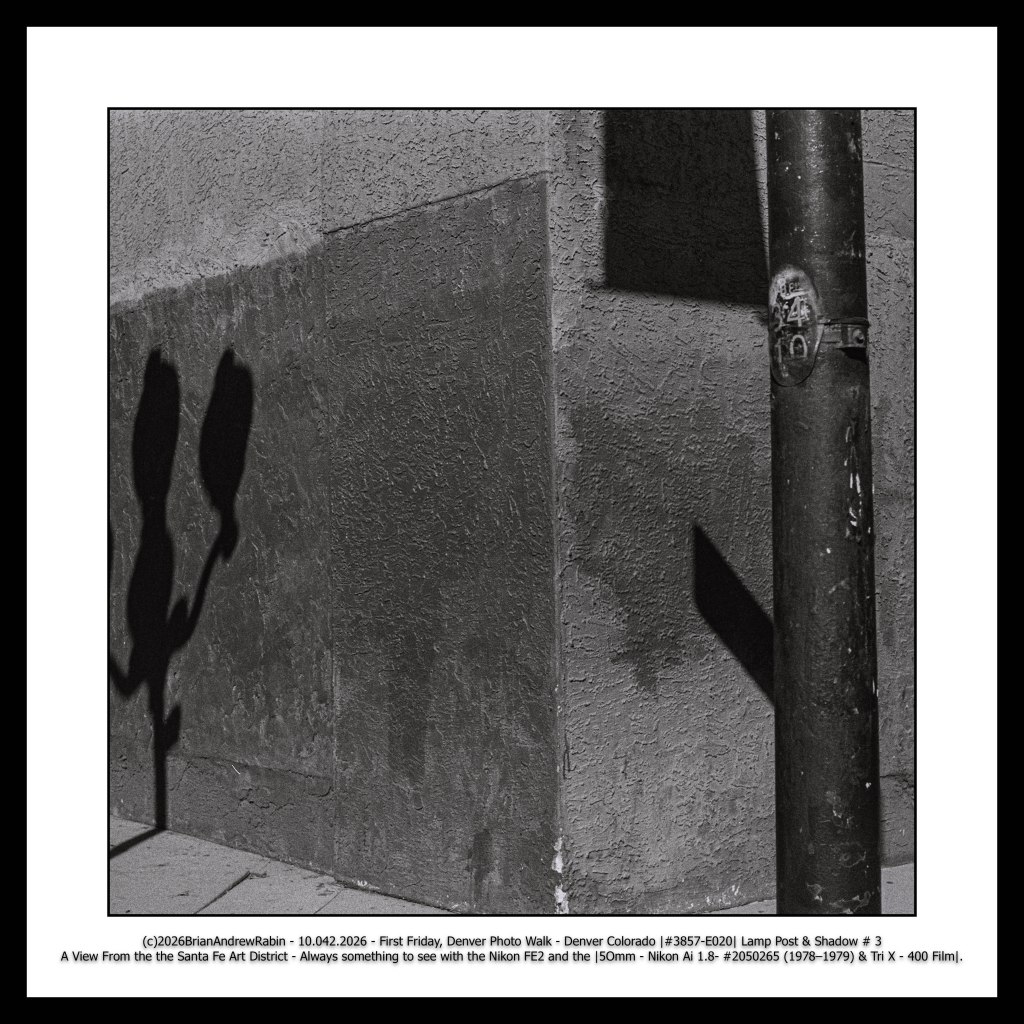
2026.10.02 – A View From the the Santa Fe Art District – Always something to see with the Nikon FE2 and the | 5O mm – Nikon Ai 1.8- #2050265 (1978–1979) & Tri X – 400 Film|. Denver Photo Walk – First Friday.
I’ve been thinking about time a lot lately.
In Ernest Hemingway’s 1926 novel The Sun Also Rises, Mike Campbell is asked about his financial ruin:
“How did you go bankrupt?” Bill asked.
“Two ways,” Mike said. “Gradually and then suddenly.”
I’ve always carried the other version of that line: a little bit at a time, and then all at once.
Lately it feels truer than ever. It all seems to be happening both a little bit at a time and also all at once.
I’m watching my parents and their generation, my aunts, uncles, and their friends, grow old and begin to slip away, while our democracy, an institution we all took to be as permanent as they were, is showing its age too. Even photography, the medium I’ve built my life around, is younger than it feels: the oldest surviving photograph, Nicéphore Niépce’s View from the Window at Le Gras, was made from a high window of his French estate in 1827, not even two hundred years ago. Closer to home, the clock became personal fifteen months ago, when my mother was diagnosed with myelodysplastic syndromes. Her doctor told us it probably wouldn’t be what took her, and that, on average, she had another six to eight years.

